The Art of Science: The Shimmering Insects of Jennifer Angus

Jennifer Angus, Insecta Fantasia

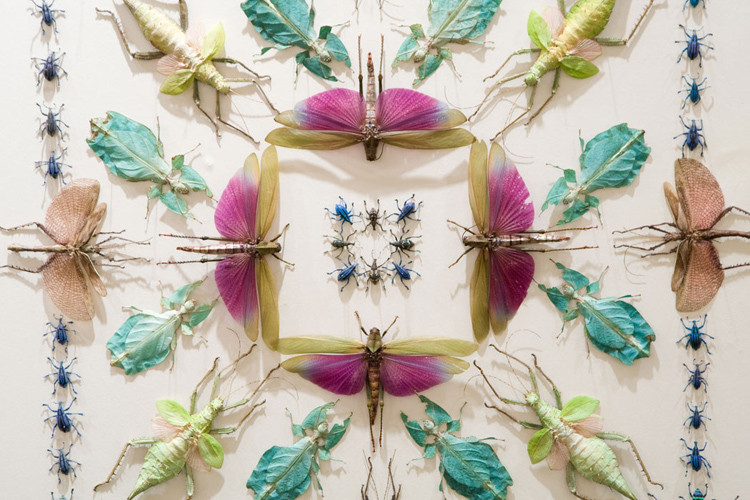
Bugs crawling up the walls are the stuff of nightmares for many, but they become stunning art in the hands of Jennifer Angus. A professor at the University of Wisconsin-Madison, Angus has for years used real, dead insects as her primary artistic medium. Her compositions, which are usually pinned to gallery walls, often refer to Victorian decorative motifs, which in turn recall the insect-collecting habits of 19th century naturalists.

Like them, she gathers her insects from around the world, particularly Thailand and Malaysia. While she notes that none of the insects she uses in her work are endangered species, she hopes that her art will spur an interest in both entomology and rainforest preservation in her audience. The eye-popping colors of her artwork are all natural, she says – she does not enhance the insects with paints or dyes. Angus’ work is on exhibit at the Jack Olson Gallery at Northern Illinois University through February 28, and you can see more on her website.

Photo via Wired.com
Rock Out!?

What is science-y about stories of my kids being adorable. Well, on the one hand, they are statistically significantly more adorable than average*. If it helps, I also refer to them as our human genetics experiment (n=2)**.

Punkface MacGruder (2yo) to The Frogger (4yo): Sister, you want ROCK OUT!?

Me: Frogger, when someone asks you if you want to ROCK OUT!, you say “YES!”

* Which, I suppose, would be an example of unconscious bias influencing a study’s results – if it weren’t also true.

** Also, evolutionary theory dictates that my fitness is determined by children.

Gene patents: it’s the sequence, stupid

Should your genome be balkanized into small fiefdoms of intellectual property? The briefs and court decisions in the Myriad BRCA patent case make for fascinating reading, because of the great effort expended by defenders of gene patents to deny that it’s the DNA sequence information that matters.

The historian of science Daniel Kevles has a lively review of this issue in the NY Review of Books. He gives us a clear example of how this denial of sequence value works:

The principal in the court majority was Judge Alan Lourie, who had been an organic chemist before turning to the law. He insisted that in patent law, unlike in biology, BRCA DNA was not information but was solely a chemical compound. Having been chemically modified at its ends upon extraction from its neighboring DNA, it differed sufficiently from the native version to be patent-eligible. He dismissed the Mayo ruling as irrelevant to the case, embracing arguments made by Myriad’s lawyers that the justices’ ruling in that case concerned a biomedical process while the Myriad case concerned DNA, a composition of matter.

To any working molecular biologist, this is ridiculous. DNA has no value solely as a chemical compound outside of the cell (unless you’re doing DNA origami). For this same reason, DNA is not analogous to a mineral extracted from the ground, or a kidney harvested from a body (to cite some other examples people have used). The isolated substance itself is irrelevant. It’s the sequence information that matters: the reason we isolate DNA as a chemical compound is to obtain its sequence. And sequence alone is not patentable.

But recognizing this would disrupt too many business interests: Continue reading “Gene patents: it’s the sequence, stupid”

Science Tourist: Algonquin Park, Ontario

I’ve taken you to a lot of indoor locations on my previous Science Tourist trips. Granted, one of them had a rain forest, but it was still indoors. Time to put on your hiking boots, because we’re going outside today, to Algonquin Park in Ontario, Canada!

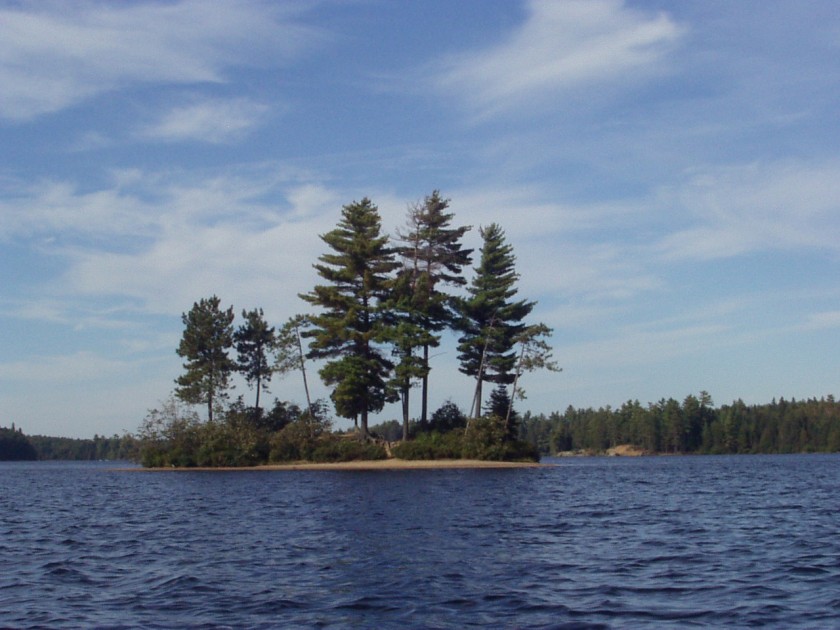
Algonquin Park is huge. Their FAQ says it’s 7,630 km² (2,946 square miles). A highway cuts through the southern part of the park, and that’s the only car route through the park. If you want to go further into the interior, you need a canoe to navigate the 1500 lakes. I’ve never gone that far. Both of my trips to the park have hovered close to the highway, but there’s still a lot to see there, and if you pick a quiet weekend to visit, you might not see anyone else on the hiking trails or on the lakes.

lake

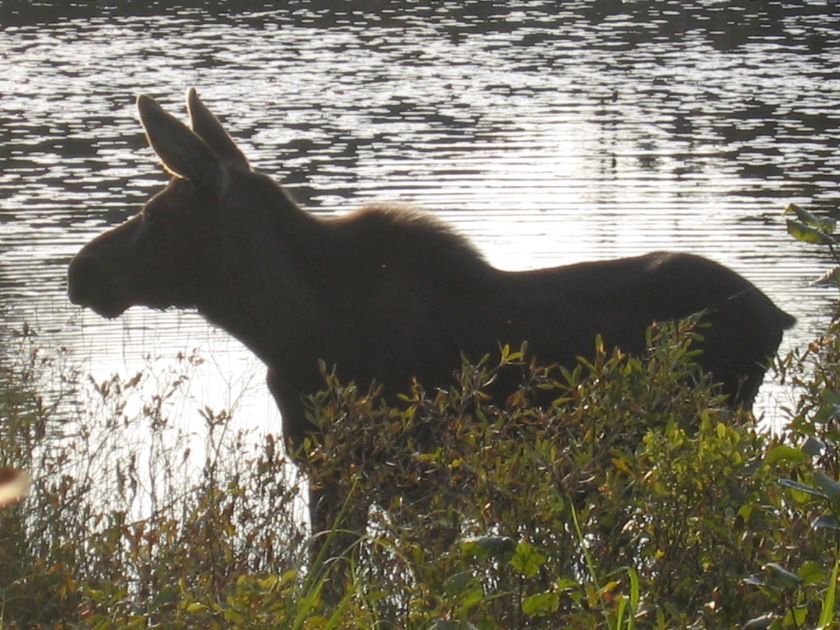
Toronto and Ottawa are each several hours away, so most people spend the night in the park. The first time I went camping in Algonquin Park, we had just started unloading the car at the campsite when the people from the neighbouring campsite told us to stop doing what we were doing and come over immediately with our cameras. There was a moose calf!

moose
Continue reading “Science Tourist: Algonquin Park, Ontario”

Lucretius: Lightning is not a means of divine communication

ThetriumphofdeathThe Nature of Things is an unfinished poem, but the sudden ending gives the finale an ironic twist: although a major purpose of the poem is to alleviate our fear of death, it ends in a fearsome, apocalyptic description of the plague that ravaged Athens during the Peloponnesian war.

Before that, Lucretius devotes much of the final book of his poem to a natural explanation for that perennial favorite signifier of the divine mood: the weather. Having spent the last few years in the U.S. Midwest, I’ve developed a fresh, first-hand appreciation for the destructive power of storms. (Given recent meteorological trends, it’s hard not to gain a first-hand appreciation of such destruction no matter where you live.) Before weather.com, radar images, and other tools that give us some predictive power, the violent and capricious nature of bad weather was perhaps easiest to understand as a means of communication between gods and humans.

Lucretius says that ascribing weather to gods is nonsense: Continue reading “Lucretius: Lightning is not a means of divine communication”