
The Gruffalo, a spoken word performance

Last night I was requested to do independent readings of the British children’s classic The Gruffalo by Julia Donaldson & Axel Scheffler.

For Punkface MacGruder, my younger child, I performed Donaldson’s rhymes as a really bad beat poet (apologies to all beat poets that still exist).

My older child, The Frogger, requested that I do voices*.

Here are my Gruffalo voice inspirations:

Narrator – Me
Mouse – Cary Elwes
Fox – Greg Proops doing Jeremy Irons
Owl – Greg Proops doing Merv Griffin**
Snake – Peter Lorre
Gruffalo – Ted Levine as Buffalo Bill in The Silence of the Lambs

*There is also a BBC Animated Short based on The Gruffalo. They made somewhat different casting choices.

**It is really based on what I remembered it sounding like. I relistened to that chunk of The Smartest Man in the World and it sounds nothing like what I remembered. Stupid primate neurology.
Sunday Science Poem: Defying the Outer Black

Robert Frost’s “A Loose Mountain” (1942)

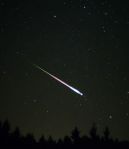
Leonid_MeteorA Balearic slinging competition, as I learned from slinging.org, involves slinging rocks at an iron disk fastened to the center of a board. In “A Loose Mountain,” Frost suggests that the Earth may be the target of a cosmic slinging game played with loose mountains instead of small stones, and that the major contestant, the Outer Black, is just waiting for the perfect shot.

Frost plays on the tension between our remarkable achievements as a species and our apparent insignificance in the universe. We can stand outside and ooh and aah over the incineration of high velocity rocks during the Leonid meteor shower, and then walk back inside, out of the night and into our well-lit homes, no longer at the mercy of the diurnal cycle. And yet there is no reason we can’t be snuffed out with one well-placed asteroid, just like the dinosaurs.

Continue reading “Sunday Science Poem: Defying the Outer Black”

Science Caturday: True Facts about Cats

catbath

You can learn anything on the internet! This fascinating fact about kitty cleanliness comes from the infallible Fake Science Tumblr.

Duck, Duck, Golden Goose!

Geese, the most aggressive of all poultry. Image courtesy of Wikipedia.

The second annual Golden Goose Award ceremony was held on September 19th. The Golden Goose Award is given to obscure federally funded research projects that ultimately resulted in breakthroughs with wide-ranging benefits. The name comes from The Goose That Laid the Golden Eggs fairytale. One of the 2013 awardees exemplifies the potential application of very basic and somewhat obscure science.

In 1966, Thomas Brock, a microbiologist, and his undergraduate research assistant, Hudson Freeze, set out for Yellowstone. They were interested in organisms that live in the most extreme of conditions. They collected bacteria thriving in the hot springs of the park. Among the samples they collected, one was called Thermus aquaticus. Molecular biologists around the world know it by its more common nickname, Taq. Continue reading “Duck, Duck, Golden Goose!”

Meet the Corpse Flower

Note: these are not miniature children

Plants are so often the overlooked underdogs that I wanted to highlight one today. With their weird and wacky genomes, plants come in a variety of shapes and sizes and if you say you love orchids then you haven’t seen enough plants. Also, just recently we’ve discovered a new organelle (tannosome) in plants! A NEW ORGANELLE (yes, it’s in all caps because I’m yelling) -I sort of thought at this point, the whole organelle deal was sorted out. Nope, plants just keep surprising us. This is major news, like rewriting middle school textbooks major.

One of my personal favorite plants is Rafflesia also called “corpse flower” because it smells like rotting flesh. Sending a bouquet of rafflesia is a bad idea not only because of the smell, but also a single flower may be 90 cm in diameter.

Thanks to ARKive we canwatch this stinky, giant flower bloom.

ARKive video - Rafflesia flower openingThere are 28 species in the genus Rafflesia and they are all found in southeastern Asia. They have no roots and parasitize other plants. Speaking of organelles, the corpse flower has no chloroplasts which perhaps changes the way you define plants. This also provided a headache for the plant systematics world as they use chloroplast DNA to make their phylogenetic trees.

Learn more with this remarkable video from the botanist, Alastair Robinson

“Meet the…” is a collaboration between The Finch & Pea and Nature Afield to bring Nature’s amazing creatures into your home.