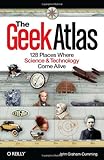
Book review: The Geek Atlas

I’m starting to run out of places I’ve visited (just a few left!) but don’t worry – I will continue posting science travel stories on here. They will just be places I have *not* been to.

But first, an interlude in the form of a book review. You see, this is not the only place you can find science travel tips. There is an entire book out there, called The Geek Atlas, by John Graham-Cumming, which is very similar in concept, and even covers some of the same places. Continue reading “Book review: The Geek Atlas”

It’s a beautiful day in the neighborhood…

How is astronomy like biology? Every time we build better tools for observation (eg, space telescopes & next-generation sequencers), we learn about the incredible variety of things that we are missing and get to wildly speculate about what it all means (we also get to regularly confuse “wild speculation” for actual “knowledge”).

“Exoplanet Neighborhood” by Randall Munroe at xkcd (CC BY-NC 2.5)

Project Tycho: Vaccines prevent diseases!

Tycho Brahe, Image from Wikipedia

I just heard about a new “big data” project called Project Tycho. They chose the name Tycho in honor of Tycho Brahe who made tons of detailed observations of the stars and planets. After his death, his data was used by Kepler to formulate the laws of planetary motion. This project wants to connect the vast amounts of public health data to scientists and policy researchers to improve their understanding of contagious diseases and their spread. Their undertaking is incredible; they digitized weekly Nationally Notifiable Disease Surveillance System reports from 1888-2013. Now that all of the data is digitized they are working their way through standardizing it and making it amenable to analysis. This entire dataset is available for search online. Continue reading “Project Tycho: Vaccines prevent diseases!”

Science Caturday: Lolcats make u smarter

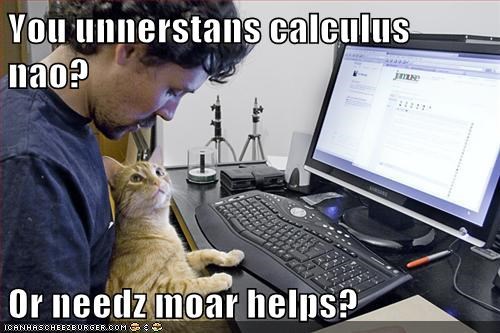
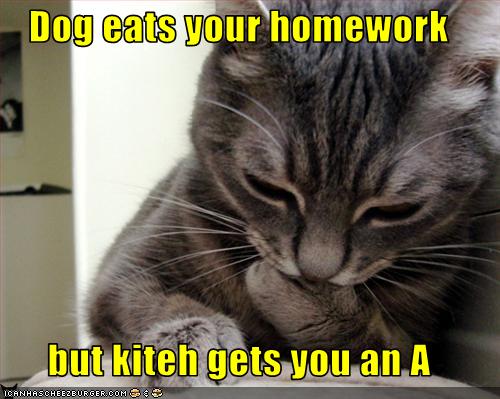
kittehABest news we’ve heard all year: science sez cute kitty photos can help you learn stuff.

A language-learning app development company called Memrise looked at lots of data to see what helped their users retain information. After finding links between using the funny photos and students’ ability to recall phrases, they broke down the results of memory tests to see which photos worked best.

“We wanted to know what kinds of visual mnemonics were most effective at helping people to learn fast,” Ben Whately, chief operating officer at Memrise, told BBC News. “The pattern began to emerge that pictures of cats always featured disproportionately among the most effective,” he says.

Memrise used this research to develop CatAcademy, an app that shows funny photos of cats along with corresponding phrases in Spanish.

Want to know why this works? Of course you do. Because SCIENCE!  Japanese researchers published a paper in PLoSOne last year showing that study “participants performed tasks requiring focused attention more carefully after viewing cute images.”

calculus

Experts agree! Looking at lolcats is good for your brain, if not ur grammerz.

We Give Thanks for Evolution

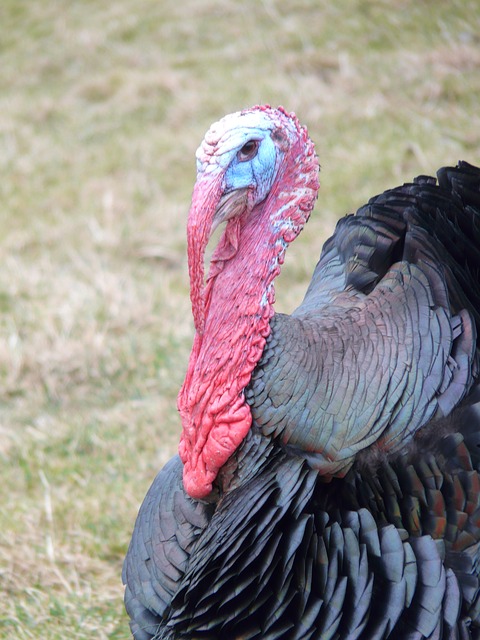
A special Thanksgiving Day reminder that evolution is weird. The front end of a wild turkey:

turkey-49675_640

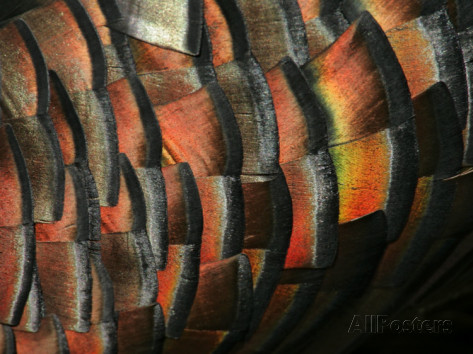
… and the back end:

arthur-morris-wild-turkey-feather-close-up-las-colmenas-ranch-hidalgo-county-texas-usa

Photos by Hans Braxmeier (top) and Arthur Morris