Food, Remembered: Mom’s Fried Eggplant

For many people, eggplant can be an acquired taste. Not many kids eyes will light up at the idea of eggplant for dinner. I was an exception there, because I was introduced to eggplant via my mom’s fried eggplant. Since eggplant has roughly the same absorption abilities as a kitchen sponge, the fried eggplant had little choice but to taste like deep-fried goodness…so, naturally, I loved it.

Click image for printable PDF (59KB) version of recipe

Even today, when I eat freshly grilled eggplant with nothing more than a brush of olive oil and some rosemary, I reminisce about my mom’s fried eggplant.

Share the Data

DARPA_Big_DataData-sharing is often much easier said than done. In the past, researchers created large and valuable databases which would often languish on the university’s server fading into oblivion after the particular post-doc or graduate student who created it had moved on. It has actually been shown that for the field of ecology, the likelihood of accessing data ever again decreases by 17% every year.

While that study is specific to a particular field, I can imagine some level of data loss in every field. Even if data was described in a publication, there is no easy way for an outside researcher to access it, or even know if that particular data would be useful in their new study. The times they are a-changing. Continue reading “Share the Data”

The Art of Science: The 12 Days of (Future) Christmas

12daysfuturexmas_7genes1

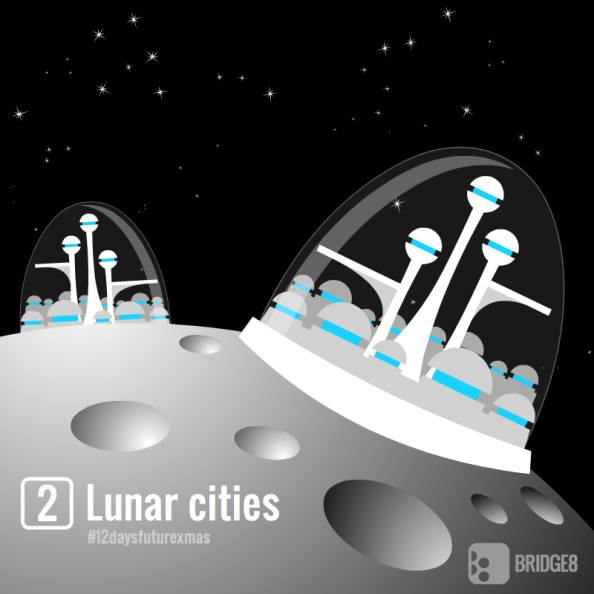
Here at the Finch and Pea, we love things that put a scientific spin on tradition, so this remake of The 12 Days of Christmas is right up our alley. Created by James Hutson of Australia-based Bridge8 and posted in 12 installments starting on Christmas day and running through the Feast of the Epiphany (January 5), the series considers visions of Christmases to come based on current directions in science.

Says Hutson, “This project grabs a fist full of the now; the promised but never came; and the far-flung maybe.” The mix of “near/likely and far/fictional” future scenarios includes advances in everything from genetic engineering (9 dodos de-extincted) to space exploration (6 ships a-jumping) to food science (3 lab-grown steaks). Hutson says he tries to balance “pop culture whimsy and nuts and bolts reality to produce engaging and understandable possible futures, so people take the time to think about it a little more and a little better than they usually would.”

12daysfuturexmas_2lunarcities

While there’s a touch of Jetsons-esque retro about Hutson’s signature style – yes, there are jetpacks – most of the “Days of (Future) Christmas” already bear a much greater resemblance to modern life than anything involving lords a-leaping and maids a-milking. You can read the whole thing here and follow James Hutson  and Bridge8 on twitter.

A new year of science travel

Happy New Year!

My first year here on The Finch and Pea has been a busy one. You can see all my science travel posts to date (and some posts by others – see further down this post) on the map below. However, as I alluded to last year, I’ve run out of science travel destinations that I’ve been to, so this year is going to be a little different.

First of all, as usual, if you would like to write a science-related travel guest post, get in touch! Ironically, I sometimes don’t have time for my weekly travel post because I travel too much, so any help to cover those weeks is very welcome.

Second, I’m going to be focusing on places I have NOT been, so if you have suggestions, throw them my way. They can be destinations that are themselves of scientific interest but possibly hard to get to (Mariana Trench, the moon), great science or natural history museums that we haven’t yet covered, destinations with an interesting scientific history (VLA, Galapagos), or combinations of the above. As you can see I’ve come up with some myself, but my imagination has limits.

Finally, we’re adding some destinations to the Have Science Will Travel Map: Destinations that may not have been covered on The Finch and Pea, but that appeared on other blogs.

Over the break I added these five posts/locations to the map:

Stuck in Antarctica’s Icy Grasp – One of Alok Jha’s updates from his time on the Akademik Shokalskiy while it was stuck in the ice. Actually, I believe that as of this time, the ship is still stuck, but Alok and others have been rescued by helicopter in the mean time.

Another one from Antarctica, but this one from a staff member at Palmer Station. “May you live in interesting times”.

Monarch Butterflies at the Ellwood Butterfly Grove in Goleta, California. This is a post from travel blog The Intrepid Tourist, and from the same blog I also added Akumal, Mexico, place of the sea turtles.

Last but not least, I added a post from the travel blog that my friend and former lab mate Roberta kept during the year she took a sabbatical from her work as a science teacher to literally travel around the world. One of her stops was Tanzania, where she volunteered with a group of teenagers to make them more aware of local wildlife conservation efforts. In All Good Things Must Come to an End she describes what they did in the programme, and how the kids went to the nature reserve for the very first time to finally see the wildlife they had been studying.

Know of any other science travel posts? Send them our way and we’ll consider them for the map. I’ll do some regular updates after we’ve added a few new ones.

Science Caturday: Stone Cold Logic

catmagnet

As much of the United States shivers through a wave of brutally cold temperatures, house cats around the country are reporting that they are quite comfy, thanks. Could the magnetic properties of kitties be responsible? Discuss. 

photo via Cheezburger.com