Really, who needs science when you’ve got dragons? But if you want both, check out this article by Marc Lallanilla all about the science of Game of Thrones, including handy explainers on incest, wildfire, and never-ending seasons.

Really, who needs science when you’ve got dragons? But if you want both, check out this article by Marc Lallanilla all about the science of Game of Thrones, including handy explainers on incest, wildfire, and never-ending seasons.

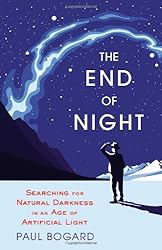 This week, Science for The People is peering out into the black to learn about deepest space, and our own night sky. They talk to Bad Astronomer Phil Plait, about recent measurements of gravity waves, and what they tell us about the birth of the Universe. They also speak to journalist and essayist Paul Bogard about his book “The End of Night: Searching for Natural Darkness in an Age of Artificial Light.” And Noisy Astronomer Nicole Gugliucci tells them about a project using citizen science to map the surface of the moon.

You know how the horizon makes a more or less straight line across every landscape? I saw a series of art photos of glaciers last night by Caleb Cain Marcus at the National Academy of Sciences that buck the convention. Although he’s shooting landscapes, Marcus messes around with the composition of his photographs so that he eliminates the horizon – you just get craggy bits of ice and then a big expanse of sky. As the NAS blurb about the show expresses it: “Freed from the horizon, a sense of scale is lost, altering one’s experience of a landscape. It is in this unfamiliar territory that Cain Marcus hopes viewers can fully experience the persona of ice.”
But here’s the weird thing: I saw this artwork just a few days after watching Cosmos, the episode where Neil DeGrasse Tyson pointed out that, because we’re on a round planet spinning through a constantly moving universe, that line that we see as the horizon isn’t actually there. The line is a lie.
So, in making his pictures of glaciers more abstract by eliminating the horizon, Marcus is actually making them more real. And I think I just blew my own mind.
You can see the show at NAS through July 18 or see more images on Marcus’ website.
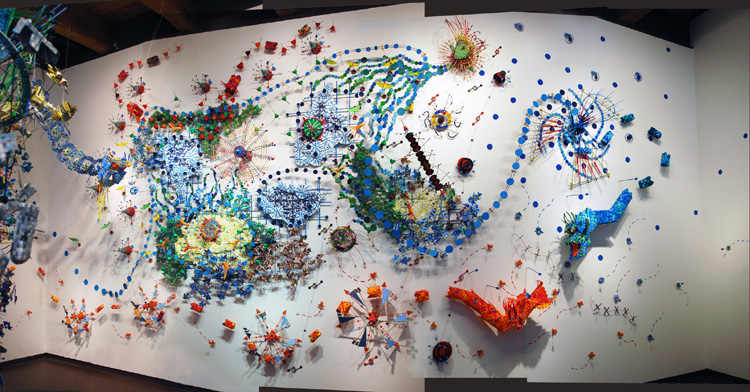
I’ve featured several artists here who incorporate weather data in their work, but nobody who does it with quite the mix of over-the-top exuberance and scientific rigor as Nathalie Miebach. As Miebach explains, “My work focuses on the intersection of art and science and the visual articulation of scientific observations. I translate scientific data related to astronomy, ecology and meteorology into woven sculptures.”
Yes, woven – the material basis of her art is basketweaving, a highly traditional form not usually used in data visualization.
Miebach hopes that her artwork expands the visual vocabulary of scientific data, moving far beyond charts and graphs. She says that science teachers were among the first to embrace her work.
“On one side, my work is very didactic, almost like a graph that tells exactly the relationship between variables, a very scientific representation. On the other, it’s a fanciful, magical, crazy expression of weather that still uses data as a source of material, but has crossed a boundary.” (source)
The piece shown above, part of a show called “Changing Waters” looks at the meteorological and oceanic interactions within the Gulf of Maine. Using data from NOAA and GOMOSS buoys within the Gulf of Maine, as well as weather stations along the coast, it explores the seasonal variations of marine life through a colorful swirl of carefully plotted pieces of weaving.
Some of Miebach’s more recent work has incorporated whirling structures that evoke the fairground rides destroyed by Superstorm Sandy, and her latest pieces are accompanied by original music, which is also based on weather and climate data.
You can see more of Nathalie Miebach’s artwork in a number of current and upcoming shows as well as at her website.
 It’s that time of year where I’m not sure anymore what is real or not. Are the Flaming Lips really releasing an album called Flaming Side of the Moon, to be played at the same time as Pink Floyd’s The Dark Side of the Moon, or is that an elaborate April Fool’s joke? The full stream is available, so it at least exists in some form.
The original Pink Floyd album is the subject of an interesting conspiracy theory, somewhat related to the idea of this new Flaming Lips album, called “Dark Side of the Rainbow”. Apparently if you play The Dark Side of the Moon album while watching The Wizard of Oz, the music synchs with the film. Psychologists have dismissed this theory on the basis of confirmation bias: viewers will remember the moments where the film and music are perfectly in synch, but not the moments where it doesn’t match.
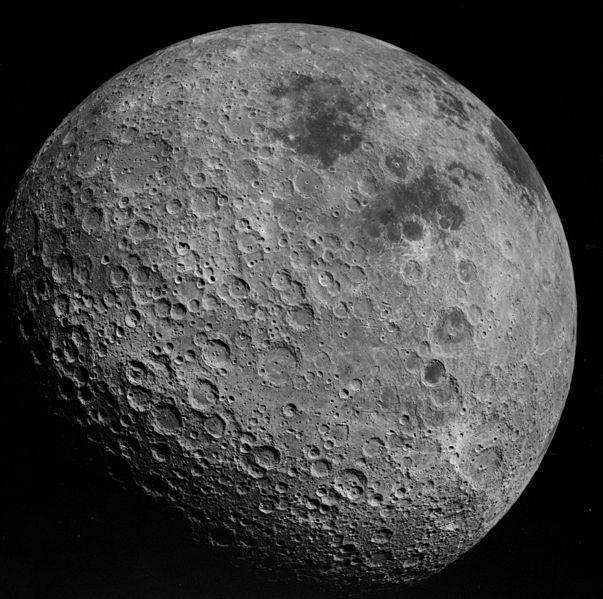
But no The Dark Side of the Moon conspiracy is as wild and wacky as those about the actual dark side of our Earth’s moon.
The moon always faces the Earth with the same side, so that we never really see the other side of it. It’s not literally dark – it receives light from the sun – but we just don’t see that side of the moon very often. The more accurate term, Pink Floyd albums aside, is “far side of the moon”. Continue reading “The Dark Side of the Moon”
 The Finch and Pea