The “poetry you find in science” in Cartarescu’s Blinding

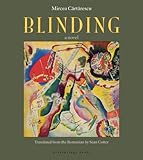
Romanian author Mircea Cartarescu’s massive novel Blinding is one of the best books I’ve read in a long time – and I’m only 80 pages in. It’s a dream autobiography/family history, heavily influenced by scientific ideas and metaphors. The author described his thinking to Bookforum:

It is the point at which science is unified with poetry, with geography, with mathematics, with religion, with everything you can imagine. Three quarters of the books I read are scientific books. I’m very fond of the poetry you find in science. I read a lot about subatomic physics, biology, entomology, the physiology of the brain, and so on. I’ve always thought that being alive is a great gift, one that should be explored.

If you like science in poetry or literature, this book is worth checking out.

The Art of Science: Cold, Hard Data in Warm, Soft Wood

Adrien Segal, Snow Water Equivalent, 2012
Adrien Segal, Snow Water Equivalent Cabinet, 2012

Data are hard. Snow is cold. And yet artist Adrien Segal chose wood, a warm, yielding material, to visualize snowpack data, to stunning effect.  This design of this remarkable, functional sculpture, Snow Water Equivalent Cabinet, is based on 31 years of snowpack measurements recorded by a SNOTEL sensor at Ebbetts Pass in California’s Sierra Nevada Mountains. The SNOTEL (snowpack telemetry) network, operated by the USDA’s National Water and Climate Center, calculates the amount of water contained in the snowpack of mountains in the western US. The data are used to forecast water supplies in the face of a changing climate.

Each drawer of the Snow Water Equivalent Cabinet represents one year of data. Segal explains:

“The sculpted plywood front is a three dimensional graph of the amount of water in the snow-pack at any given time during the water year, showing specifically the first snowfall, peak amount of water, and final snowmelt as changes occur from year to year. The size of each drawer is directly related to the amount of water in the snowpack, the smaller the drawer the less water stored, and the less storage space available in the drawer.”

The California-based artist says that her work integrates scientific research, data visualization, aesthetic interpretation, and materiality in an attempt to “to reconcile scientific conventions of reason and fact with an intuitive sensory experience.”

You can see more of Segal’s work at her website.

Travel round-up: Mysterious nature

I’ve added two new posts from other blogs to the travel map:

What makes a river sing the blues?
by Steve Caplan on Occam’s Corner
Steve visited Rio Celeste in Costa Rica. This bright blue river has confused scientists for years. The blue colour is only visible at the point where two rivers converge, and a study published last year offers an explanation for this interesting phenomenon. See Steve’s post for details.

OLYMPUS DIGITAL CAMERAEvery devil I meet becomes a friend of mine
by Matthew Francis on Galileo’s Pendulum
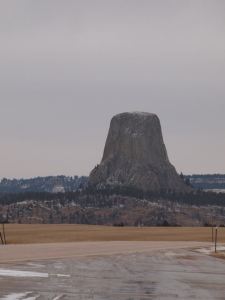
Matthew had a chance to see the Devil’s Tower volcanic formation in Wyoming. The structure was formed underground, but the surrounding soil has eroded over time. Matthew muses: “So, the Devils Tower we see today was born deep underground. To me, it’s a beautiful example of something that looks inexplicable, yet we can understand through science — yet the marvel of seeing it is undiminished by comprehension. Far from losing a sense of wonder, scientific knowledge leads us to greater wonder.”

Finally, this third link was a bit too complicated to add to the map: a Buzzfeed round-up of 22 destinations that “science nerds” need to see before they die. How many have you visited yet? We’ve only covered three of them on the Finch and Pea so far!


Devil’s Tower photo by Matthew Francis.

Mother’s Day Science Poem: Mitochondrial Mothers

Heid E. Erdrich’s “Seven Mothers” (2012)

(Originally posted here in August 2012, this poem is worth a read on Mother’s Day.)

Despite my experiences of crushing boredom studying cell trafficking pathways in grad school, there was no way I was going to just walk past a book of poems titled Cell Traffic without stopping. In this delightful book, poet Heid E. Erdrich mixes themes of genetics, motherhood, ancestry, and Native American mythology to produce poetry that feels very relevant in a day when we can read information about our ancestry from the text of our DNA.

Today’s Sunday Poem is “Seven Mothers.” The title refers to the seven major, maternally inherited mitochondrial haplogroups popularized by Bryan Sykes in The Seven Daughters of Eve. Since Sykes’ book was published, we have developed a greater ability to use genetic variation in our nuclear DNA to trace our ancestry, and mitochondrial DNA now plays less of a role in our efforts to understand human ancestry than it once did. But it’s hard to beat the impact of mitochondrial maternal ancestry on our imaginations. Continue reading “Mother’s Day Science Poem: Mitochondrial Mothers”

Science Caturday: Happy Mothers’ Day

lolcatforcefield