Science Caturday: Tourists Bring Unwanted Gifts

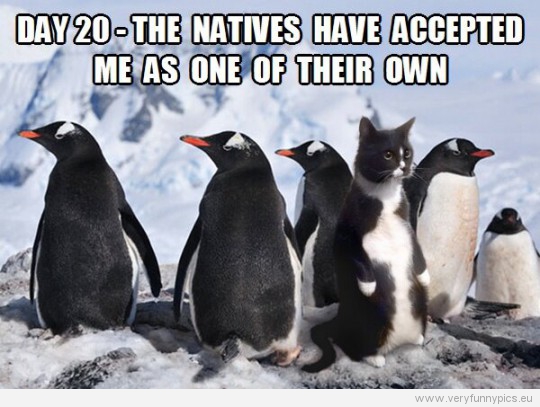
funny-picture-a-cat-amongst-penguins-day-20-the-natives-hav-accepted-me-as-one-of-their-own-540x407

Oh noooo, a new article in The Atlantic says that the huge increase in the numbers of visitors to Antarctica in recent years may be making the penguins sick.

A team led by Wray Grimaldi of the University of Otago in New Zealand found multiple infectious agents, including Salmonella and E. coli bacteria and West Nile virus in captive penguins dating back to 1947. A paper based on the team’s work published this month in the journal Polar Biology (paywall) reports that outbreaks of disease from those pathogens have killed thousands of penguins over the years.

I sure hope our intrepid polar explorer kitteh didn’t bring along any toxoplasmosis from home.

The Art of Science: A Tragic Beauty

Brandon Ballengee Collapse, 2012 mixed-media installation
Brandon Ballengee
Collapse, 2012
mixed-media installation

A must-see for sciart lovers, Brandon Ballengée’s installation Collapse is on display at the National Academy of Sciences in Washington, DC until March 20, 2015.

Collapse was created in 2012 in response to the devastating effects on the marine food chain following the 2010 BP Deepwater Horizon oil spill. Simple, beautiful and devastating, the installation consists of a pyramid of gallon jars containing hundreds of preserved fish and other aquatic organisms. Empty containers – and there are many – represent species in decline or those already lost the extinction. A written appendix gives details on all the species represented in Collapse.

In conjunction with the exhibition, the NAS will hold an evening event on Thursday, December 11, on the topic of Art and Ecology. Speakers include Brandon Ballengée, developmental biologist Benjamin Dubansky, Ariel Trahan of the Anacostia Watershed Society, and Kim Waddell, senior program officer of the NAS’s Gulf Research Program.  (More details here)

Science Caturday: Small Business Caturday

giardia


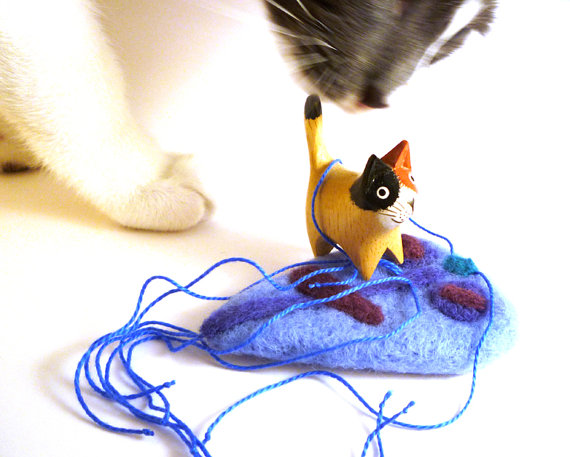
Today is Small Business Caturday, a day set aside for holiday shoppers to discover and support cat-owned businesses.  One of our favorites is Mycrobe Catnip, an etsy store devoted to creating geeky catnip toys that are equally irresistible to cats and science-obsessed humans. Mycrobe was started by Talia Jewell, a scientist who turned her felting hobby into a side business with the help of her feline companions. She makes catnip toys in the shapes of UFOs, fish, birds, insects and – coolest of all – microbes, including this amazing giardia parasite.  You can seriously indulge your feline companions with a Mycrobe Geeky Catnip Toy of the Month Club membership, which might include anything from bugs to rockets.

Pristine Beauty

MBanks-002_m

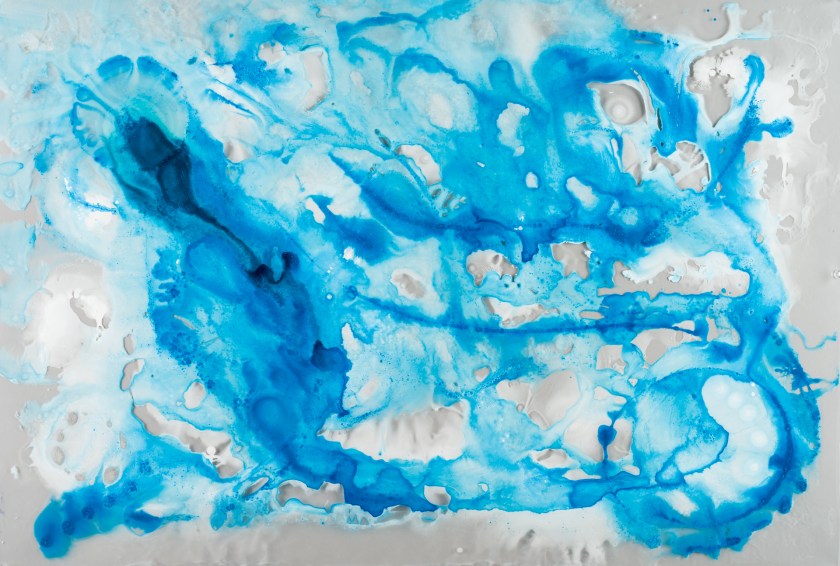
…the artworks have a pristine beauty, but warn of a polluted future.
Mark Jenkins writing about Voyage of Discovery in the Washington Post

Science Caturday: LOLCatCare

you may leave now

This week, tech giants Apple and Facebook announced that they would begin covering the cost of egg freezing for their employees, allowing female techies to put off childbearing until…some more convenient time, I guess. However, the fact remains that some employees will want to have kids, and Facebook’s new headquarters will provide daycare for dogs but not for children. Someone’s got to take care of the small humans! Luckily, I have devised an elegant solution that combines the best of the internet with real life: LOLCatCare™.

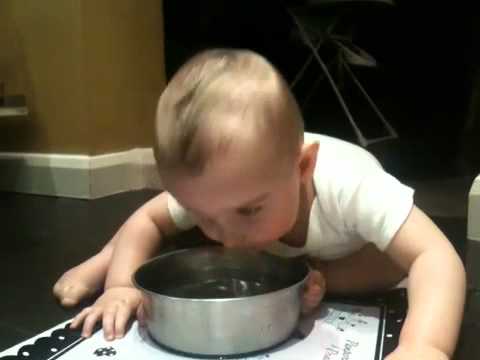
A crack team of cat nannies will care for the babies of Silicon Valley until they are old enough for preschool. Tasks such as feeding and changing babies, which are difficult for childcare workers without opposable thumbs, will be rendered unnecessary by training babies to eat and drink from bowls on the floor and use a litter box. Babies will gain key motor skills by chasing feathers and red dots. Blankets and boxes will be thoroughly investigated. Naptime, of course, will be led by top-level experts.

I see no way this plan can fail. You’re welcome, America. You’re welcome.