Science Caturday:Buzzed Off

regret

A report released this week by the US Environmental Protection Agency (EPA) showed a link between a major class of pesticides and harm to honeybees, but only when used on certain types of crops. The report showed that pesticides known as neonicotinoids posed a significant risk to honeybees when used on cotton plants and citrus trees but not when used on other big crops like corn and tobacco.

Both the pesticide manufacturer and anti-pesticide advocates were unhappy with the report, which failed to make a clear case for either continued use of neonicotinoids or an outright ban.

Neonicotinoids, chemicals that work on insects’ central nervous systems, have been the subject of intense debate in Europe, where several countries have enacted full or partial bans on their use.  Despite this, most scientific bee experts agree that neonicotinoids alone are not to blame for the problem of dwindling bee populations, although they may be a factor in some cases.

Entomologist May Berenbaum of the University of Illinois noted that the health of honeybees, agriculture’s top pollinator, is a complex puzzle that includes climate, food for bees, parasites, disease and the way different pesticides and fungicides interact. “People would like a nice simple story with a guy in a black hat as the bad guy, but it’s complicated.”

Our science kitteh, on the other hand, seems to have identified a villain. Oh, dear.


Happy Holidays!


From all of us at The Finch & Pea, we wish you and yours a happy holiday season, whichever holiday (or lack thereof) you choose to celebrate.

Art of Science: Joe Black’s Ways of Seeing

joe-black-mosaic-01
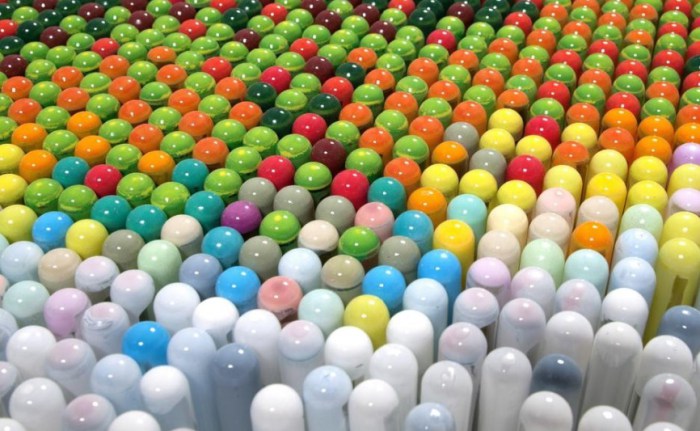
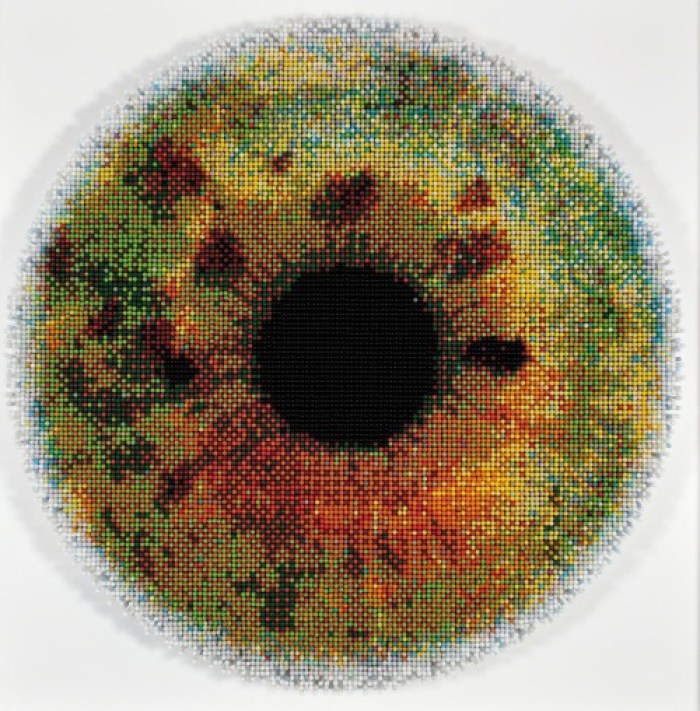
Joe Black, Ways of Seeing, 2013, hand-painted test tubes

UK-based artist Joe Black uses thousands of small objects – ranging from toy soldiers to plastic flowers to chess pieces – to create his large scale mosaic works. Black has made many portraits of famous people, including David Bowie and Barack Obama. But my favorite is Ways of Seeing, a huge eyeball made of 15,000 painted test tubes.

Black says that while he will use practically anything that is small enough to build large images and create vast tonal effects, he is careful to select a medium that not only meets those requirements but is also relevant to the subject he’s depicting.  The connections between the image of eye, the scientific connotations of the test tubes and the idea of art and science as ways of seeing are all fairly clear. His reasons for also building his portrait of Bowie out of test tubes remain slightly more obscure.

You can see more of Joe Black’s work at his website.

joe-black-mosaic-02
Detail view of Ways of Seeing


Sciart Caturday

teapotscarf

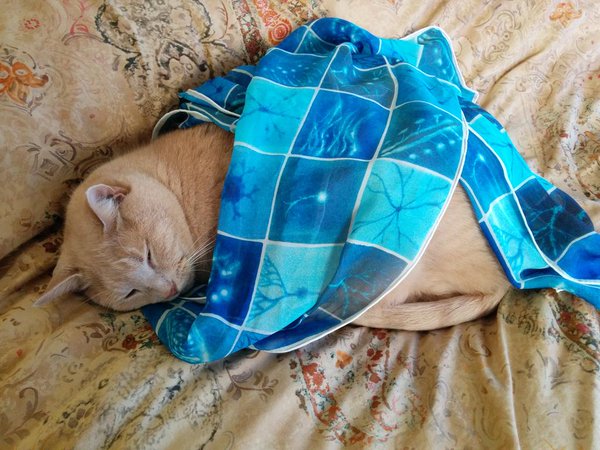
Teh science kittehs have a week off while I sell art at DC’s Downtown Holiday Market. Only Teapot the kitteh is still working, modeling one of my science scarves. If your cat (or hoomin) would like one too, you can find them here.


Science Caturday: Editing Teh Hoomins

minoredits

Scientists, journalists and policy-makers gathered in Washington, DC this week for the International Summit on Human Gene Editing at the National Academies of Science. The meeting, which NAS co-hosted with the Chinese Academy of Sciences and the U.K.’s Royal Society, was billed as a global discussion of “the scientific, ethical, and governance issues associated with human gene-editing research.” In particular, the summit focused on the implications of the emergence of CRISPR, a new gene-editing technique which is cheaper, more versatile and more precise than any currently in use.

This topic is a little complex for cats, so we’ll let the experts help out. Ed Yong, in The Atlantic, outlines the basics of the technique and what scientists are working on to make it even better, while Tina Saey writes in Science News about the significant safety and ethical issues and the guidelines in place for further development.

While scientists work on the fancy new stuff, cats will continue to use their traditional techniques for editing your jeans – shedding, clawing and nomming.