The Art of Science: Consuming Technology

Public Feelings, 2012

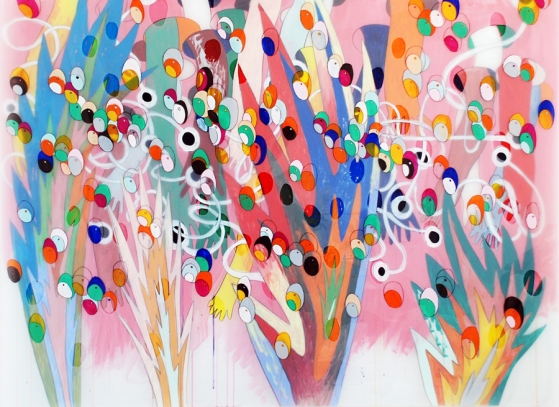
Eat All You Can is the title of a show of paintings by UK-based South Korean artist Ha Young Kim, currently on display at London’s Hoxton Art Gallery through October 4th. Kim’s colorful paintings, often in acrylic on translucent drafting film, focus on humans as consumers, of food, goods, “public emotions” and especially technology. Continue reading “The Art of Science: Consuming Technology”
The Art of Science: Starry Night

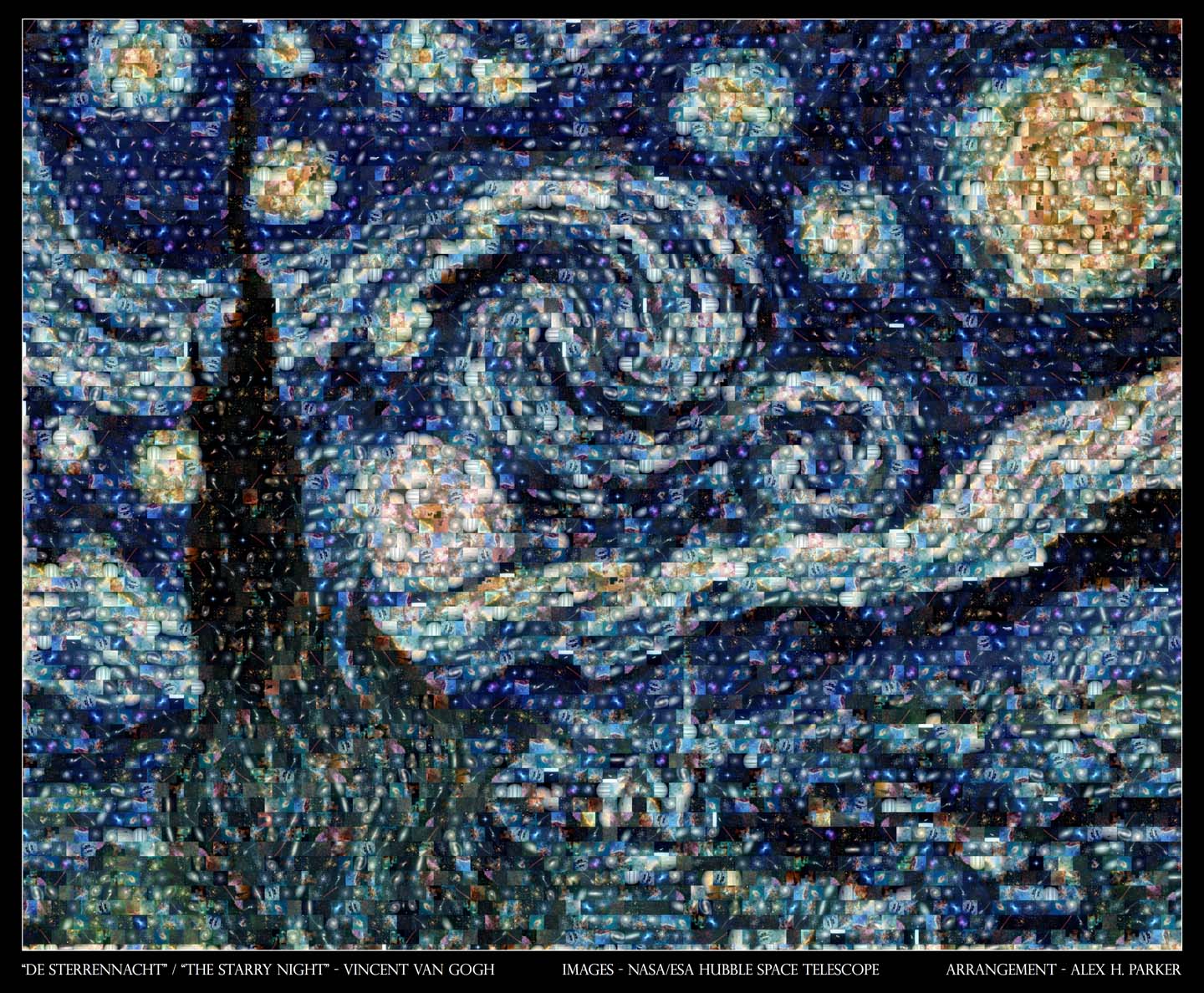
Alex Parker is a postdoctoral research fellow at the Harvard-Smithsonian Center for Astrophysics, focusing on the formation and evolution of planetary systems. His work involves a lot of starry nights. So when cloudy weather gave him a stretch of downtime at the observatory, it seemed like a fun idea to transform some of the stunning images from the Hubble Space Telescope into an homage to Vincent Van Gogh’s famous painting. Continue reading “The Art of Science: Starry Night”

The Art of Science: Courage Unmasked

Courage Unmasked, an art exhibit at the Katzen Art Center in Washington, DC, consists of 59 sculptures incorporating radiation masks previously worn by head and neck cancer patients.  Each radiation mask, made of plastic mesh, is heated and fitted individually to the patient prior to treatment so the head and neck can remain perfectly still, allowing the radiation to be precisely directed and avoid damage to healthy tissue.  Not surprisingly, many patients who have used these masks never want to see them again. “Some people run over them with cars,” noted artist Jessica Beels, one of the organizers of the exhibit.  But some donated theirs to be turned into works of art, which in turn will be auctioned off to support other cancer patients. Continue reading “The Art of Science: Courage Unmasked”

The Art of Science: Shapeshifter

Brian Jungen is a Canadian artist of mixed European and Native background.  He often uses everyday objects such as sporting goods, shoes and luggage to create new versions of iconic cultural objects, such as Native American masks, totem poles and fossil skeletons. This piece, Shapeshifter (2000), is one of a series of monumental whale skeleton sculptures made of cheap acrylic lawn chairs. Continue reading “The Art of Science: Shapeshifter”

The Art of Science: Linger a Little Longer


Designer Jay Watson calls this deceptively simple table and bench set “Linger a Little Longer”. The thermochromic finish of the table and benches responds to the heat of the body parts or dishes placed on it, leaving a “watermark” on the particular point of contact, a fleeting echo of the enjoyment of food and company, of the evanescent pleasures of life.

Watson used a technology, sometimes called hypercolor, that has been around for decades, and updated it by using it, not in tacky t-shirts, but in quietly elegant pieces of furniture…with a secret.

More information at Jay Watson’s website.