The Art of Science: Protect-a-Bear Workshop

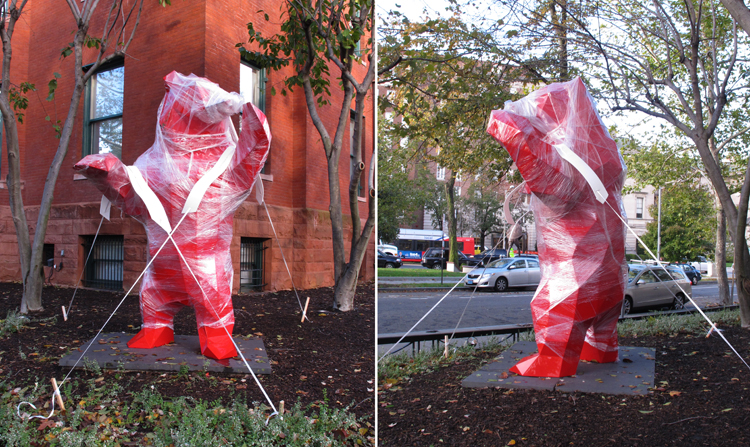
Outdoor public art is built and installed to withstand a tremendous beating from the elements, which is why you rarely see a statue topple even in the worst storms.  But this shiny red resin bear is only a temporary visitor to Washington, DC, so its hosts at the Phillips Collection were understandably concerned for its safety in the face of an expected hurricane earlier this week.

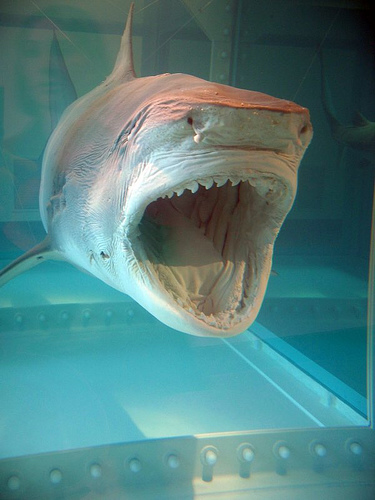
So they did some old-fashioned storm-proofing, covering The Bear (by Xavier Veilhan, whose steel shark was featured here a few weeks ago) with sheets of plastic and tying it with ropes attached to stakes in the ground.

Fortunately, although the storm produced heavy rain and strong winds, The Bear came through it unscathed and is currently standing guard at the intersection of 16th and Q Streets, NW.  Veilhan’s show at the Phillips opens on November 3 and runs through February 10, 2013.

Photos by Sarah Osborne Bender via the Phillips Collection Blog

The Art of Science: Two Ways of Looking at an Earthquake

Earthquakes are dramatic and frightening events. They literally shake our foundations, and large quakes can cause massive damage and disruption, revealing faults in societies, not just in the earth, as seen recently in China, Haiti and Japan. So it’s not surprising that artists are drawn to earthquakes as both an inspiration and a metaphor.

Luke Jerram, an English artist who mainly works in glass and often explores scientific themes in his work, made this Tohoku Earthquake Sculpture to commemorate the devastating 2011 earthquake and tsunami in Japan. Continue reading “The Art of Science: Two Ways of Looking at an Earthquake”

The Art of Science: Madame Wu and the Violation of Parity

Ele Willoughby (aka Minouette) calls herself a “marine geophysicist by day and printmaker by night”. She carries over this unusual combination into her artwork, which often features concepts and key figures from the history of science.

For example, she explains, “In physics, if there’s a bias which is commonly forgiven (and viewed as harmless, or even right), it’s beauty. I bet that wasn’t what you expected, but it’s true…One thing physicists invariably count as ‘beautiful’ is symmetry. The concept is invaluable in physics; symmetries are very powerful tools for figuring things out….Each symmetry leads to a conservation law.” Continue reading “The Art of Science: Madame Wu and the Violation of Parity”

The Art of Science: Put a Shark on It

Sharks are scary. The apex predators of the ocean, they have giant mouths with rows of pointed teeth, they can grow to a great size, and they never stop moving. And yet, according to the National Oceanic and Atmospheric Administration (NOAA), more people are killed by electrocution by Christmas lights than by shark attacks.  (source) So our fear of sharks isn’t rational, it’s cultural.  Artists, take note: If fear is what you’re going for, put a shark on it. Continue reading “The Art of Science: Put a Shark on It”

The Art of Science: Low-Carbon Footprints

Simple and lovely in both concept and execution, this “green pedestrian crossing” project created meaningful interactive art with a message. A joint project of DDB China and The China Environmental Protection Foundation, this outdoor campaign used foot power to make a point about the environmental benefits of walking versus driving. Huge white canvases imprinted with a bare tree were placed across 132 crosswalks in 15 Chinese cities. Pedestrians walked across a pad filled with eco-friendly green paint and then across the canvas, leaving a trail of green footprints. Over time, the trees were filled with footprint “leaves”, a reminder that walking instead of driving helps trees, and the whole environment, to thrive.  DDB estimated that over 3 million people passed through the installations, and the canvases were later hung as billboards in several cities.

More photos and a video are at This is Colossal