Science Caturday: Thar She Blows (Up)

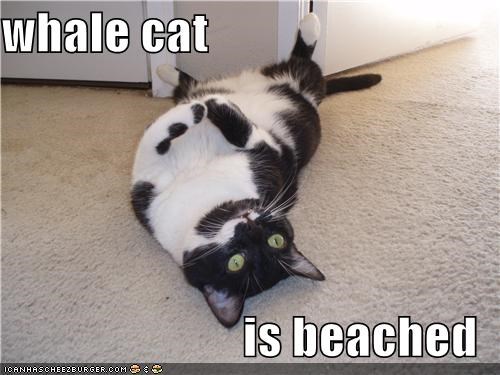
whalecat

The biggest science story online this week was very big indeed.   About 60 tons, in fact.  The gigantic carcass of a blue whale has washed up onto the beach in Trout River, Newfoundland, and some fear it could explode. The whale carcass, which is estimated to be 81 feet long, has been swelling for several days due to the buildup of methane gas inside the body. And yes, as many of us learned this week by watching disgusting but riveting videos, a dead whale can explode.

Luckily, our scicomm friends are on the case.  Marine ecologist Andrew David Thaler, aka Southern Fried Scientist, set up a website called HasTheWhaleExplodedYet.com,  which instantly went viral.

And,  to prove that even a swollen dead whale can be a teaching tool, Aatish Bhatia wrote this terrific post  using physics to work out the velocity of guts spewing from an exploding whale.


Science Caturday: Kitty Cocktails

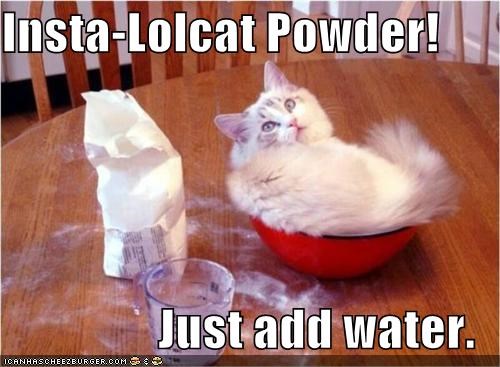
powdercat

Boozy drinks that you can mix like instant lemonade? The internet was abuzz this week with reports that a company called Lipsmark had received US government approval to sell a form of “powdered alcohol” called Palcohol. Shortly after the company’s announcement, however, the Treasury Department’s  Alcohol and Tobacco Tax and Trade Bureau said that it was withdrawing its approval.

So while we can’t immediately try out a powdered mojito, we can do as the internet folk do, and talk about it. Apparently, the idea of powdered booze has been around for decades, and versions of it are already for sale in parts of Europe and Asia.

Larry Greenemeier at Scientific American talks about the concept and the chemistry with chemist and blogger See Arr Oh, who notes that the alcohol isn’t so much powdered as encapsulated in a form of sugar. Paul Adams at Popular Science provides instructions on making your own “fluffy” powdered booze. And everybody everywhere warns you not to snort it.

The Finch & Pea is a fairly traditional pub, so we’re planning to stick with liquid alcohol for the forseeable future. We’re more interested in the product shown above, which could allow people to take lolcats on plane trips or bike rides, or even send them through the mail. This exciting development could bring a whole new meaning to Chemistry Cat.

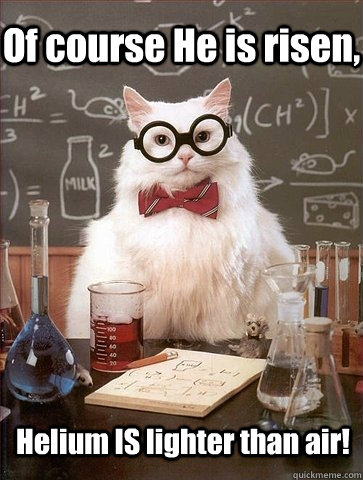
Science Caturday: Happy Easter

heisrisen

Image via quickmeme.com

Science Caturday: The Cat and the Fancy Fiddle

Invisible_Violin

This week’s mythbusting prize goes to researcher Claudia Fritz of the Sorbonne, who led two studies, both of which revealed that despite their mystique, antique “master” violins – even Stradivari – produce no better sound quality than modern instruments.

In a piece in National Geographic  Phenomena, Ed Yong walks readers through the stages of Fritz’s research, involving a number of different testing protocols, and her findings, which ultimately indicated that professional violinists found no difference in sound quality between old instruments and new.

Of course, our classically-trained kitty will tell you that her particular invisible violin sounds much better than that screeching monstrosity next door.

lolcat via Cheezburger.com


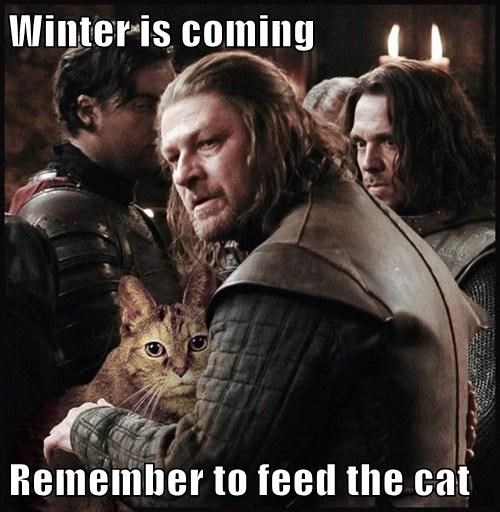
Science Caturday: Game of Thrones Edition

wintercat2

Really, who needs science when you’ve got dragons? But if you want both, check out this article by Marc Lallanilla all about the science of Game of Thrones, including handy explainers on incest, wildfire, and never-ending seasons.