The Ontario Science Centre

I lived in Toronto for years before I finally made it to the Ontario Science Centre. First I didn’t know it existed, then I didn’t know where it was, and then it just took me forever to find time to travel that far on the subway and bus. It’s not downtown, where everything else is, but in a residential neighbourhood – and I never needed to be there.
800px-0OSC_Sept23_06

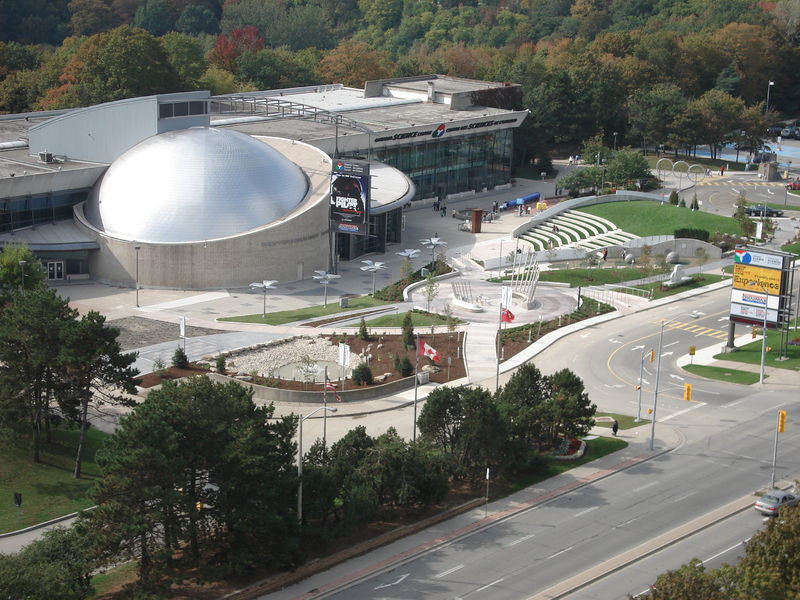
But when I did finally make it, it was awesome, and I made a point of coming back a few times. The science centre was built in the 1960s, and uses its surroundings really well. It’s on a hill, with some sections at the top, and others further downhill. The parts are connected with hallways that vaguely remind me equally of a spaceship and my elementary school. It’s difficult to explain…

The hillside location gives the science centre a lot of space to do interesting things. There’s obviously an IMAX theatre, because that’s what all science centres have these days.

Outside the entrance is a giant hydraulaphone, designed by local inventor Steve Mann. It’s a fountain that makes music, and you control it by closing particular water streams.

800px-Hydraulophone_at_Ontario_Science_Centre_imgp4940rp

There’s also an entire section where I’ve never been because I’m not allowed inside: adults can only enter it if they’re accompanied by a child, and I didn’t know any children of the right age.

It’s a bit hard to find any information on the permanent exhibits on the site (it’s here – took me a while), because it’s all focused on themes and events. The museum hosts rotating exhibits, and they seem to be getting all the attention. For example, I saw Body Worlds here a couple of years ago.

Speaking of moving exhibits, the Ontario Science Centre rents out some of its own original exhibitions. Among the collection of exhibits they offer to other science centres is my favourite OSC exhibit, about living on Mars! I went there with friends, and we had a great time practicing our survival skills. There was one display where you had to try to get a solar panel to produce as much energy as possible, using only a bunch of random objects. After lots of puzzling, we managed to get it up to about 99%, woo!

Another fun hands-on part of the museum is the Weston Family Innovation Centre, although, like in other popular parts of the science centre, things often start to move away from science. I’m not sure how I feel about that, especially considering this part gets a lot of media and attention, and is easy to find on the site. I know a lot of science museums are branching out, but it would be nice to also focus on the science exhibits.

Shelley loves intestines

Natural History Museum in London

ROARAfter some exotic trips, it’s time to visit a museum again. The Natural History Museum in London is right next door from the Science Museum. They’re very different, though. While the Science Museum is focussed on technology and engineering – lots of man-made scientific work – the Natural History Museum is all about, well, natural history.

If you’re going to the NHM during a school vacation, and want to see dinosaurs, you need to plan well ahead. Arrive at the museum when it opens, and as soon as you’re in, immediately line up for the dino exhibit. I can’t remember who gave me that tip when I went a few years ago, but thanks! Later in the day the dino-line was the length of several diplodocus’ necks. At the moment, the museum is offering free online advance tickets to see the dinosaurs gallery. So, again, plan ahead if you want to see dinos.

It’s well worth it: the dino gallery is very elaborate, and you get to walk around a lot of the skeletons. They’re displayed high and low in the room, and you can see them from all angles.

Continue reading “Natural History Museum in London”

Over Mountain, Under Mountain

Eva is busy being traveled to this week. So, I am taking on the travel guide duties. Apologies in advance.

Recently, we took our family up to Boone, NC. Our daughters experienced Grandfather Mountain, including an animal park that provides a home to individuals from indigenous species that cannot live in the wild (usually the fault of thoughtless humans). They also got their first experience in natural caverns at Linville Caverns.

This slideshow requires JavaScript.

We also spent hours cruising the Blue Ridge Parkway while small children napped, but I don’t have pictures of that due to making sure I did not drive off the edge of mountains. This tweet was slightly dishonest in its time frame. I wrote it after the car had come to a full and complete stop.

You can follow all our science-y travels on the Have Science Will Travel map.Screen Shot 2013-05-20 at 9.59.08 PM

Whale watching near Tadoussac

Zodiac boat
Zodiac boat

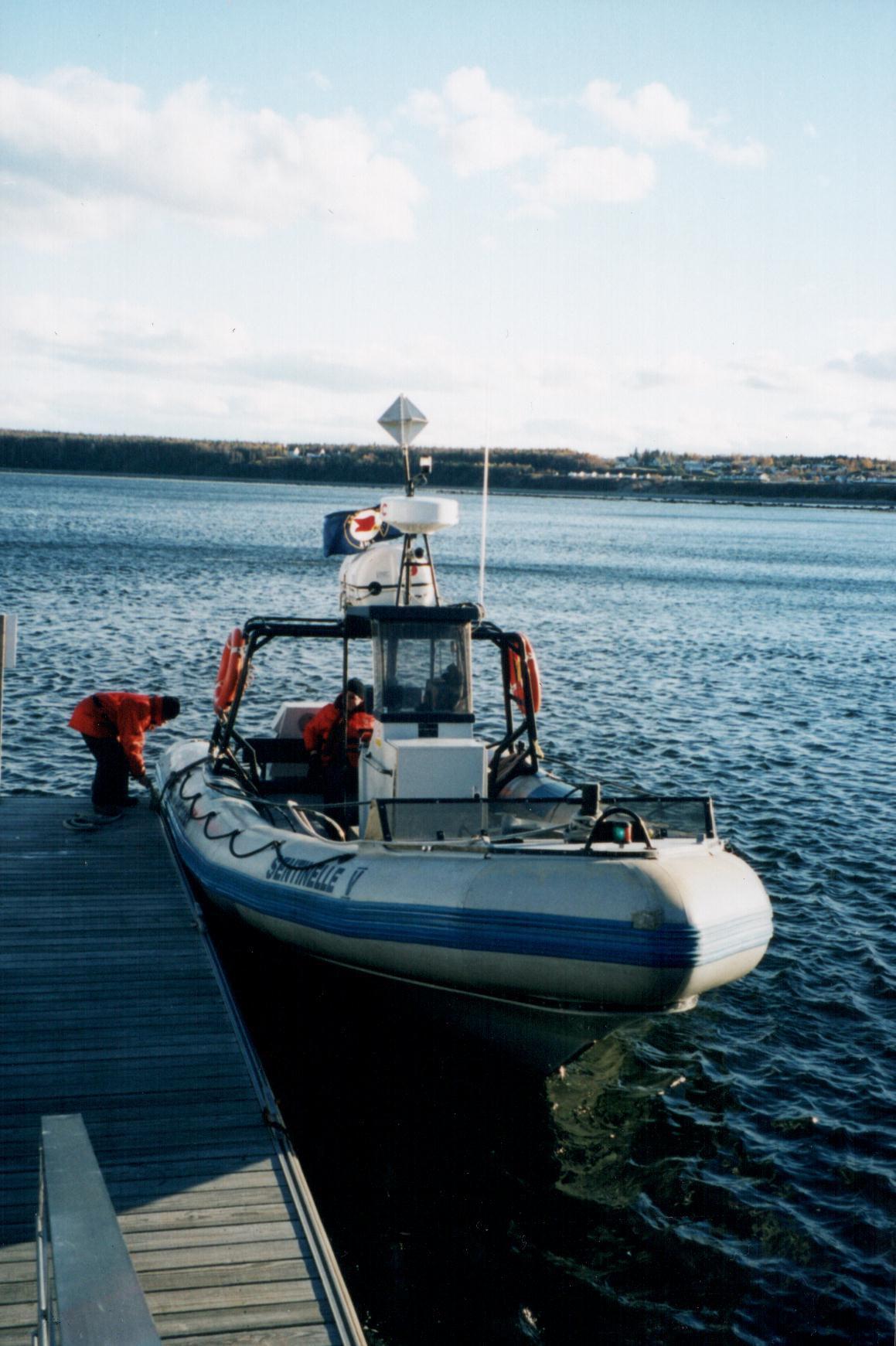
When the weather is warm enough – between May and October – whales will swim from the North Atlantic into the Gulf of St Lawrence, and upstream into the St Lawrence river. They get about as far as Tadoussac. At this point, the river is still very wide. Wide enough even for blue whales.

When it gets colder, the whales return to the ocean, but from May until October, Tadoussac is host to whales – and several companies stationed there organise whale watching trips.

I started a 4-month lab project in Quebec City in October 2000, so at the very end of whale season some other Dutch students and I went on a day trip to Tadoussac. Continue reading “Whale watching near Tadoussac”

The Hunterian Museum

Hunterian_Museum1London is old and full of dead people. Most of them are out of sight, decomposing under ground. Some are not. Some are on display for all to see — or at least parts of them are. The most famous visible dead person is the philosopher Jeremy Bentham, whose bones, padded with clothes, and topped with a wax replica of his head, sit in a display case at University College London.

Even more dead body parts can be found at the Hunterian Museum of the Royal College of Surgeons, which is celebrating its 200th birthday this year. That’s two centuries of collecting, preserving, and displaying skulls, bones, limbs, hands, and various other organs.

The museum started out as the collection of surgeon John Hunter. He’s one of the founders of modern day surgery, but his Wikipedia page also highlights one of his mistakes: he inoculated himself with gonorrhea in an experiment – no wait, that’s not yet the mistake! –  but didn’t realize the sample was contaminated with syphilis as well. When he contracted both diseases, he assumed they were both the same, and set back our knowledge of venereal diseases a few years. Oops.

As a surgeon, he also made and collected thousands of preparations of plant and animal species, to learn more about the natural world. A lot of his samples were of diseased or malformed human body parts, which allowed him and others to study these conditions.

Hunterian_Collection

A controversial centrepiece of the collection is the skeleton of 18th century giant Charles Byrne. Afraid of being used for medical experiments, Byrne had requested to be buried at sea, but when he died, John Hunter bribed a member of the funeral party to steal Byrne’s body. Now his skeleton stands in the Hunterian.

If you’re in London, you should definitely check out this collection, but the museum also has a lot of information on their site, including this video made for their bicentennial celebrations:

Images: Woodcut by Sheperd and Radclyffe [Public domain], via Wikimedia Commons and Hunterian Collection by Paul Dean (CC-BY-SA)