I’ll Trade You an Evolutionary Theory for Your Creationism

Mixed emotions over PZ Myers’ condescending response to a 12-year-old child‘s email supporting creationism[1], reminded of a very interesting conversation I had with my father at a dinner this holiday season. Lemons and lemonade, people.

During our conversational meanderings, we touched on the debate between creationism[2] and evolution. We did not directly discuss the political/social issues surrounding the teaching of evolution in schools[3].  Rather, we discussed the difficulty of convincing individuals that evolution is right and creationism is wrong. Continue reading “I’ll Trade You an Evolutionary Theory for Your Creationism”

Sci-fi’s clumsy, mawkish Golden Age

Author Jonathan Lethem has an apt description of science fiction in the 40’s and 50’s (PDF):

At the time [Philip Dick] entered the field, science fiction was preoccupied with genuine scientific developments, space exploration boosterism, and a super- rational cognition. Where everyone else was writing about extrapolation and thinking hard about real possibilities, Dick was attuned to the unconscious, the irrational, the paranoiac, the impulsive. His stories had a wildly hallucinatory nature that he treated as if it were rational.

Now, the stories of the other science fiction writers were not as rational as they claim. They were quite in the grip of a fabulating imagination or wish fulfillment. They were writing fairy tales more than they acknowledge. But Dick engaged in the most direct and distinctive way with the undertow of terror and the irrational in contemporary technological society. That’s why science fiction was important to begin with, because it addressed the fact that we were living in a technocratic age when traditional arts, literary and otherwise, didn’t have much to say on this and didn’t find a lot of vocabulary for acknowledging the increasing rate of change and what it did to the experience of ordinary life. Science fiction in its clumsy, mawkish, embarrassing way was taking the bull by the horns.

This is along the lines of what I was getting at in my post on John Wyndham.
Continue reading “Sci-fi’s clumsy, mawkish Golden Age”

Sometimes I do not enjoy being right

I did not see this article until I had drafted, edited, and posted my piece on Airport Body Scanners. Included in that piece was a speculative note (note 2; read the notes people) about the disconnect between “our” definition of a successful attack and the definition of a “successful” attack by terror networks.

So much for speculation. It turns out that “our” definition is not “their” definition. In fact, Al Qaeda is using what we would call a failed “attack” as an example of a successful attack:

Al Qaeda’s choice of a demonstration was to use parcel bombs (called Operation Hemorrhage — a classic name for a systems disruption attack).  These low cost parcel bombs, were inserted into the international air mail system to generate a security response by western governments.  It worked.  The global security response to this new threat was massive. –John Hood

#IAmSpartacus

I’m wondering if the folks participating in the #IAmSpartacus protest of the “Twitter Joke Trial” remember that the original* “I am Spartacus” protesters were all crucified for their trouble.

*Incidentally, for similar reasons, I have no interest in running a marathon, as the original Marathon-er (Pheidippides) died after running a “marathon” from the battlefield (at Marathon) to Athens.

House Republican Science Agenda

Oh boy:

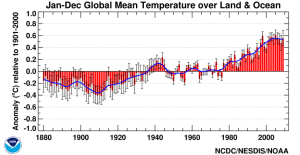
Issa’s priorities are, to an astonishing degree, representative of the new Republican House majority. Last year, when John Boehner, of Ohio, the incoming House Speaker, was asked by ABC’s George Stephanopoulos about his party’s plans to address climate change, he had this to say: “The idea that carbon dioxide is a carcinogen, that it is harmful to our environment, is almost comical.” John Shimkus, of Illinois, is one of four members now vying for the chairmanship of the House Committee on Energy and Commerce. At a congressional hearing in 2009, he dismissed the dangers of climate change by quoting Genesis 8:22: “As long as the earth endures, seedtime and harvest, cold and heat, summer and winter, day and night will never cease.” He added, “I believe that’s the infallible word of God, and that’s the way it’s going to be for His creation.” Another contender for the Energy Committee post, Joe Barton, of Texas—who is one of the House’s top recipients of contributions from the oil-and-gas industry—argues that CO2 emissions have nothing to do with climate change, and, in any event, people will just adapt. “When it rains, we find shelter,” he has said. “When it’s hot, we get shade. When it’s cold, we find a warm place to stay.” (Barton is perhaps best known for the apology he offered, last June, to the C.E.O. of BP, Tony Hayward, for what he described as a “shakedown” of the company by the Obama Administration.)

See “Uncomfortable Climate” at the New Yorker.

Apparently the position of chair of the House Committee on Energy and Commerce goes to the Representative who can deny the most science.