

 This Science for the People, we’re digging into a tale of intrigue that may have changed the course of physics research in the 20th century. We’ll spend the hour with Frank Close, Professor of Physics at the University of Oxford and Fellow of Exeter College, Oxford, talking about his book Half-Life: The Divided Life of Bruno Pontecorvo, Physicist or Spy. We’ll learn about Pontecorvo’s groundbreaking career in particle physics, his defection to the Soviet Union, and the accusations that he traded nuclear secrets at the height of the Cold War.
Category: Follies of the Human Condition
Science for the People: Happy People
 This week Science for the People is exploring what science can tell us about happiness. We’ll speak to John Helliwell, Co-Director of the Canadian Institute for Advanced Research (CIFAR) Programme on Social Interactions, Identity, and Well-Being, about the World Happiness Report, a global project that uses tools from economics, psychology, health statistics and more to study the happiness of people and nations. And we’ll speak to journalist Michael Booth about his book The Almost Nearly Perfect People: Behind the Myth of the Scandinavian Utopia.
*Josh provides research & social media help to Science for the People and is, therefore, completely biased.
You can’t win ’em all: My (unpublished) letter to PNAS re Hiring Bias Study
First published at Marie-Claire Shanahan’s personal blog, Boundary Vision, on 1 July 2015.
A few months ago I wrote a blog post in response to Williams and Ceci’s paper in the Proceedings of the National Academy of Science: National hiring experiments reveal 2: 1 faculty preference for women on STEM tenure track. I was concerned about the way that the findings were interpreted, generalized and compared to the wider literature. In the media comments that followed their piece, Williams and Ceci were very clear, however, that they felt that critics of the paper were being unfair and unscholarly. I didn’t agree and I wanted to ensure that genuine scholarly concerns were discussed not only in a blogged and public venue but also through traditional channels. So I wrote a letter to the editor, expressing the concerns raised in my blog post.
I think Rosie Redfield’s dual work in criticizing NASA’s arsenic life paper both on her blog and through a letter to Science, for example, is a very important model. High visibility science, reported in large media venues, often doesn’t receive public critique. People may write letters to the editor or complain to each other at conferences, but too often that critique is not available to most of the people who have read about a story in the news. Or it is only available so long after the initial results are reported that it has little impact on how that science is understood publicly. As I’ve written before, the back channels of criticism of cold fusion were quickly refuting the findings, but those of us reading about it on the sidelines were left out of that conversation for a long time. Blogged commentary and social media responses are a very important way of making all of science–including the messy processes that go into building scientific consensus about a topic–available.
The editors of PNAS weren’t entirely moved by my letter and declined to publish it. The letter and the editor’s comment are below. Even though it wasn’t published, I’m still happy to have worked to express my concerns both publicly here and through the more formal channels of the journal. This is an important model for scholarly critique, and I would do it again in heartbeat.
Editor’s Remarks to Author:
While interesting we do not feel this adds weight to the discussion.
Lack of hiring bias in STEM? Interpretive caution needed
The recent article by Williams and Ceci [1] addresses an important issue: identifying precisely where women leave or are shut out of scientific careers. The results of their study suggest that when hypothetical faculty candidates are identical except for gender, women may be favored at the point of hiring. Within the constraints of experimental research of this type, their study addresses a meaningful and specific literature gap. In a context like this, however, where findings will contribute (and are explicitly intended to contribute) to public discourse and policy making, the interpretations of the evidence and the implications that are drawn are of at least equal importance. So it is especially troubling that, in this article, the interpretations stretch well beyond the experimental evidence.
The experiment is framed with two base assumptions: that hiring bias is the most prominent explanation for women’s underrepresentation and that fear of hiring bias is a key motivator for women to withdraw from seeking tenure-track positions; neither is compellingly supported. On the latter assumption, no evidence is provided that hiring bias is a central worry for women despite claims such as “One reason (for fewer applicants) may be omnipresent discouraging messages about sexism in hiring”. In reference to the former claim (“The underrepresentation of women…is typically attributed, both in scientific literature and in the media, to sexist hiring”) the evidence provided is contradictory and weak. Of all of the literature they cite in support of this claim only one study [2] examines this type of hiring bias. Sheltzer and Smith [3], for example, examined the employees of elite labs and found fewer women employed there. They, however, are appropriately tentative in their interpretation saying explicitly that they have no evidence to suggest or negate hiring bias and they propose multifactorial explanations for their observations. Similarly, the 2010 American Association of University Women report “Why so Few? Women in Science, Technology, Engineering, and Mathematics” [4] is used to support the claim that “numerous blue ribbon panels … have concluded that implicit, and sometimes explicit, attitudes pervade the hiring process“; but on hiring bias, which it addresses only briefly, the report references the same National Research Council (2010) report that the authors cite to support their own findings. This report concludes that women declining to apply for tenure track jobs is a more pressing issue than bias at the point of hiring.
Gender-based hiring bias, as a factor isolated from the many other day-to-day experiences that influence women’s participation and progression, is not the dominant explanation for women’s underrepresentation in the literature. That hiring bias may not (under experimental conditions) be a barrier to women on the tenure track is therefore just one of many contributions to understanding a complex phenomenon. There is little to support the far-reaching conclusion that, as a result of these findings, this “is a propitious time for women launching careers in academic science”. A great deal more nuance and tentativeness in interpretation would have been appropriate.
[1] Williams WM, Ceci SJ (2015) National hiring experiments reveal 2: 1 faculty preference for women on STEM tenure track. Proc Natl Acad Sci USA 112(17): 5360-5365.
[2] Moss-Racusin CA, Dovidio JF, Brescoll VL, Graham MJ, Handelsman J (2012). Science faculty’s subtle gender biases favor male students. Proc Natl Acad Sci USA 109(41): 16474-16479.
[3] Sheltzer JM, Smith JC (2014) Elite male faculty in the life sciences employ fewer women. Proc Natl Acad Sci USA 111(28):10107–10112.
[4] Hill C, Corbett C, St. Rose A (2010) Why so Few? Women in Science, Technology, Engineering, and Mathematics (American Association of University Women, Washington, DC).
[5] National Research Council (2010) Gender Differences at Critical Transitions in the Careers of Science, Engineering and Mathematics Faculty (National Academies Press, Washington, DC).
Science for the People: High Price [Rerun]

 This week, Science for the People is revisiting our look at the science and policy of treating drug addiction. We were joined by psychology professor and researcher Carl Hart to talk about his book “High Price: A Neuroscientist’s Journey of Self-Discovery That Challenges Everything You Know About Drugs and Society.” We also spoke to Donald MacPherson, Director of the Canadian Drug Policy Coalition, about harm reduction strategies to reduce the negative consequences of drug use.
*Josh provides research help to Science for the People and is, therefore, a completely biased and cooperative member of the team.
Beatles-inspired author photos
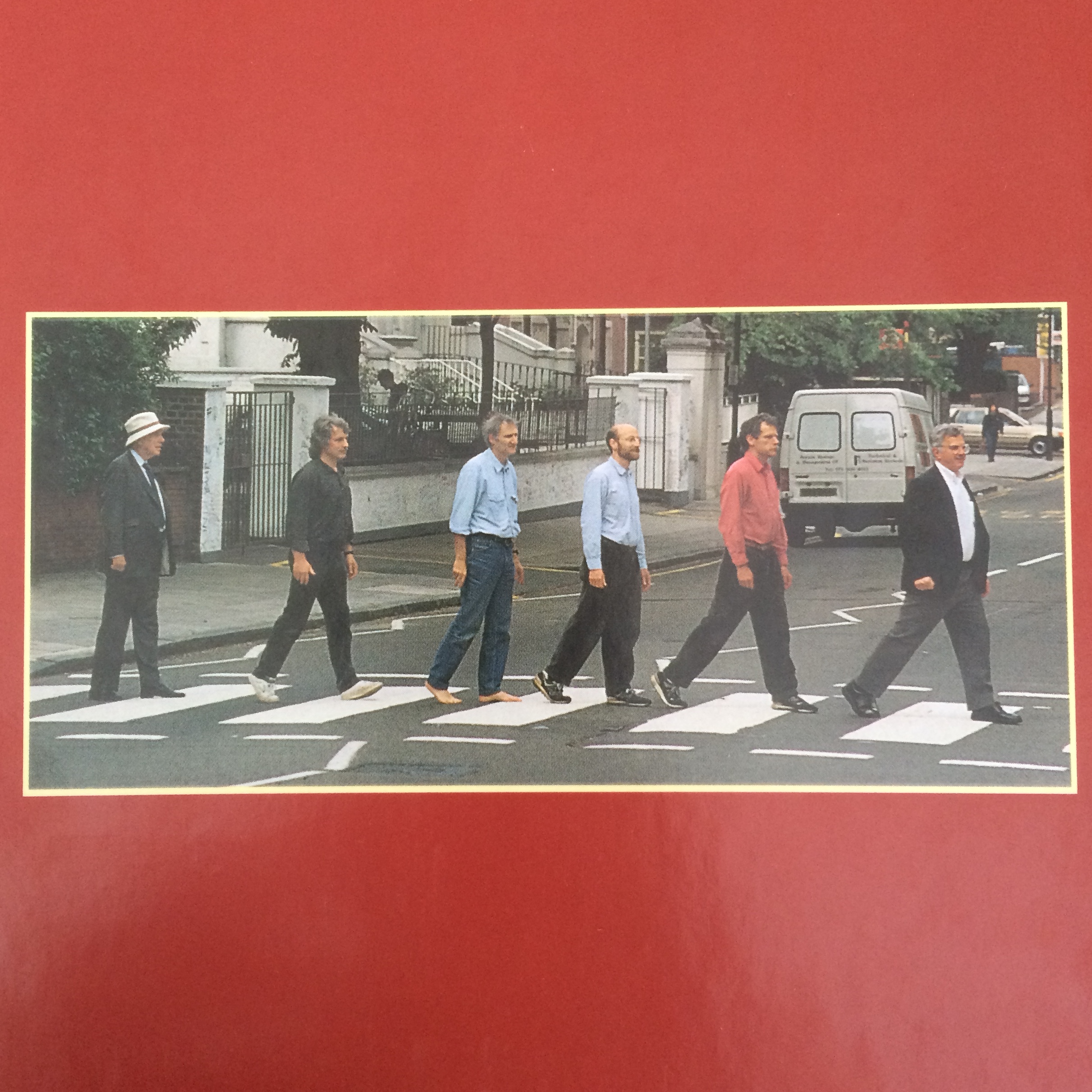
In 1994, Bruce Alberts and his co-authors released the third edition of their popular textbook Molecular Biology of the Cell. On the back cover, all the authors are photographed crossing Abbey Road, because they worked on the book just around the corner from the famous crossing.
When they published another text book, Essential Cell Biology, they stuck with the joke and took a photo in the style of With The Beatles.
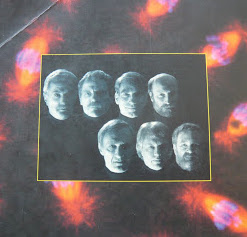
Now committed to a running gag, almost all subsequent editions of both textbooks have included author photos in the style of a Beatles album. I’ve listed them all on easternblot.net, with sliders to compare them to the corresponding album. I couldn’t get the sliders to work on this blog, unfortunately, but I will leave you with my favourite author photo, of the fourth edition of MBOC. Who do you recognize in the collage?

Images: Abbey Road parody: I photographed the back of my copy of Molecular Biology of the Cell, 3rd edition (1994). With The Beatles parody: This image comes from the blog of Svenn, who misidentifies it as the second edition of Essential Cell Biology – it’s the first (1997). Sgt Pepper parody: I found this posted on Reddit by a user called hookp. Don;t know if they took the photo, but it’s the back of the 4th edition of Molecular Biology of the Cell. All books published by Garland Science, and obviously all images are inspired by the Beatles.
 The Finch and Pea