
2012 – Year of Classic Science Fiction Reprints

It’s been a little too busy to do the Sunday Science Poem or finish up the Thomas Kuhn book club (we’ll finish it soon, really). In the mean time, here are some quick sci-fi thoughts: with the recent arrival of an Amazon package at my home, I’ve realized that 2012 has been an awesome year for classic science fiction reprints. Here are my acquisitions:
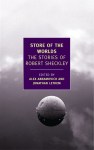
1) Store of the Worlds: The Stories of Robert Sheckley (NYRB classics): Nearly 400 pages, 26 stories, and a useful intro (PDF) by Alex Abramovich – this is essential reading for fans of the SF short story, especially those who like the vintage 50’s stuff. Continue reading “2012 – Year of Classic Science Fiction Reprints”

Sunday Science Poem: Reality and The Snow Man

For this week’s poem, we’re coming back to Wallace Stevens, with one his most famous poems, “The Snow Man”. If you’ve read any Wallace Stevens, it’s probably this early poem.

John Serio writes that Stevens’ “most distinctive achievement” is this:

In an age of disbelief or, what might be worse, one of indifference to questions of belief, Stevens adds a metaphysical dimension. In doing so, he does not imply anything religious, yet goes beyond humanism. “The chief defect of humanism,” he writes, “is that it concerns human beings. Between humanism and something else, it might be possible to create an acceptable fiction.”… Poetry is supreme because it shifts our orientation from a traditional subject of belief, such as God, to its source – the creative, ever changing, infinitely renewable process of constructing a credible truth.1

The “renewable process of constructing a credible truth” sounds much like Thomas Kuhn’s description of the scientific process. Much of Stevens’ poetry tackles questions about how we construct our mental representations of reality. Continue reading “Sunday Science Poem: Reality and The Snow Man”

For Sale; 1 Vote, Price: “Science” or Best Offer

This was originally a guest post at Sheril Kirshenbaum’s Culture of ScienceIn light of Romney’s “defeat” of Obama in the Science Debate, I thought it was worth revisiting, as some of the points may help explain why Obama’s responses seemed to reflect minimal time, effort, and concern with the debate.

Perhaps my earliest political memory came from presidential election coverage in, let’s call it 1988. I distinctly recall a portion of a news segment on voting experiences in which a Catholic priest described the ghosts of his ancestors compelling him to vote a straight Democratic ticket.

I think about that priest when I hear the “why is the Republican party anti-science?” discussion and I wonder. While we can debate whether Republicans are more anti-science than Democrats[1], the rhetoric of Republican politicians is certainly more hostile toward science and the scientific establishment. When confronted with such statements about your colleagues, yourself, and your field of work, it is natural to wonder “why?”. Continue reading “For Sale; 1 Vote, Price: “Science” or Best Offer”

Don’t knock out your toddler

Your child tripped on the back steps and has ended up with a long deep gash on their leg. You head to the ER to get it stitched up. Turns out your toddler has other plans and wails and thrashes around whenever the doctors try to take a look. In many ERs around the country the doctor will recommend sedating your child to prevent the trauma your child is experiencing as well as the anguish you must be feeling watching your child suffer.

For the last ten years, evidence has been building that giving young children anesthesia can be bad for their developing nervous system. The evidence in juvenile rodents is extremely compelling while studies in humans show a trend but some variability. Links have been shown between anesthesia before 4 years of age and increased rates of ADHD and cognitive dysfunction. While there are many cases that require surgery before the age of 4, there are often elective surgeries that would be better postponed. Continue reading “Don’t knock out your toddler”

Parental controls

It’s not that extracting information from your kids is hard; but parents know that extracting high quality, useful information is almost impossible. My offspring can talk continuously1, but when it comes to a direct request for information the clam up, like clams with dimples. Their vocabulary is reduced a repetition of”yes” or “no”. How can I know if my questions are generating reliable information? How can I know if “no” really means “no” when I ask if anyone needs to use the potty2? Continue reading “Parental controls”