
You’re gonna suck…And the best it was ever described to me was actually at a kids summer camp. And the guy said, “Ok, here is how you do it. You’ve got an editor in your brain. That editor, you make a deal with the editor. That’s your self-conscious editor that’s telling you this sucks, this sucks, this is going to suck. Don’t do it. That guy, you ask him to leave the room. He doesn’t get to be in the room; but your deal is, when he comes in tomorrow he gets to bring his hatchet. He gets to bring a chainsaw and do whatever he wants. He can cut the whole thing. He can cut it all except for one syllable. He can do whatever he wants to, but today is yours. So, you just write everything you want to and tomorrow the asshole’s coming back with his hatchet.” And, I think that’s really useful because so many ideas are stopped. What are you afraid of? What’s so scary about having a shitty idea?
–Ben Folds discussing failure as part of the creative process on The Nerdist Podcast
Category: Follies of the Human Condition
Science for the People: Fact Checking Elections
 This week we’re back at the intersection of science and politics, comparing economic data to partisan talking points and polling predictions to election results. We’ll talk to Jim Stanford, economist at Unifor, about his report “Rhetoric & Reality: Evaluating Canada’s Economic Record Under the Harper Government.” And we’ll speak to pollster and consultant Donna Dasko about the science and art of polling in Canadian federal elections.
Finally, don’t forget to support the Science for the People Patreon Campaign to keep the sciencey goodness flowing toward your ear holes.
Science for the People: Coffee Table Science
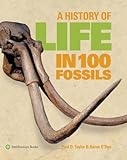
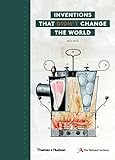
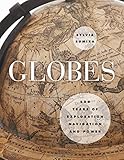
 This week, Science for the People meets the authors of three big books that use stunning images to tell intriguing stories about the history of science. We’ll discuss evolution and the building of the fossil record with invertebrate palaeontologist Paul Taylor, author of A History of Life in 100 Fossils. Archivist Julie Halls shares stories of unheralded ingenuity from her book Inventions that Didn’t Change the World. We will also learn about attempts to map the world in three dimensions from independent conservator Sylvia Sumira, author of Globes: 400 Years of Exploration, Navigation, and Power.
*Josh provides research help to Science for the People and is, therefore, completely biased.
Science for the People: Birth of the Pill [Rebroadcast]
 This Science for the People is exploring the intersection of science, society, and sex with the origin story of the birth control pill. They speak to author Jonathan Eig about his book The Birth of the Pill: How Four Crusaders Reinvented Sex and Launched a Revolution. Writer Rose Eveleth also returns to talk about the history and design of the vaginal speculum.
*Josh provides research help to Science for the People and is, therefore, completely biased.
The hard…is what makes it great
There are a lot of things to love in this piece from Christie Aschwanden about why retractions, studies that don’t hold up to reproduction, and even sub-fraudulent “p-hacking” do not mean that science is broken, but it is, simply, very hard. Among those things are the great visuals from Ritchie King – including a fun “p-hacking” demonstration tool.
For me, the real take home message goes beyond the “science is hard” catchphrase. Science isn’t just hard in the way implied by Tom Hanks’ Jimmy Duggan character in A League of Their Own:
It’s supposed to be hard. If it wasn’t hard, everyone would do it. The hard… is what makes it great.
Contrary to the rhetoric that would portray “science is hard” as an endorsement of success over a monumentally difficult task, this is not the point.
As Ashwanden addresses, science is hard because it is messy and complicated and requires a communal effort from members of a species that is only dubiously social outside of relatively narrow local groups.
If we’re going to rely on science as a means for reaching the truth — and it’s still the best tool we have — it’s important that we understand and respect just how difficult it is to get a rigorous result.
There are things like sampling variance and mistakes and uncontrollable environmental variables and resource limits and the fabled “orthologous methods” that inject all sorts of inconsistency and challenges into the textbook scientific method. This is why the great philosophers of science* spoke about disproof rather than proof, about independent reproducibility, about probability rather than certainty.
These issues do not indicate that science is broken. There simply is no other way it could work in the hands of mere humans. What may be broken is the way we perceive science. We need to understand that it is a gradual and a community effort. We need to understand that our mythos of science – of the great, usually in the stories, man performing a great experiment and making a great discovery – are almost always false summaries which are convenient and inspiring, but do not represent why science is truly hard.
*It is also why those who dismiss the philosophy of science as a waste of time – I’m looking at you Neil DeGrasse Tyson – deserve nothing but the most vigorous of side-eyes on that point.
 The Finch and Pea