
Science Careers has compiled an excellent list of articles and stories about scientists overcoming disability, mental health issues, and scores of other problems. With all of the negativity surrounding maintaining a career in science, it’s refreshing to read about how a scientific career is possible even with a few extra hurdles.
Category: Follies of the Human Condition
Online journals have not made publication dates irrelevant…
So why is it so hard to find the pub date in the HTML view of PLoS papers? The date needs immediately visible to be somewhere in this space:

BTW, this is not my paper – it’s by the other, much more productive Michael A. White in whose shadow I’ve lived for years. I’ve never met him, but I have received his mail at one point.
Sunday Science Poem: We live in the casts of our imaginations
Wallace Stevens’ ‘Description Without Place’
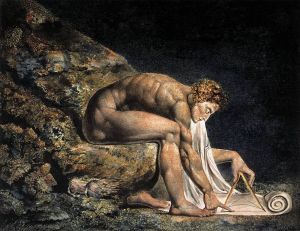 Science works by making models of the world. We need models, because the data rarely speak for themselves.
As individuals, we also work by making mental models of of the world, both at the automatic, neurobiological level where the brain assembles representations of the world from the neural impulses transmitted by our sensory organs, and at the conscious, conceptual level, the level where we consciously try, with limited information, to decide what’s going on in the world around us. Models mediate between us and reality.
Continue reading “Sunday Science Poem: We live in the casts of our imaginations”
The dark side of running a lab

A lucky few scientists make it through graduate school and a post-doctoral fellowship AND manage to secure a position running their own lab. Once they begin the day-to-day grind of operating a research enterprise they often realize there’s way less time for science and more administrative tasks to do. This administrative burden can be a drain on creativity and scientific productivity. The National Science Foundation (NSF) issued a request for information (RFI) to learn what aspects of administration are affecting scientists at work, and hear their suggestions for change. The Federation of American Societies for Experimental Biology (FASEB), a coalition of many scientific societies, administered a survey sent out to all 26 member societies to collect the data for NSF. The answers they received painted a picture of what it’s like to be a scientific investigator. Continue reading “The dark side of running a lab”
Sunday Science Poem: Science and doubt on the naked shingles of the world
Matthew Arnold’s ‘Dover Beach’
 For at least a millennium in the West, Christianity was the dominant public perspective on how the world operates. That is no longer true. In our culture, science now explains the world.
Despite widespread private expressions of piety, in our public culture science is what we believe. Intelligent design, fad diets, ESP, or any other ideas that make a go at competing on science’s materialistic home turf all end up measured by science’s standard. This is why pseudo-science exists: you have to dress your ideas in a lab coat and protective eyewear if you want other people to believe your ideas about the physical world. That was not true when Victoria inherited the British throne in 1838, but it was largely true when she died in 1901. This was the result of a tectonic shift in the psychology of an entire society, and Matthew Arnold’s poem ‘Dover Beach’ captures the mental anguish of that shift. Continue reading “Sunday Science Poem: Science and doubt on the naked shingles of the world”
 The Finch and Pea