Sunday Science Poem: The Stark Dignity of Self-Organization

William Carlos Williams’ “Spring and All” (1923)

After an unintentionally long hiatus, our Sunday Science Poem is back. April is National Poetry Month, and this month we’ll read the poetry of the American physician-poet William Carlos Williams (1883-1963).

“In physics, irreversibility and dissipation were interpreted as degradation, while among natural scientists biological evolution, which is obviously an irreversible* process, was associated with increasing complexity… Today scientists realize that dissipative systems constitute a very large and important class of natural systems.” (Grégoire Nicolis and Ilya Prigogine, Exploring Complexity (1989), p. 50-51

Nicolis and Prigogine argue that we should no longer take the simple, regular, and stable motions of classical mechanics as the essence of our macroscopic physical world. Rather, we live in “a world of instabilities and fluctuations, which are ultimately responsible for the amazing variety and richness of the forms and structure we see in nature around us.” Nature is characterized by spontaneously organizing structures. Continue reading “Sunday Science Poem: The Stark Dignity of Self-Organization”
Hedy Freaking Lamarr

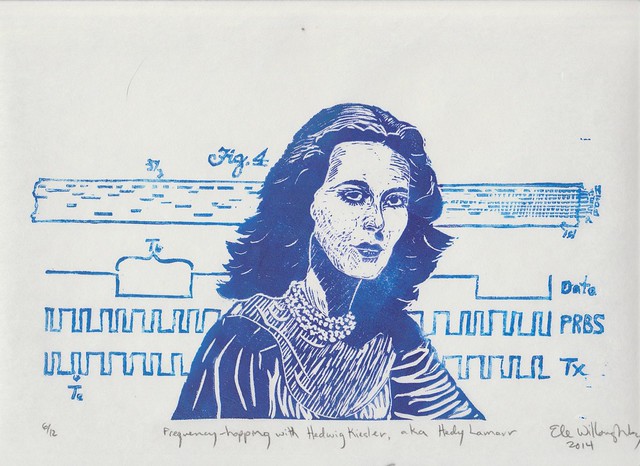
Hedy Lamarr may be the greatest movie bombshell of all time, because of what was above her shoulders. Her entry in Wikipedia begins, “Hedy Lamarr was an Austrian actress and inventor.”

Frequency Hopping with Hedwig Keisler, aka Hedy Lamarr by Ele Willoughby (All Rights Reserved; Used with Permission)

The post featuring the art above celebrates her most famous, life saving invention; and is headlined with “Hedy Lamarr, Inventor of Frequency Hopping”. As I said on Twitter, if that headline does not immediately compel you to drop what you are doing and read, we can no longer be friends.

Falling Upwards

sftp-fullsize-redbg
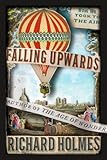
This week on Science for The People the conversation is about the science and history of lighter-than-air flight. The hour is spent with biographer and science writer Richard Holmes, to talk about his newest book, “Falling Upwards: How We Took to the Air.” Learn about the technology of 19th century ballooning, and the pioneering men and women who took to the skies and changed our view of the world.

Falling Upwards: How We Took to the Air by Richard Holmes (Pantheon, 2013)

Better Trials, So Failure Isn’t All Bad

Image courtesy of Zachary Veach

The National Institute of Mental Health (NIMH) is rolling out new rules for clinical trials testing psychiatric drugs or interventions. For years, applications have proposed testing to see if Drug X helps with a particular condition, like depression, schizophrenia, anorexia etc.

If a drug does show an effect on the particular condition being tested, we have learned that we may have a new treatment for that condition. “Hooray!” If a drug does not show an effect on the particular condition being tested, we have learned that we may not have a new treatment for that condition, which is pretty much what we knew before the expensive clinical trial.

The NIMH has created new funding rules in an attempt to address this issue. Continue reading “Better Trials, So Failure Isn’t All Bad”

Meet the Finnish Forest Magic

The following narrative was written by my very good friend and colleague, Stephen Heap (University of Jyväskylä in Finland). He is a soft-spoken and incredible storyteller and this is a story about a forest survey, but really so much more.

story of forest 3

Story of the Forest by Stephen Heap, PhD

The pale sun of an autumn dawn shines through the trees to illuminate a shallow valley. Brown ferns, fading into death with the chill of the coming winter, are speckled across a mat of green moss. Trees placidly stand on either side of the valley, comfortably watching the scene below. Their shadows leave dark bars across the floor. The subdued shade accentuates the brighter patches, which shine with a golden luster like the skin of a sensuous lover in a sunlit bedroom. Continue reading “Meet the Finnish Forest Magic”