
J.-H. Rosny aîné’s The Death of the Earth (1910)
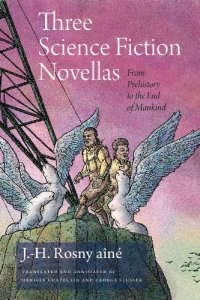 As I wrote when I first began this series on post-apocalyptic science fiction, what makes this genre so compelling is how its writers put our mastery of nature up against the possibility of human extinction. The extinction of a species is a routine event, and has been for the entire history of life on earth. So what about us? Will our species eventually disappear, or will our mastery of science and technology protect us from nature’s ruthless assaults?
This theme is beautifully explored by one of the early masters of science fiction, the Belgian writer J.-H. Rosny aîné. Rosny, whose career began in the 1880’s and ended with his death during the Campbellian Golden Age, can be considered the father of hard science fiction because, as his translators argue, unlike Verne or Wells, he “was the first writer to allow science to write his narratives” from a “neutral, ahumanistic” perspective.
In this way, Rosny is much like the scientifically realist Camille Flammarion; but unlike Flammarion, Rosny’s purpose is novelistic rather than didactic. The result is fiction that is as compelling as that of Verne or Wells, told in a detached, analytic style that makes Rosny’s voice unique in early SF. This voice has a powerful effect in The Death of the Earth, a ruthless evolutionary vision of human extinction, in which our species cedes the planet to a completely new form of life. Continue reading “Apocalypse 1910: Extinction is Inevitable”
 After the First World War, as historian Barbara Tuchman wrote in her
 The Finch and Pea