Speculative Electro-Paleontology

Soft tissues generally do not show up well in fossils. That missing information means that paleontology is particularly fertile ground for speculation. One of my favorite bits of paleontological speculation comes from Putting the Life Back in Science Fiction where a post wonders whether plesiosaurs had long necks to allow for electric organs like electric eels, useful for defense, electrolocation, and fishing. The post is careful to note that it is indulging in wild speculation.

The speculative theory probably isn’t true, but it is more fun to imagine that it is.

Decoding ENCODE

On Sunday, I participated in a panel discussion of the ENCODE project and issues  related to it, with the folks from ScienceSunday via Google+ Hangouts. Ian Bosdet and I joined hosts Rajini Rao, Buddhini Samarasinghe, and Scott Lewis. to talk about ENCODE and make it accessible to those without a decade of post-graduate training in genomics If you have a spare 78 minutes, the discussion can be viewed on YouTube.

Meet the Flying Fox

There are about 60 species in the genus Pteropus and these bats are known generically as flying foxes. They are typically fruit and nectar fiends and can forage over a 40 miles radius. This seems incredible, but some of the larger species have wingspans reaching over a meter and a half.

Check out the video from National Geographic below:

“Meet the…” is a collaboration between The Finch & Pea and Nature Afield to bring Nature’s amazing creatures into your home.

Meet the Tardigrade

Credit: William R. Miller Tardigrade Reference Center

Tardigrades are within the Superphylum Ecdysozoa and about 400 species make up the Tardigrada phylum. These 8-legged segmented bits of awesomeness live in water and are the some of the most extreme of all the extremophiles. Tardigrades are able to survive near absolute zero (-459F) all the way up to 304F.

Here is a short video from National Geographic:

Tardigrades are being utilized in research as a model system to examine development driving the evolution of morphology. Follow this link to the Goldstein lab at UNC-Chapel Hill.

“Meet the…” is a collaboration between The Finch & Pea and Nature Afield to bring Nature’s amazing creatures into your home.


Smarter mice are safer than smarter sharks

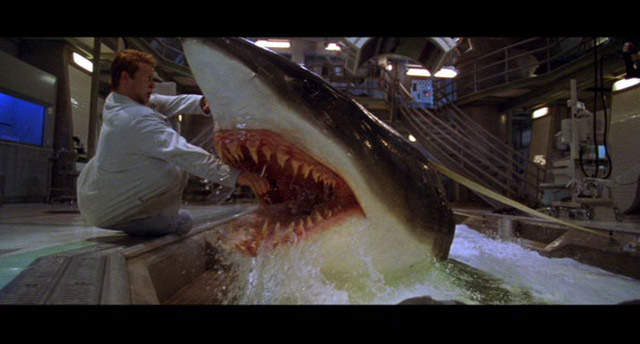
deep blue seaI don’t know if you’re familiar with the cinematic gem Deep Blue Sea, but as far as ridiculous neuroscience sci-fi horror movies go, it is awesome. Let me summarize the plot for you. A group of researchers is working in an underwater lab trying to cure Alzheimer’s. Their proposal involves genetically engineering three Mako sharks to enlarge the size of their brains. Somehow, the researchers plan to harvest these huge brains and then use the tissue to cure Alzheimer’s…  Lets just say, they didn’t cure Alzheimer’s and spoiler! Samuel L. Jackson gets eaten in one of cinema’s greatest death scences. Continue reading “Smarter mice are safer than smarter sharks”