
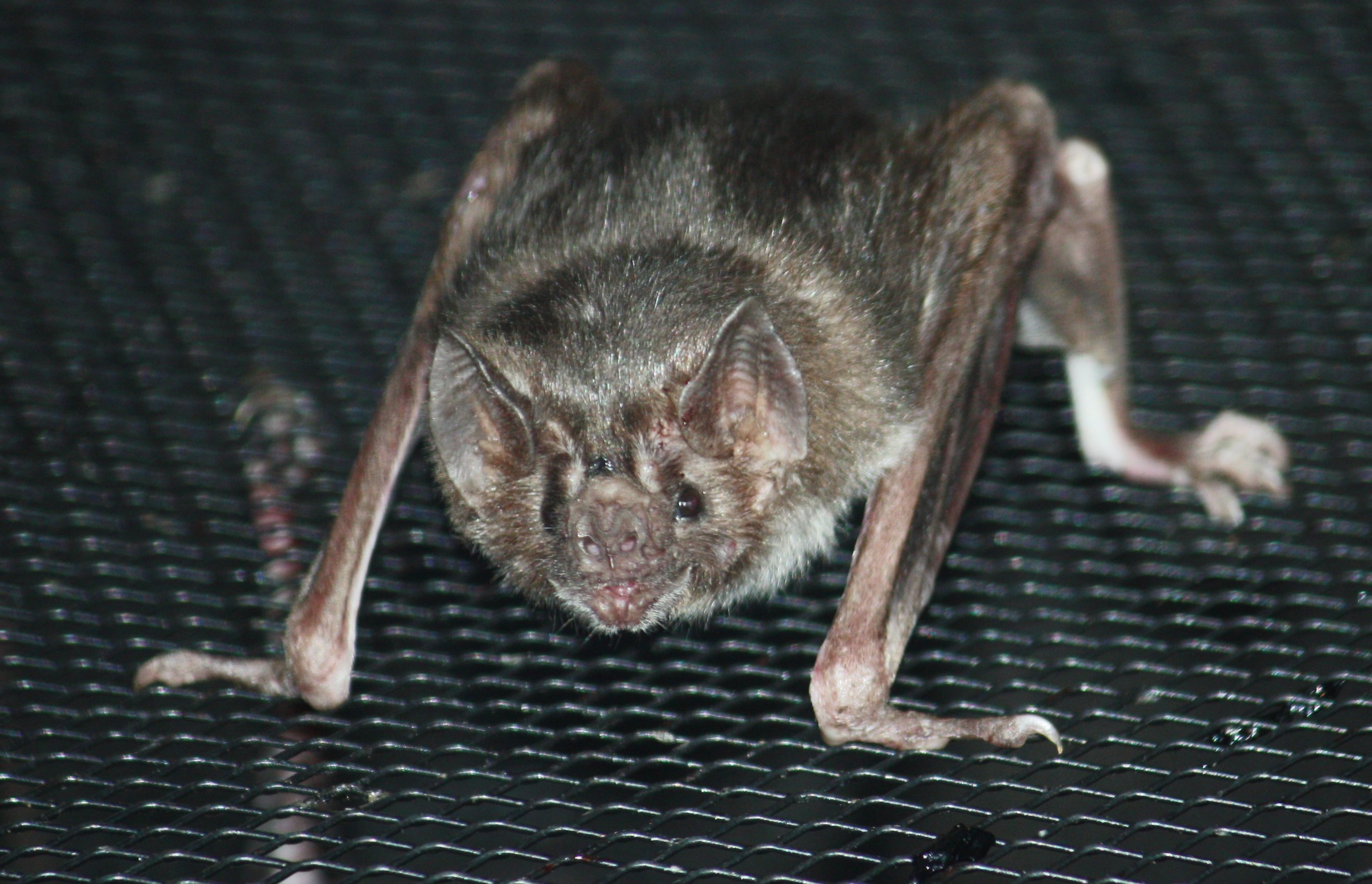
 While no one I know personally has ever been infected with rabies, I do recall a tale of my father donning a racing helmet and wielding a tennis racket to rid our house of a bat. Presumably, he was protecting us from rabid bat fangs. Rabies is relatively well controlled in the US through pet vaccinations and early prophylactic care when someone is bitten by a potentially rabid animal. While rabies as a health concern in the US may be fading, rabies as a molecular biology tool is a cutting edge new technology. Continue reading “Rabies, doing what it does best”
Category: Curiosities of Nature
Making mouse diseases more like human diseases
 It is almost impossible to study basic cellular mechanisms in humans. This is why scientists spend so much time trying to find animal models for human diseases. Sometimes, there is a naturally occurring disease in animals that is analogous to a human condition. Other times, the animal’s genome can be modified to replicate mutations that are found in human diseases. However, despite the best efforts of many scientists, models often fail to faithfully replicate all aspects of human disease.
This led to the creation of a new mouse model of spontaneously developing Creutzfeldt-Jakob disease (CJD) by the Lindquist lab at MIT. Continue reading “Making mouse diseases more like human diseases”
Meet the Lake Titicaca Frog

Lake Titicaca resides between Bolivia and Peru at an extremely high altitude. One animal that has evolved to live in the environment is the Lake Titicaca frog (Telmatobius culeus) whose Latin name possibly started as a joke during an expedition in the late 1800s. Because there is sparse oxygen at high altitudes this frog has tons of extra skin to increase the surface area for oxygen absorption. While the average size of the frogs in the lake home has decreased over time, so too has the overall population and the IUCN now considers this animal as critically endangered. In the past, frog legs of Telmatobius culeus were eaten by visitors and locals alike, and animals were often used in local medicines. As a result of the IUCN status many locals are turning from cooking frog legs for dinner to becoming conservationists. Click on the link to watch the video!

“Meet the…” is a collaboration between The Finch & Pea and Nature Afield to bring Nature’s amazing creatures into your home.
Meet the Caecilians

There are three orders within the class Amphibia; Anura (frogs and toads), Caudata (salamanders) and Gymnophiona (caecilians). Caecilians are the least well-known group even though there are 184 known species with a widespread distribution in Africa, Asia, South and Central America. They have the appearance of worm-like snakes and can be small like worms or up to 1.5 meters. Caecilians can be fossorial or aquatic and below there is a video of each example. Continue reading “Meet the Caecilians”
We still don’t know why children resemble their parents
 Back in May, the St. Louis Post-Dispatch held a mother-daughter look alike contest. In their write-up of the results, they turned to a geneticist, Barak Cohen, for some expert commentary on why daughters look like their mothers:
We asked Dr. Barak Cohen, professor of genetics at Washington University Medical School, to explain this phenomenon.
“They are just the ones, who in a sense of the word, won the genetic lottery,” he said. In these cases, most of the mother’s genes are dominant.
(Barak tells me this quote was the outcome of a 30 minute conversation.)
The real truth is, we still don’t understand why children look like their parents, or rather, we don’t understand how DNA builds complex traits. Over at Pacific Standard this week, I discuss the case of the missing heritability and recent evidence that genetic variants with small effects might be a big deal. Go check it out. (And please don’t come back and talk to me about epigenetics.)*
A few more (largely personal) thoughts on genetic variation below the fold: Continue reading “We still don’t know why children resemble their parents”
 The Finch and Pea