Broken Shells

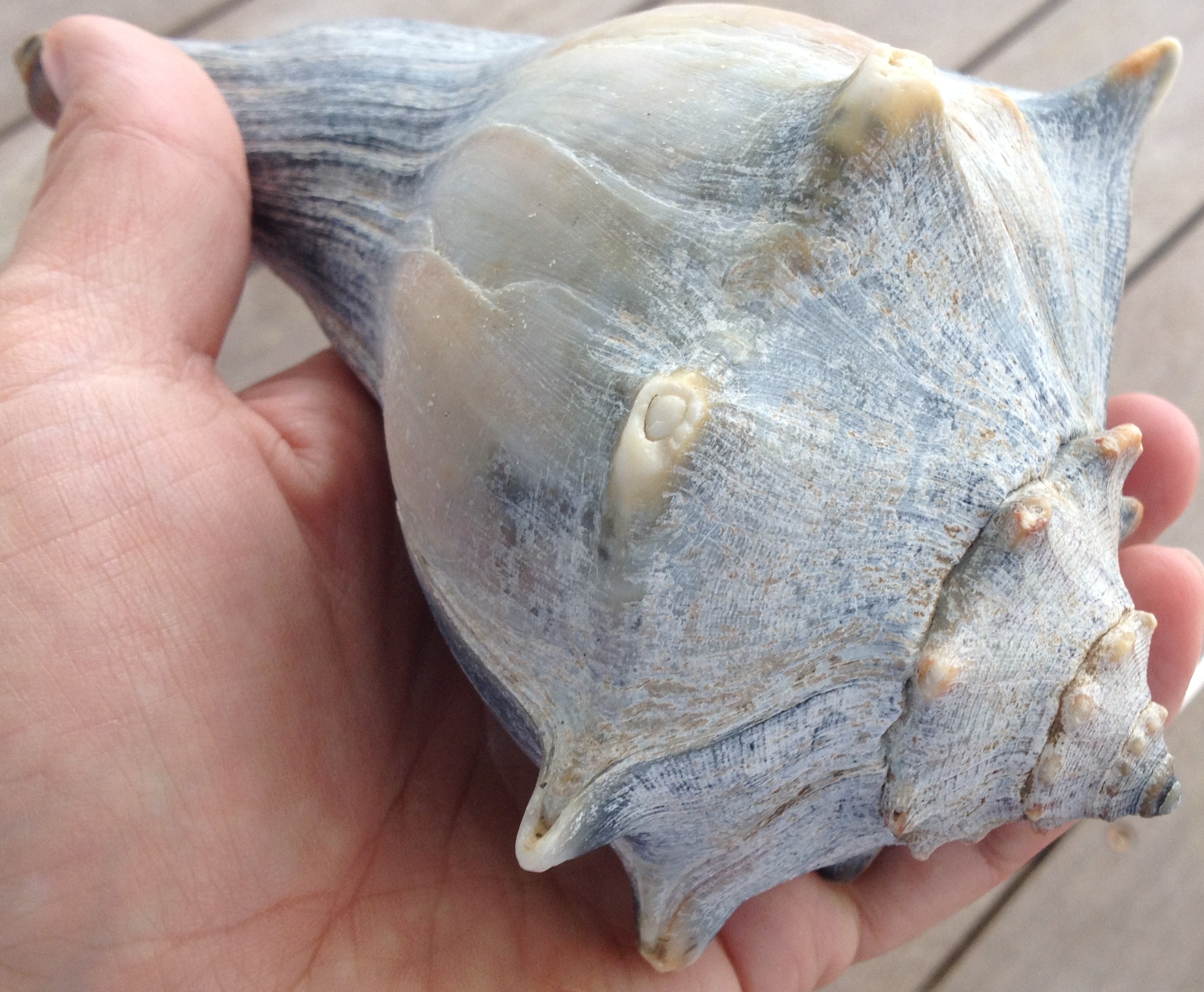
photo 2 (1)For Spring Break, I took my three year old daughter1 to Holden Beach, NC. It was not warm enough to spend much time splashing in the water. So, we spent a lot of time looking for shells.

Over nearly thirty-five years, I have had the platonic ideal of a “sea shell” crammed into the forefront of my consciousness. I’m supposed to find “perfect” shells, unmarred by the unforgiving motions of the sea that bring the shells within my reach. Shells that will look pretty on the shelf. Shells like this one that used to be a whelk’s home2.

Based on the weight of shell fragments my daughter deposited in my pockets, it is clear that she has a more expansive ideal of beauty than her old man. We collect a lot of “broken” shells, because my daughter sees the innate beauty in these broken things. This may explain why she still likes me3.

You know what? You can learn a lot from broken shells and three year-olds. Continue reading “Broken Shells”

How many genes were we supposed to have?

In my Pacific Standard column this week, I note that over the course of the 20th century our concept of the gene went from being an abstract unit of heredity to an increasingly restrictive molecular definition. The advantage of this molecular definition is that it made genes countable; the drawback is that it is ill-suited to describe the heterogeneous collection of DNA elements that make up our genome. We’re now in the somewhat ironic situation where more function in our genome falls outside of these conventional genes. As other have noted before, the physical and ‘genetic’ definition of a gene are in tension.

Before we sequenced the human reference genome, how many genes did people expect us to have? Most estimates made in the 1990’s put the number between 60,000 and 100,000. One group in 1994 reviewed estimates out there in the literature, which ranged form 20,000 to 100,000, and ultimately favored a prediction in the 60,000-70,000 range. In 1998, Deloukas, et al. published a physical map of 30,000 human genes (PDF) and figured that they had captured nearly half of the complement of human genes. In 1999, Francis Collins was using a number of “80,000 or so.” My molecular cell biology textbook, the third edition of Lodish, et al. (2000) stated that our genomes were expected to contain 60,000-100,000 genes. One estimate, made less than a year before the draft genome sequence was published, noted that “Early estimates suggested that there might be 60,000−100,000 (ref. 1) human genes, but recent analyses of the available data from EST sequencing projects have estimated as few as 45,000 (ref. 2) or as many as 140,000 (ref. 3) distinct genes.” They worked out their own estimate of the total genes in the genome: “Using highly refined and tested algorithms for EST analysis, we have arrived at two independent estimates indicating the human genome contains approximately 120,000 genes.” Continue reading “How many genes were we supposed to have?”

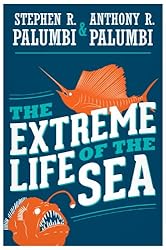
The Extreme Life of the Sea

The Extreme Life of the Sea by father-son team Stephen R Palumbi (marine biologist) and Anthony R Palumbi (science writer & novelist) was, to me, like a grown-up version of some of my favorite childhood books – books of interesting animal facts, like how high a mountain lion can jump or how fast a house fly can fly.

The Extreme Life of the Sea is less narrative and more an enthusiastic sharing of cool things in the sea, which are loosely tied together in thematic sections. It is not, however, just a collection of “gee whiz” facts. The compelling vignettes help to convey broader concepts of science and nature with excitement and enthusiasm.

Most of all, the Palumbis remind the reader that science and nature are not just important, they are fun. Continue reading “The Extreme Life of the Sea”

LOLemur, the Movie

Good friends of The Finch & PeaCristina Russo, John Romano, and Chris Smith – collaborated to turn their visit* to the Duke Lemur Center into this video.


“LOLemur” is my name for my occasional habit of attempting to caption lemur pictures as if they were LOLcats; but imagine if LOLcats were actually cute, intelligent, and charming.

I’d also ask you to keep an eye on the Twittersphere for our efforts to guilt Ocean Spray into donating a mere 260 pounds** of the lemurs favorite treat, Craisins, to the Duke Lemur Center each year.

*Chris Smith was not visiting. He works there; but he likes what he does.

**According to the head keeper at the Duke Lemur Center, 250 lemurs combine to eat 5 pounds of Craisins each week.

Meet the Finnish Forest Magic

The following narrative was written by my very good friend and colleague, Stephen Heap (University of Jyväskylä in Finland). He is a soft-spoken and incredible storyteller and this is a story about a forest survey, but really so much more.

story of forest 3

Story of the Forest by Stephen Heap, PhD

The pale sun of an autumn dawn shines through the trees to illuminate a shallow valley. Brown ferns, fading into death with the chill of the coming winter, are speckled across a mat of green moss. Trees placidly stand on either side of the valley, comfortably watching the scene below. Their shadows leave dark bars across the floor. The subdued shade accentuates the brighter patches, which shine with a golden luster like the skin of a sensuous lover in a sunlit bedroom. Continue reading “Meet the Finnish Forest Magic”