
Some gene conceptions and misconceptions

Any geneticist who has discussed genes with friends and family knows that there are a lot of misconceptions floating around out there. This is understandable – genetics involves some tricky concepts, and sometimes we use confusing linguistic shortcuts to talk about genes without using jargon. Sometimes scientists get confused as well (although that’s a topic for another day).

One of the big misconceptions is that there are genes ‘for’ specific traits — you’ll often hear that we have a gene ‘for’ X, X being some phenotypic trait. (If X is not a trait, but some sort of molecular player, than the language is correct, e.g. we do in fact have a gene — actually multiple genes — for the enzyme alcohol dehydrogenase.) This language is often rightly condemned as being misleading, because there is no one-to-one correspondence between genes and traits: traits are the product of multiple genes, while any given gene will contribute to multiple traits.

But you only need to tweak the ‘gene for X‘ language slightly to get at a correct and important concept in genetics: variation in a single gene is often responsible for important differences in X (in a particular population). This is usually what we mean when we say there is a ‘gene for X‘, but this clarification is rarely noted when people knock the phrase. Continue reading “Some gene conceptions and misconceptions”
Apocalypse 1912: Nightmare Journey to the Center of the Earth

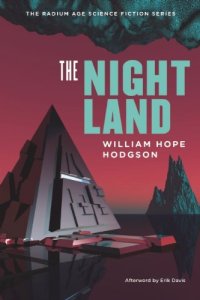
William Hope Hodgson’s The Night Land (1912)

NightLandHiLoBack in 1805, the French priest de Grainville wrote what could be considered the first Dying Earth novel. Despite many obvious science fictional elements, Le Dernier Homme was a religious fantasy, inspired by the pseudo-biblical style of Milton’s Paradise Lost. Scientist-prophets fulfilled God’s will by conquering nature with science, but in the background was an invisible world of mystical spirits who were part of God’s master plan.
A century later, a quirky British poet produced another major dying earth vision by flipping this formula: he brought the mysticism to the foreground, and put the science in the background, creating a completely secular and much darker vision of earth’s final era. William Hope Hodgson’s The Night Land, a flawed beast of a book, is a milestone in the genre — a forerunner not only of now-classic Dying Earth fantasies by Jack Vance and Gene Wolfe, but also of psychologically refracted post-apocalyptic visions like Galouye’s Dark Universe and Dick and Zelazny’s Deus Irae. Continue reading “Apocalypse 1912: Nightmare Journey to the Center of the Earth”

Apocalypse 1912: Salvation Through Faith in Science

Garrett P. Serviss’ The Second Deluge (1912)

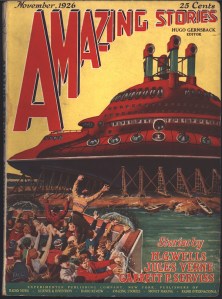
Servissamazingstories21912 was a good year for science fiction — according to some, it was the best year. Certainly for pulp science fiction, it was a landmark year. Although the first dedicated pulp SF magazine, Amazing Stories, wouldn’t appear for more than a decade, two of the foundational texts of pulp SF were published in 1912: Edgar Rice Burroughs’ A Princess of Mars, which began as the serial “Under the Moons of Mars” in February, and Hugo Gernsback’s Ralph 124C 41+, whose last installment was published in March.
Another contributor to this early pulp ferment, less memorable than Burroughs or Gernsback, was the American journalist Garrett Serviss. Serviss was a popular science writer who had also written an 1898 sequel to Wells’ War of the Worlds, featuring an invasion of Mars led by none other than Thomas Alva Edison. The Second Deluge, serialized in 1911-12, is a pulpy, early instance of a classic storyline that crops up over and over again post-apocalyptic fiction: Noah’s Ark. Continue reading “Apocalypse 1912: Salvation Through Faith in Science”

Why reproducibility initiatives are misguided

In my latest Pacific Standard column, I take a look at the recent hand-wringing over the reproducibility of published science. A lot of people are worried that poorly done, non-reproducible science is ending up in the peer-reviewed literature.

Many of these worries are misguided. Yes, as researchers, editors, and reviewers we should do a better job of filtering out bad statistical practices and poor experimental designs; we should also make sure that data, methods, and code are thoroughly described and freely shared. To the extent that sloppy science is causing a pervasive reproducibility problem, then we absolutely need to fix it.

But I’m worried that the recent reproducibility initiatives are going beyond merely sloppy science, and instead are imposing a standard on research that is not particularly useful and completely ahistorical. When you see a hot new result published in Nature, should you expect other experts in the field to be able reproduce it exactly? Continue reading “Why reproducibility initiatives are misguided”

Apocalypse 1910: Extinction is Inevitable

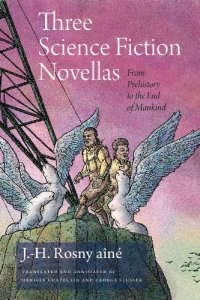
J.-H. Rosny aîné’s The Death of the Earth (1910)

RosnyAs I wrote when I first began this series on post-apocalyptic science fiction, what makes this genre so compelling is how its writers put our mastery of nature up against the possibility of human extinction. The extinction of a species is a routine event, and has been for the entire history of life on earth. So what about us? Will our species eventually disappear, or will our mastery of science and technology protect us from nature’s ruthless assaults?

This theme is beautifully explored by one of the early masters of science fiction, the Belgian writer J.-H. Rosny aîné. Rosny, whose career began in the 1880’s and ended with his death during the Campbellian Golden Age, can be considered the father of hard science fiction because, as his translators argue, unlike Verne or Wells, he “was the first writer to allow science to write his narratives” from a “neutral, ahumanistic” perspective.

In this way, Rosny is much like the scientifically realist Camille Flammarion; but unlike Flammarion, Rosny’s purpose is novelistic rather than didactic. The result is fiction that is as compelling as that of Verne or Wells, told in a detached, analytic style that makes Rosny’s voice unique in early SF. This voice has a powerful effect in The Death of the Earth, a ruthless evolutionary vision of human extinction, in which our species cedes the planet to a completely new form of life. Continue reading “Apocalypse 1910: Extinction is Inevitable”