Natural History Museum in London

ROARAfter some exotic trips, it’s time to visit a museum again. The Natural History Museum in London is right next door from the Science Museum. They’re very different, though. While the Science Museum is focussed on technology and engineering – lots of man-made scientific work – the Natural History Museum is all about, well, natural history.

If you’re going to the NHM during a school vacation, and want to see dinosaurs, you need to plan well ahead. Arrive at the museum when it opens, and as soon as you’re in, immediately line up for the dino exhibit. I can’t remember who gave me that tip when I went a few years ago, but thanks! Later in the day the dino-line was the length of several diplodocus’ necks. At the moment, the museum is offering free online advance tickets to see the dinosaurs gallery. So, again, plan ahead if you want to see dinos.

It’s well worth it: the dino gallery is very elaborate, and you get to walk around a lot of the skeletons. They’re displayed high and low in the room, and you can see them from all angles.
Continue reading “Natural History Museum in London”

Whale watching near Tadoussac

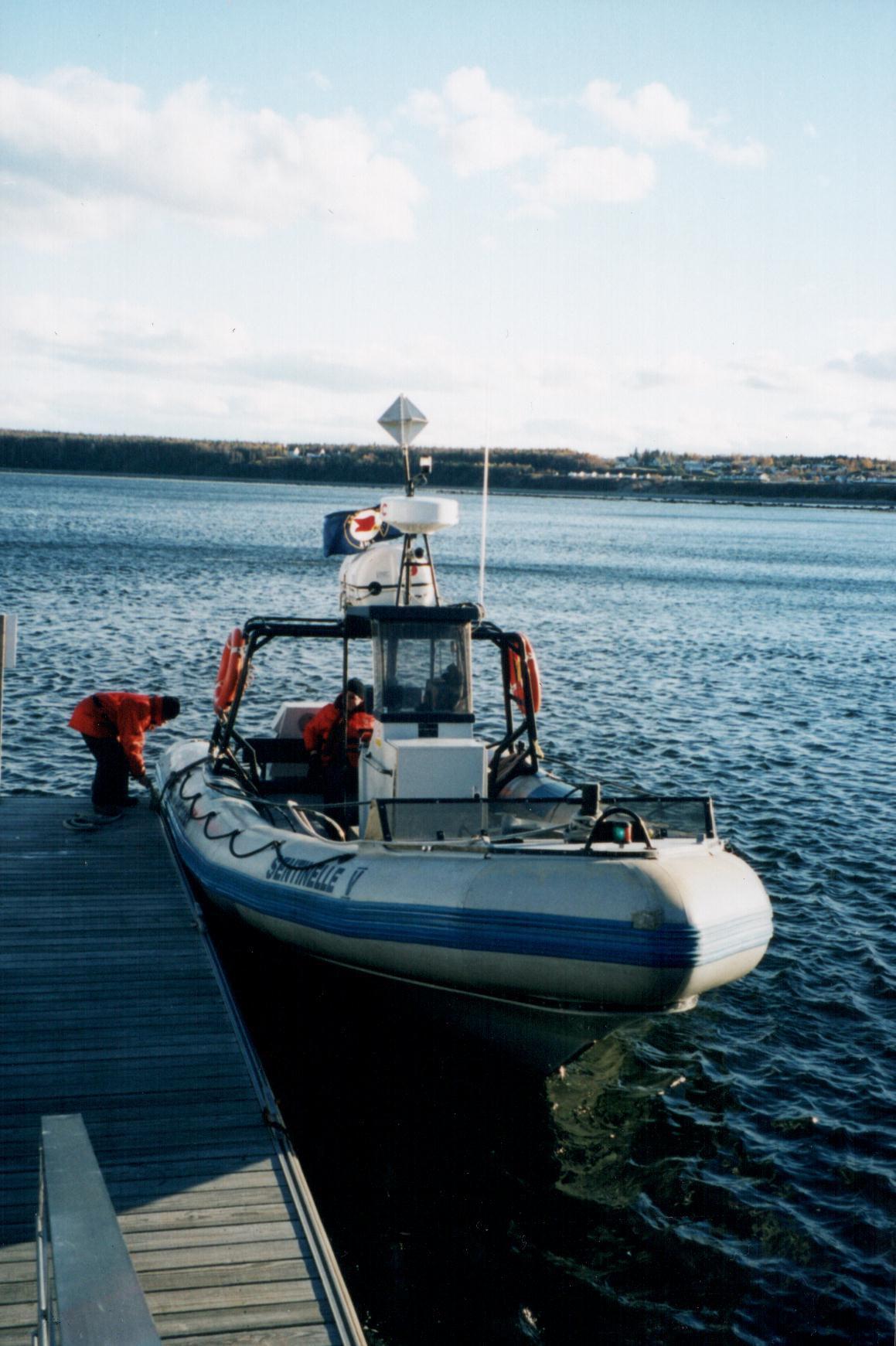
Zodiac boat
Zodiac boat

When the weather is warm enough – between May and October – whales will swim from the North Atlantic into the Gulf of St Lawrence, and upstream into the St Lawrence river. They get about as far as Tadoussac. At this point, the river is still very wide. Wide enough even for blue whales.

When it gets colder, the whales return to the ocean, but from May until October, Tadoussac is host to whales – and several companies stationed there organise whale watching trips.

I started a 4-month lab project in Quebec City in October 2000, so at the very end of whale season some other Dutch students and I went on a day trip to Tadoussac. Continue reading “Whale watching near Tadoussac”

The Hunterian Museum

Hunterian_Museum1London is old and full of dead people. Most of them are out of sight, decomposing under ground. Some are not. Some are on display for all to see — or at least parts of them are. The most famous visible dead person is the philosopher Jeremy Bentham, whose bones, padded with clothes, and topped with a wax replica of his head, sit in a display case at University College London.

Even more dead body parts can be found at the Hunterian Museum of the Royal College of Surgeons, which is celebrating its 200th birthday this year. That’s two centuries of collecting, preserving, and displaying skulls, bones, limbs, hands, and various other organs.

The museum started out as the collection of surgeon John Hunter. He’s one of the founders of modern day surgery, but his Wikipedia page also highlights one of his mistakes: he inoculated himself with gonorrhea in an experiment – no wait, that’s not yet the mistake! –  but didn’t realize the sample was contaminated with syphilis as well. When he contracted both diseases, he assumed they were both the same, and set back our knowledge of venereal diseases a few years. Oops.

As a surgeon, he also made and collected thousands of preparations of plant and animal species, to learn more about the natural world. A lot of his samples were of diseased or malformed human body parts, which allowed him and others to study these conditions.

Hunterian_Collection

A controversial centrepiece of the collection is the skeleton of 18th century giant Charles Byrne. Afraid of being used for medical experiments, Byrne had requested to be buried at sea, but when he died, John Hunter bribed a member of the funeral party to steal Byrne’s body. Now his skeleton stands in the Hunterian.

If you’re in London, you should definitely check out this collection, but the museum also has a lot of information on their site, including this video made for their bicentennial celebrations:

Images: Woodcut by Sheperd and Radclyffe [Public domain], via Wikimedia Commons and Hunterian Collection by Paul Dean (CC-BY-SA)

You can take the yak out of Tibet…

Do yak die at low altitude? When I visited Tibet, I was told that they did, and that the yak you see in zoos are all cross-breeds. Yak genetics have adapted to the high altitude, they said. You can’t take them down, they said.

It sounded plausible, and I thought it was a neat fact to include in a post here. I just needed a reference.

But when I searched, I didn’t find any convincing evidence that yak can’t survive low altitudes. In fact, the more I searched, the less I knew what a yak even was. I found info about wild yaks and domesticated yaks, and some notes about cross-breeds. Among the muddled facts, I found two things that everyone seems to agree on: Bos grunniens is a domesticated yak, and it exists in low altitude zoos far away from Tibet.

Yak
Domestic yak walking out of a Tibetan zoo and nibbling on a plant.

Continue reading “You can take the yak out of Tibet…”

The Eden Project

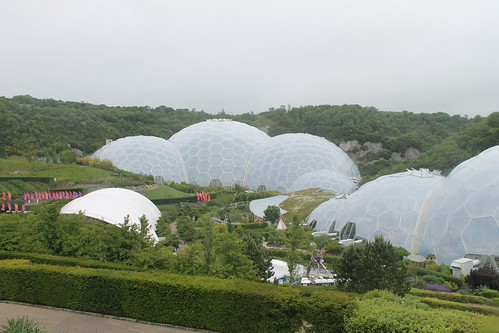
The Finch and Pea at the Eden ProjectLast month I took a four-hour train journey from London to the closest rainforest: the Eden Project in Cornwall. Several people recommended it to me after I described the Biodome in Montreal, and I mentioned it in my blog post about that, as one of the other large biomes in the world.

the Eden Project

The Eden Project consists of three biomes – a 50m high (tropical) rainforest biome, a slightly smaller one with a Mediterranean and Californian climate, and an “outdoor biome”. The latter isn’t in a glass dome, it’s the gardens of the project, and these obviously have a Southern English climate.

I spent most of my visit in the rainforest biome. I was expecting to be hit by a wall of heat, which is what happens when you enter the rainforest area of the Montreal Biodome, but that didn’t happen. It was cool and breezy. I was a bit disappointed. Not because I was looking forward to heat – I don’t do well in anything above room temperature – but because I thought it wasn’t authentic.

I was wrong.

It did get hot in the rainforest biome, just not immediately. After walking further into the forest, the temperature rose to a sticky 32C (about 90F), and that wasn’t on a particularly hot day.

32 degrees C

The warmest spot was the rainforest lookout, a platform at the very top of the dome, from which you had a great view of the rainforest below.
Continue reading “The Eden Project”