Remember when we all left comments on blogs? I looked at some of my old blog posts from 2007-ish, and they’re full of discussions, friendly notes, silly pictures, and occasionally spin off into random banter. I have made friends via blog comments, and found interesting other blogs through the links left by commenters.
Now, all conversation about blog posts seems to happen externally – mostly on social media – and blog comment sections themselves are either empty or filled with spam. Very few of my posts get comments anymore (although I did get this really nice one from a museum in Chile!)
It’s easy to blame others for not leaving comments, but be honest, when did you leave a friendly blog comment yourself?
That’s why I’m planning to spend the month of July actively leaving comments on blogs again. I’ve started a pledge on PledgeBank where you can indicate if you want to join (pseudonyms allowed!) and several people are on board. There’s also a FAQ on my personal blog. Join me!
(And if you want to write blog posts rather than comments, I also recently revealed my secret for keeping track of writing ideas.)
Walked the sand with the crustaceans,
Could find my way to Mariana
– The Pixies
Walsh and Piccard in their sub, on the way to Mariana.
Have you ever been to the Mariana Trench? If you have, you are either oceanographer Don Walsh or film director James Cameron, because the only other person to ever have visited the trench (Jacques Piccard) died in 2008. Hello Don or James! Thanks for reading The Finch and Pea.
If you’re one of the seven billion other people who haven’t yet visited, here’s a bit of travel info: The Mariana Trench is the deepest part of any of the oceans on Earth. It’s located in the Pacific Ocean, between Japan and Papua New Guinea. The trench forms the boundary between two tectonic plates: the Pacific plate in the East and the small Mariana plate in the West. The Mariana plate pushed over the Pacific plate, which created the trench at the border. Above the surface, the tectonic plate boundary forms a series of small islands, the Mariana Islands. The island of Guam, just South of the Mariana Islands, is also part of this system. Continue reading “Finding their way to Mariana”
While several countries have sent sports teams to Brazil, one country has sent something much more important. The massive Amazon River, providing life to the rainforest that houses a third of all species in the world, originates from a small glacial stream in Peru.
The Amazon meanders through Brazil all the way from its western borders to the Atlantic ocean in the east. Along the way, it picks up streams from all over the northern half of South America, but by definition the origin of a river is the source that is furthest away from the end of the stream. For the Amazon, that source is found on a mountain in the Peruvian Andes, called Nevado (snowy) Mismi.
Mismi was first identified as the origin of the Amazon by Loren McIntyre in 1971. Jacques Cousteau’s 1982 Amazon Expedition also led to Mismi as source. Other expeditions confirmed this in 1996, 2001, and 2007. So, we’re pretty sure that this insignificant-looking pond in the Andes is the furthest source of the largest river in the world.
According to Wikipedia, the site is only marked by a small wooden cross (see photo above), but when Ed Stafford set out to walk the full length of the Amazon from source to sea in 2008, he discovered that this was not entirely true:
“Within minutes we could see the cross and scrambled up the rocks to get to it. On our way we found a plaque announcing we were at the source. We ignored it and pushed on as “Wiki” can’t be wrong.
When we arrived at the source it was as we imagined: a steady spring of water coming out of the cliff above us and a nice white wooden cross. We took lots of photos but as we were about to leave we saw, twenty meters below, an iron cross. On inspecting, this cross had been erected by another expedition, this time in 1971.”
There is no single source at Mismi. Glacial streams emerge from the rocks at various places at different times. Stafford continues:
“Four completely separate teams have given four different locations as the source. The mountain is glaciated and covered in snow, there are water bodies and sub-glacial streams galore above all four “sources”.
So we decided to stop playing the silly “which source is the true source?” game and decided that we were happy that we had summitted the mountain on which the furthest tributary of the Amazon springs, and we were on our way to walking the length of the Amazon.”
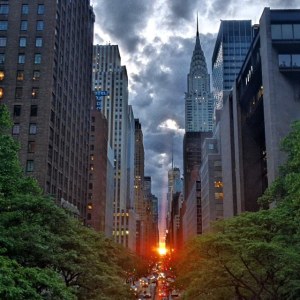
2014 Manhattanhenge. Photo by Jeffrey Putman on Flickr.
This past week was “Manhattanhenge” in New York City. This event occurs twice per year, on both sides of summer solstice, when the setting sun aligns exactly with the street grid.
The name is derived from Stonehenge, which shows a similar phenomenon exactly on solstice. While Stonehenge is believed to have been built specifically with this light effect in mind, Manhattanhenge is just an artefact of the street grid of Manhattan.
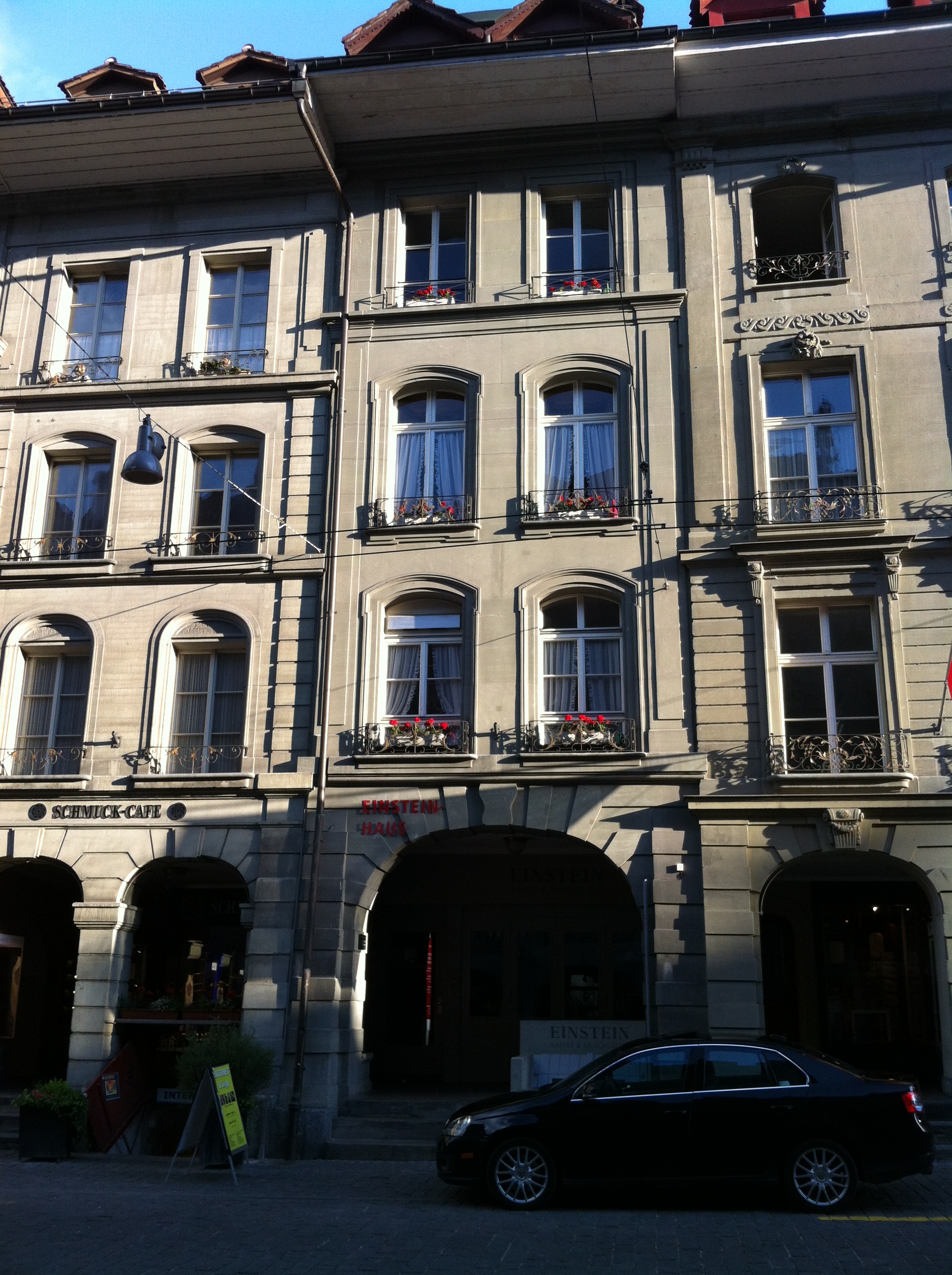
I was in Bern for work last week, so I took the opportunity to drop by the Einstein Haus (or Einstein House).
Albert Einstein lived in Bern for several years after graduating from university. He worked at the patent office here, but was simultaneously writing physics papers. The apartment where he lived from 1903 to 1905, right in the center of Bern, is now a small museum. One floor is the former living area, where you can sit at the dining table and look at family photos on the wall.
The upstairs apartment has been converted to an exhibit about Einstein’s life. There’s a case with his passport in it, and a famous photo of many well-known physicists at a Solvay convention.
All along the walls of that floor are panels with information about historical events in Einstein’s life. The first few of them all emphasize how much of a mediocre student he was. He wasn’t terrible, but all through university he seemed to have struggled, which was why he didn’t go straight to academia, but found work in the patent office instead.
One of the last panels was about his life as a musician. I was most interested in that, for my “musisci” project, and on my way out of the museum I bought a small booklet (in German) produced by the museum, all about Einstein and his violin.
The Einstein Haus is a very small and unassuming museum, and from the street you can barely spot it unless you know where you’re going, but well worth a visit if you’re ever in Bern.

 Remember when we all left comments on blogs? I looked at some of my old blog posts from 2007-ish, and they’re full of discussions, friendly notes, silly pictures, and occasionally spin off into random banter. I have made friends via blog comments, and found interesting other blogs through the links left by commenters.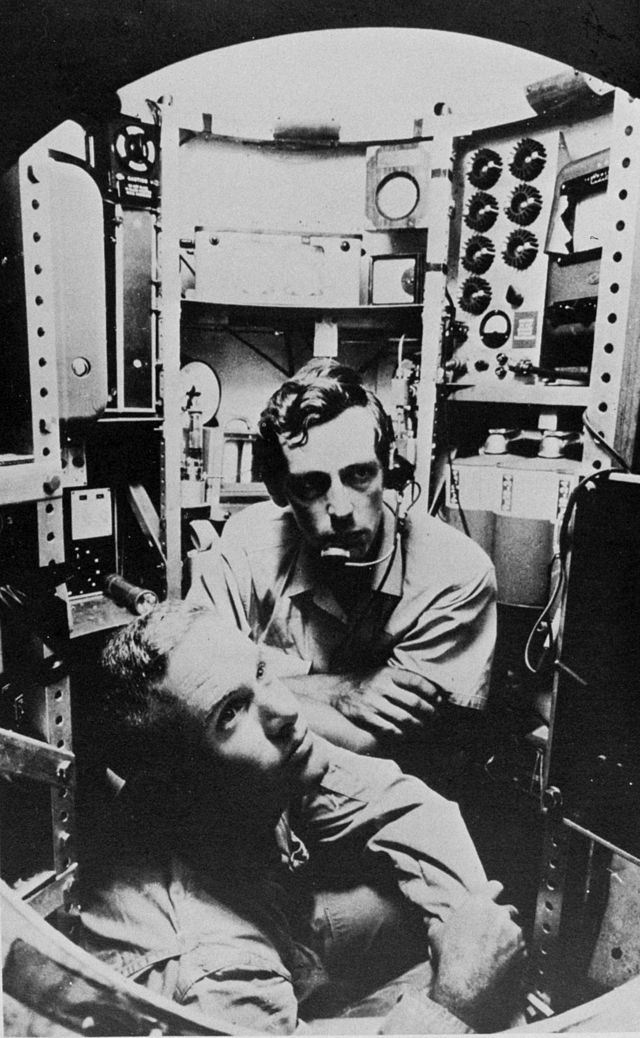



 The Finch and Pea