Science Caturday: New Old Hoomins

anthrocat1

The biggest news in science this week was the announcement of the discovery of a new human ancestor, Homo naledi. After anthropologists excavating in South Africa found an almost inaccessible cave which appeared to contain hominid remains, they recruited a team of the smallest, skinniest cavers they could find and sent them to explore it. What they found was astonishing – the skeletons of some 15 individuals of a human-like species with features unlike any seen before. This article in National Geographic gives many more details, with more sure to come as teams of researchers study the finds.

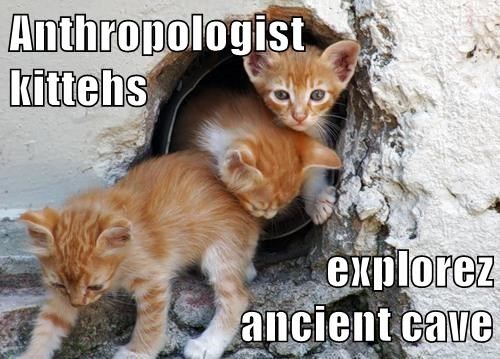
While our science kittehs applaud the discovery of new hoomins, they are slightly vexed that they were not allowed to join the team, given that they are experts in crawling through small tunnels and also highly skilled at guarding valuable stuff.
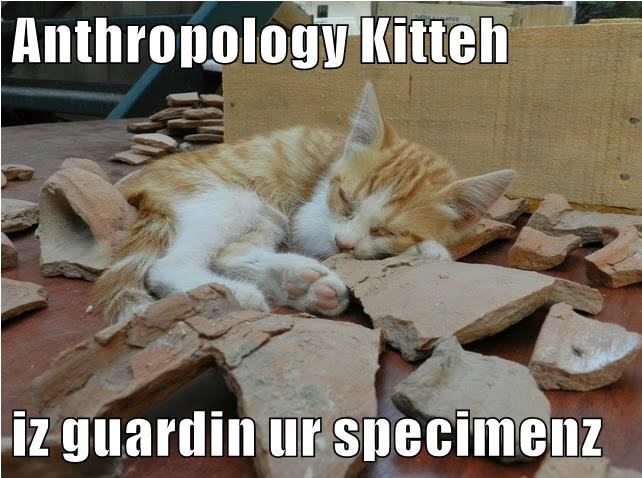
guardin

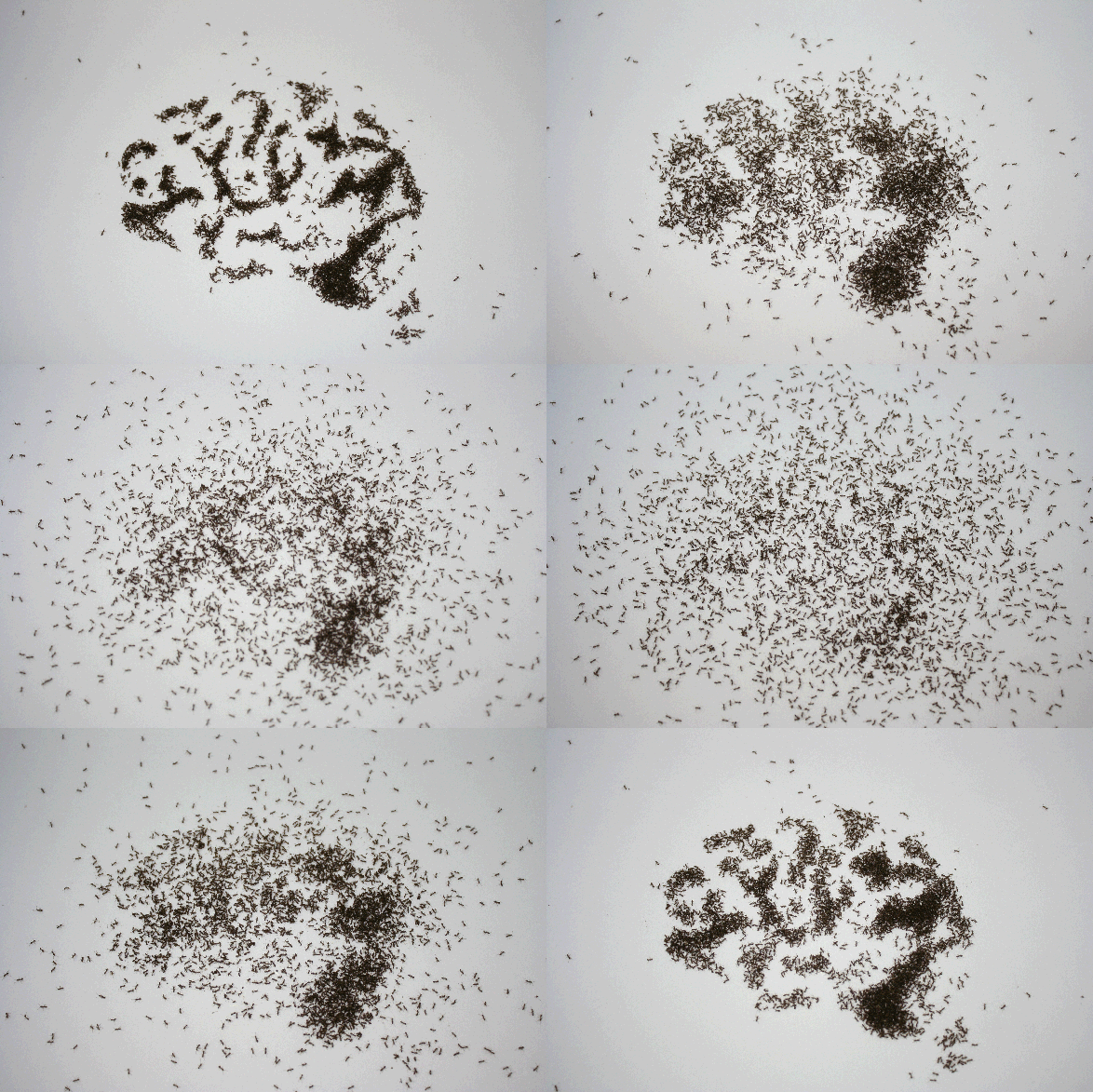
The Art of Science: The Antsy Art of Loren Kronemyer

Brain, from Myriad, 2012

Ants fascinate humans with their strength, their adaptability and their astonishing ability to work together to achieve goals. Artist Loren Kronemyer enlisted large groups of them to create her 2012 project, Myriad.

Kronemyer draws on paper with pheromones, then releases ants onto the paper. The ants, drawn to the scent, briefly cooperate in completing her designs before going back to their own patterns of movement. The artist explains that her projects explore “the notion of living drawing” as a collaboration showing the interplay of insect and human intelligence. Kronemyer, who has also created drawings with living tissues, says:

“The ant colony is a superorganism, a system with its own intelligence made up of many individuals, and the tissue is a fragment of an individual that is itself made up of many discreet living entities. I sit somewhere in the middle, meddling with both yet at the same time responsible for caring for them and keeping them alive.” (source)

The various works in Myriad are full of life and movement. The image of the brain, in particular, works as a great visual metaphor for a short attention span, or perhaps a sudden realization.  Kronemyer, an American who moved to Australia to work with SymbioticA Lab, says that “at a certain point I stopped being interested in just representing living systems, and wanted to work with the systems themselves.” It’s a long way from paint and marble, yet the visual delight of her work keeps it from simply becoming a science-fair project and plants it firmly in the territory of art.

You can see more of Loren Kronemyer’s work at her website.

Science Caturday: The Cat’s-Eye Street View

catmap

A map generally shows a bird’s eye view, but now a small Japanese city has pioneered a paradigm-changer, the cat’s eye view.  The tourism board of Hiroshima prefecture has created an online map for cats — similar to Google Street View, but at a cat’s height instead of a car’s — of a commercial area in the city of Onomichi.

This article in Vox explains the features of the cat map, including cat locators and biographies of the neighborhood’s kitties. Needless to say, it appears vastly superior to a view from a bird, satellite or car. Two paws up.


Science Caturday: Let’s Try That Again

cat-hate-it

This week, psychologist Brian Nosek and his colleagues from the Center for Open Science released the results of four years of work on a unique project. Since 2011, he and 270 other scientists in The Reproducibility Project have been attempting to replicate 100 previously published psychology studies. The results, published this week in Science, were worse than expected – just 36% of the replicated studies produced as strong a result as the original research.

That sounds pretty bad! But this article by Ed Yong in The Atlantic goes systematically through the issues around study design, publication and replicability and concludes that “failed replications don’t discredit the original studies, any more than successful ones enshrine them as truth.”

Most scientists agree that more efforts like the Reproducibility Project are essential to leading scientific research toward practices that produce more robust results. Luckily, research cats are generally amenable to repeating experiments over and over again, particularly if they involve can openers or pushing objects off tables.

The Art of Science: Stylish Sci Tattoos, Minus Pain

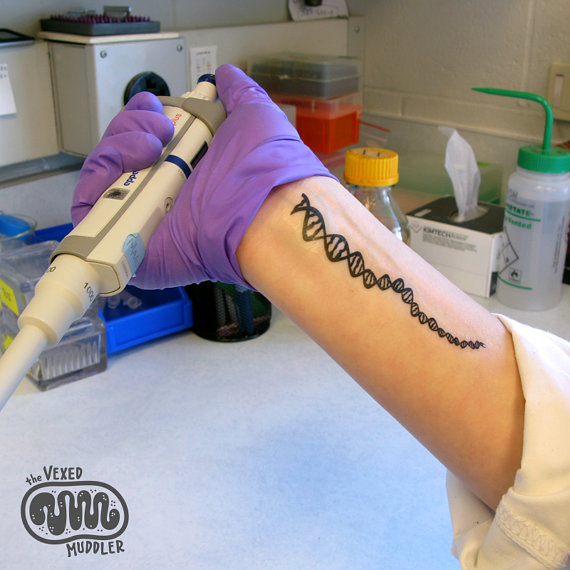
DNA temporary tattoo by the Vexed Muddler

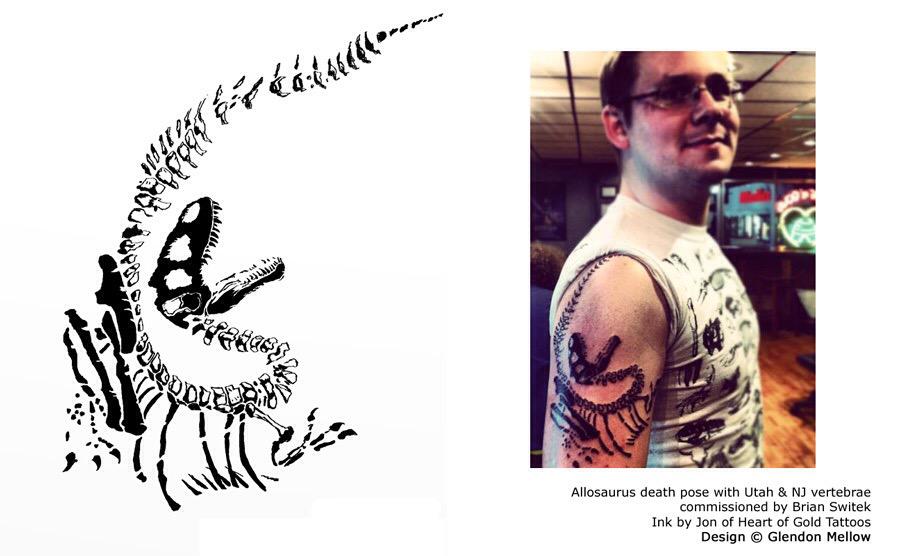
The Science Tribe are a proud people, many of whom display their allegiances on their skin in a dazzling variety of geeky tattoos. Science writers @Scicurious and @Laelaps, for example, both have cool tats designed by @FlyingTrilobite – a caffeine molecule and some dino bones. But there are those who fear the needle, or the commitment, of permanent ink. For them, The Vexed Muddler has created a new series of temporary science tattoos, available in her etsy shop. The Vexed Muddler (aka Peggy Muddles) is a biology lab tech by day, and she knows her microbes. You can chose from a variety of bacteria, a spiky virus and a classic DNA double helix. So be a trendsetter, wear your gut flora on the outside for a change. While you’re at it, you might want to accessorize with one of the Muddler’s lovely ceramic necklaces, in styles ranging from mitochondria to whipworms.