The Art of Science: Three to See

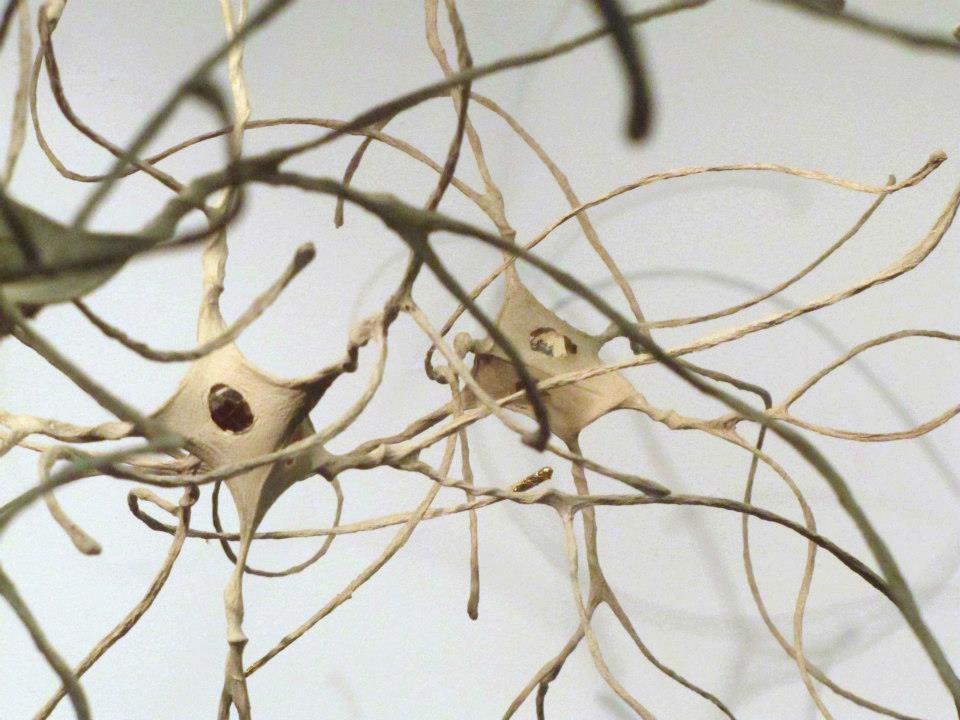
Pass it On by Jessica Beels at Strathmore Hall

There’s too much great science-art happening right now to pick just one thing. If you’re anywhere near Montreal, Dublin, or DC in the next few weeks, don’t miss the chance to go see some amazing work. Continue reading “The Art of Science: Three to See”

Science Caturday: Sacrificing for Science

harbls

Thank you, sir! But if everyone did the same, soon there would be no more scientists.

Photo via Cheezburger.com

The Art of Science: Caleb Charland Experiments with Photography

calebcharland21

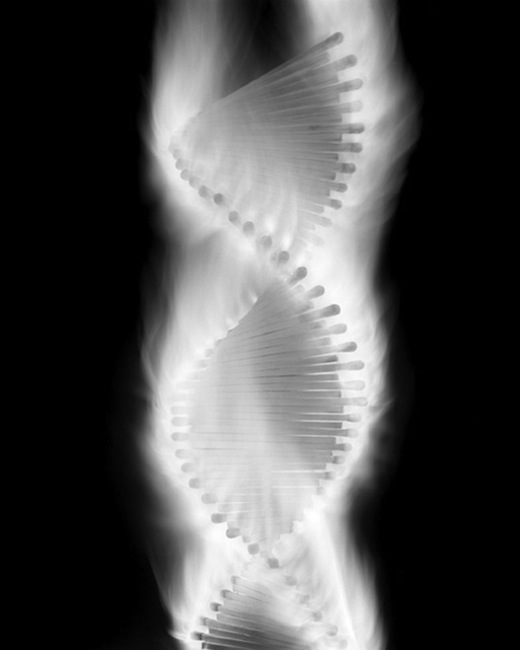
Caleb Charland’s photos explore many aspects of physics and chemistry to stunning effect – all without the use of photoshop. He uses a number of elaborate but essentially old-school techniques, including scanning and multiple exposures, to create his amazing images. One of my favorites is this relatively simple photo, Helix with Matchsticks, a DNA-style double helix engulfed in flame. Besides the obvious connection of the flames and life-force, could it allude to the fiery conflicts over evolution?

Charland, who is based in Maine, has recently been working on creating “photos” without a camera – using a burning candle to expose, and drip on, photographic paper. Before that, he used images to demonstrate unusual power sources, like using an orange to run a light bulb for 14 hours. He described his work in 2010 as being “like 5th grade science mixed with sculpture. It’s about being curious and playful. There is still a lot to wonder about.” (source)

You can see many more images at  Charland’s website.

The Art of Science: Wallace’s Flying Frog

Flying-frog-Sarawak-1855-by-Alfred-Russel-Wallace-200x275

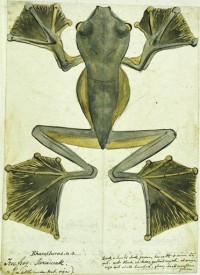
Last week, the Natural History Museum in London unveiled a digital archive of the letters of 19th century naturalist Alfred Russel Wallace, the co-discoverer with Charles Darwin, of evolution by natural selection. The archive, introduced on the 100th anniversary of Wallace’s death, naturally focuses on his writings, but also contains some paintings and drawings. Wallace, who spent years in far-flung places collecting specimens, didn’t have the option of pulling out a camera to document his finds. He often sketched or painted his discoveries, including this lovely watercolor of a flying frog which he painted in Sarawak. It may not be Audubon-level in its artistry and detail, but it’s a useful scientific illustration which also has great personality and charm.

Science Caturday: Mid-Winter Edition

Science Caturday: Mid-Winter Edition

Notice how kittehs contract in the cold and expand in teh warmz.

via Cheezburger.com