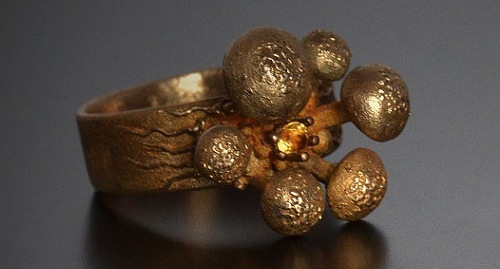
 This one-of-a-kind ring in citrine and bronze depicts a honey fungus, or Armillaria. A perfect gift for a mycologist or anyone who appreciates the more obscure beauties of nature. $120
 These “nondenominational festive ornaments” celebrate the contributions of six key women in science: Rosalind Franklin, Marie Curie, Jane Goodall, Rachel Carson, Elizabeth Blackwell and Ada Lovelace.
Hang them on your Christmas tree, menorah, Festivus pole or wall. Made of wood with ribbon hangers. $36 – also available as a set of coasters.
 Delftia is a new Israel-based etsy shop featuring jewelry made by a self-described “nerdy armchair scientist and metalworker.” Her science and nature inspired pieces include brains, atoms and caffeine molecules, but our favorite is this silver and brass pendant of Darwin’s original sketch for the tree of life. $45
 Beautiful, practical and sustainable, this cutting board adorned with a Fibonacci spiral can be customized with an Einstein quote or with your own personal message. (Please note 3 week lead time if you need it by Christmas.) The shop also features other boards with science motifs, including a periodic table, DNA spiral or solar system. $45
 Remember your furry friends (and your microbiologist or infectious-disease specialist friends) with an adorable needle felted pathogenic cat toy by Mycrobe Catnip. Pretend your cat is a healthy immune system or strong antibiotic tearing into this catnip-infused bacterium. Lots of other nasties available in Mycrobe’s shop, including myxococcus, trypanosoma and giardia. $10
 Sevenstone makes simple and beautiful bowls, vases and tealights from lovely rocks – like this small vase “crafted from a polished glacier stone with a striking band of quartz” A perfect gift for a geology fan, or for anyone who appreciates decor that is both rugged and refined. $65
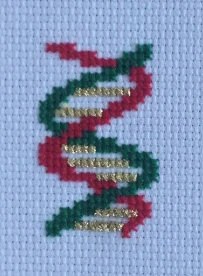 Genegeek’s line of cross-stitched Christmas ornaments merge old-fashioned craft with modern science. Our favorite is the DNA double helix.
Note that the DNA double helix is in the correct, right-handed direction.
You can also choose from microscope, pipette or cell motifs. $7.70 each or $24.05 for a set of all four.
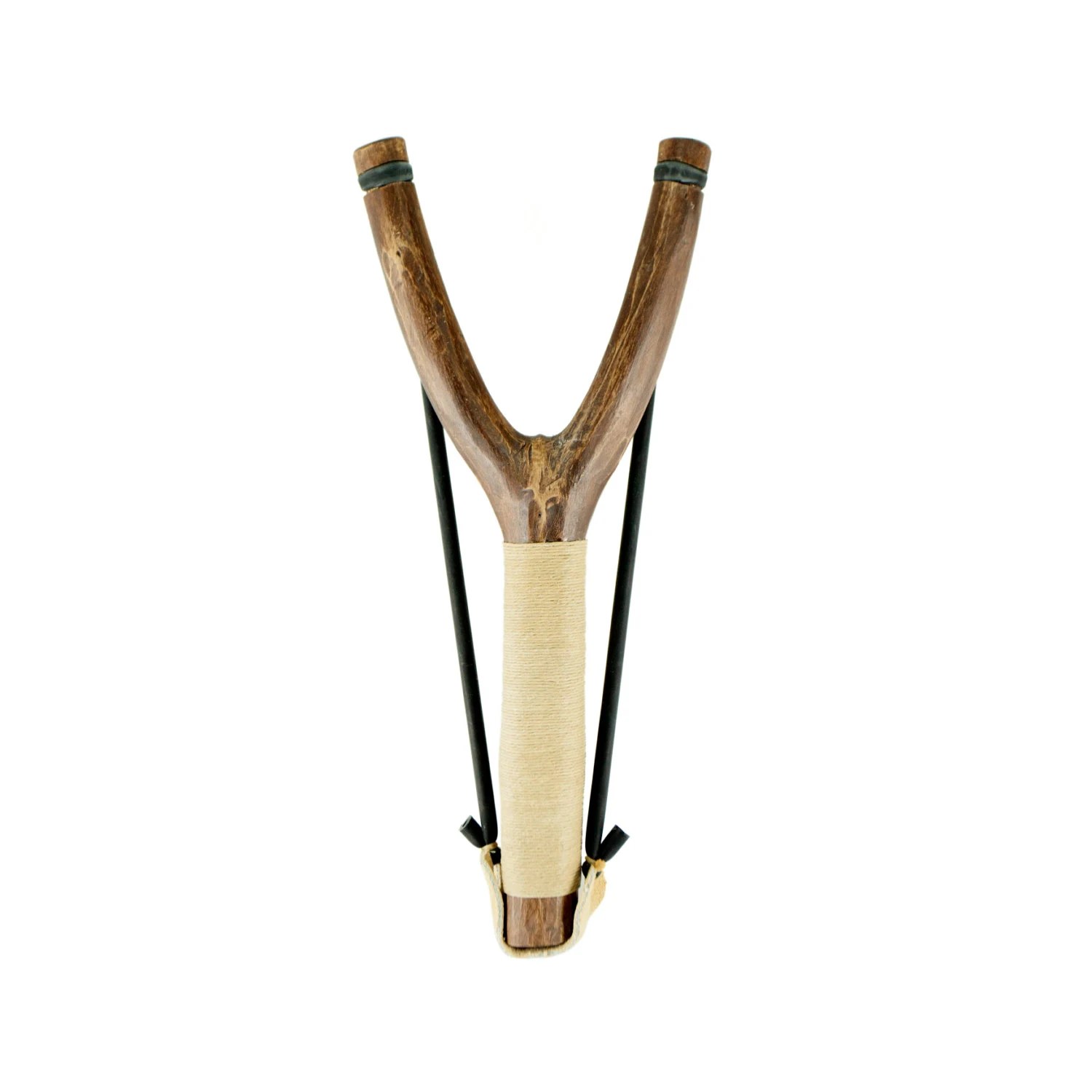 A slingshot is an ideal vehicle for exploring numerous concepts of basic physics: tension, elasticity, potential and kinetic energy, just to name a few. So you can tell yourself that is why you want this sweet, handcrafted slingshot. Says the maker: “Each one-of-a-kind slingshot is handmade in San Francisco from forked tree branches. They’re carefully varnished, twined in shellacked hemp, and outfitted with a leather projectile pouch using natural latex tubing and imitation sinew. So grab one, head outside and cause some mischief.” OK! $36
 Get extra-scientifically clean with handmade glycerin soaps from Sky Rain Soap, an etsy shop packed with choices like astronauts and meteors (pictured), crinoids and trilobites, dinosaurs, elements, and plenty of robots and aliens.Perfect stocking stuffers from $3 and up.
 Why wear reindeer when you could have dinosaurs? Be the toast of holiday nerd gatherings with this screen-printed sweatshirt featuring Santa with a triceratops and an apatosaurus. $29




 The Finch and Pea