The Art of Science: Adorable Art that Misses the Mark

Pandas on Tour in Hong Kong, summer 2014

I love pandas. I mean, I really love pandas. An analysis of my browser history over the year since Bao Bao was born would reveal an embarrassing amount of time logged onto the National Zoo’s PandaCam. When my daughter was very little, she was semi-seriously convinced that I loved Tai Shan more than I loved her. So you would think that I would also love Pandas on Tour, the long-running traveling exhibition by French sculptor Paulo Grangeon.

I don’t.

It’s not that it isn’t appealing. Grangeon’s papier-mâché pandas are completely adorable. If they came to DC, I would go see them, coo over them, and take pictures of them.

Here’s my problem with Grangeon’s Pandas – there are just too many of them.

Let me explain.

The Pandas on Tour project was launched in 2008 in partnership with the World Wildlife Fund and other organizations as a simple way of showing just how endangered pandas are. The 1600 panda sculptures roughly correspond to the number of pandas that remain in the wild. Over the past 6 years, the pandas have traveled to more than 20 countries, where they’ve provided fabulous photo ops everywhere from the Eiffel Tower to the National Theater in Taipei.
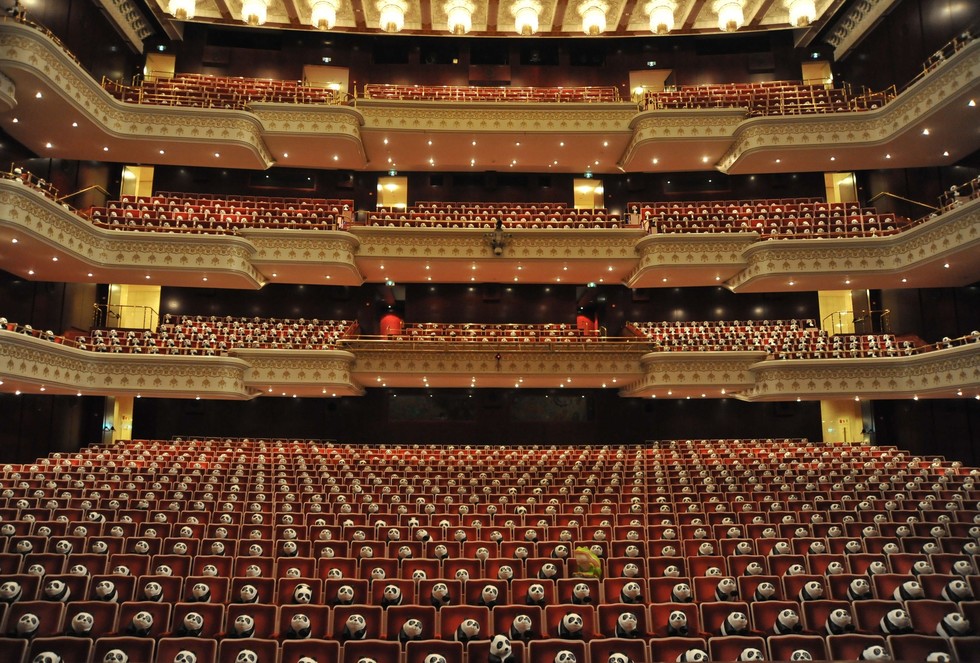
Pandas at Taipei's National Theater
Pandas at Taipei’s National Theater

I mean, look at them in that theater, or on that square. They’re so cute, and there are soooooo many of them! That’s what I feel seriously muddies the intended conservation message of this project. It’s hard to feel like the panda is disappearing when you’re surrounded by an enormous crowd of pandas.

Maybe I’m a grouch, but I can’t help thinking that while the words about this exhibition say “Look how few pandas there are,” the pictures say, “Look how many pandas there are.”

And that seems like a bit of a #PandaFail

panda-slide


Science Caturday: Treasure in the Dirt

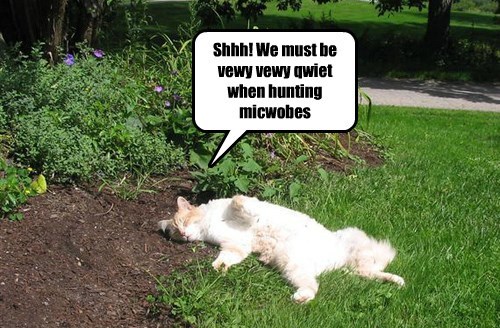
vewyqwiet

The biggest news in the science world this week was from a tiny microbe that grows in the dirt. A study published in Nature revealed that a newly-discovered antibiotic, Teixobactin, based on a soil bacterium, shows promise against TB and MRSA, which are increasingly resistant to all the drugs currently on the market.

There’s much more information about the team, the study and the possible uses of Teixobactin in this Washington Post story by Rachel Feltman. Our intrepid science kitteh was so inspired by this article that she went right out and started searching for the next marvelous microbe hidden in the soil.


The Art of Science: Rosemary Mosco Explores Quirks of Nature

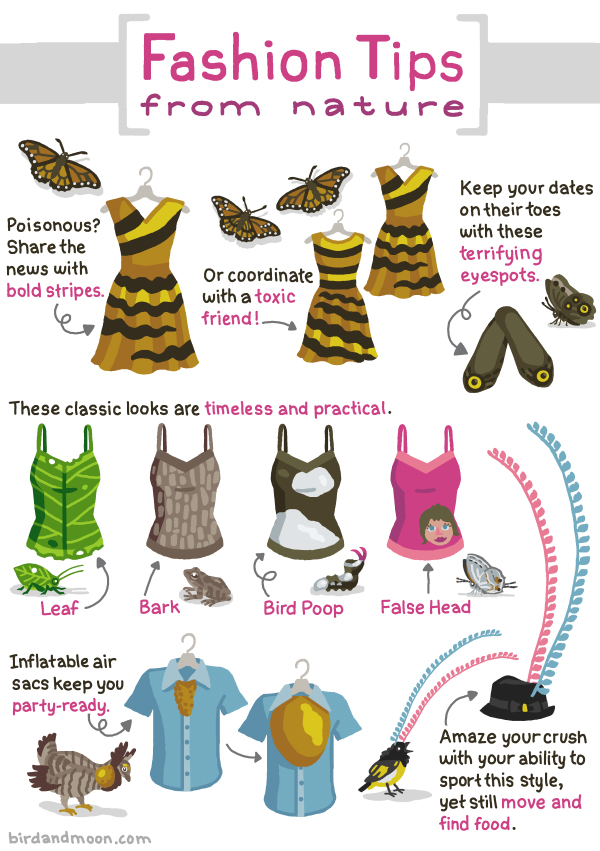
From Quirks of Nature
From Quirks of Nature by Rosemary Mosco

Rosemary Mosco is a naturalist, illustrator and science communicator who has seamlessly merged her scientific and artistic interests into a range of projects, most notably her Bird and Moon science comics.

Mosco’s academic background as a field naturalist, her obvious love of nature in all its forms, and her sunny sense of humor and cheerful style combine to create informative content that feels effortless.

Her work is featured in an exhibition called Quirks of Nature, running through June 8 at the Museum of the Earth in Ithaca, NY.  The exhibition pairs her comics and illustrations with fossils, taxidermy, live animals, and more. Mosco provides commentary on her drawings and the inspiration behind them – from working at a bird rehabilitation center as a kid to suffering through an awkward first date – while experts explain the hard science behind each comic.

If you can’t make it to Ithaca, you can see more of Rosemary Mosco’s work at her website and support her work via Patreon.

Science Caturday: Teh Resolution Solution

New-Year-27s-Resolutions-3A-Conquer

Every January, they arrive like clockwork – articles telling us why it’s so very hard to stick with New Year’s resolutions. (Here’s a pretty good one on Quartz, if you’re interested in some of the psychology behind making and keeping them.) To make it easier, We’ll just supply a few resolutions for you: In addition to the two excellent ideas above, please resolve to click on The Finch & Pea more often in 2015. We, in turn, resolve to make it worth your while.

The Art of Science: Turning Pollution into Pigment

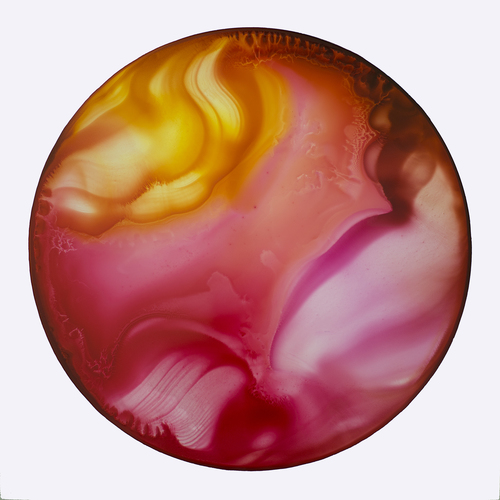
John Sabraw, Chroma S1 12, 2013, Mixed media on aluminum composite panel

Need proof that you can make art out of almost anything? Artist John Sabraw creates beautiful paintings using the byproducts of acid mine drainage. Sabraw, an artist and professor at Ohio University, works together with OU chemists and engineers to turn the toxic runoff from abandoned mines into pigments, which he then makes into paints and uses to create his artwork.

Ohio has miles of abandoned coal mines filled with metal dust. The mines eventually fill with water, which becomes acidic as the oxygen in it reacts with sulfide minerals in the rock, and picks up high concentrations of iron and aluminum. This water then spills out into streams, polluting them and killing wildlife.

An environmental engineering professor at OU, Guy Riefler, worked with some students to develop a novel approach to this problem – to take this toxic runoff and turn it into paint. This is not as crazy as it sounds – many commercial red and yellow paints are made from ferric oxyhydroxides, one of the major components of the polluted water. Riefler and his students worked on processing and refining the runoff into pigment (there’s a video here that goes through the main steps). Then they approached Sabraw, who had experience in making paints from scratch, to be a product tester.

The rest is not so much history as, well, science and art. Sabraw created a range of both oil and water-based paints from the runoff and now uses them to make all of his paintings, which have been featured in numerous gallery shows. You can see his work in an upcoming show at Chicago’s McCormick Gallery from March 6- April 25, 2015 or at his website.

Riefler and Sabraw are continuing to work on the paints, and hope to create a viable commercial line, with proceeds going to clean up polluted streams in Ohio.