Limited Returns on Shark Week

Apparently, Shark Week did not help the stock price of Discovery Channel’s parent company (Discovery Communications, DISCA), according to this article from CNN Money.

Despite that success, investors aren’t biting. Shares of Discovery Communications(DISCA), which owns the Discovery Channel and networks like Animal Planet, have flatlined this week.- Matt Egan at CNN Money

This might sound like good news for those of us who find that Shark Week has increasingly become a week of inaccurate, fear mongering programs. Many shark scientists and conservationists have taken every opportunity available to register their problems with the program contents. Continue reading “Limited Returns on Shark Week”

Science for The People: Garden of Marvels

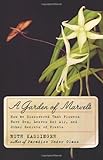
sftpThis week Science for The People learning about botany and the colorful science of gardening. Author Ruth Kassinger joins them to discuss her book A Garden of Marvels: How We Discovered that Flowers Have Sex, Leaves Eat Air, and Other Secrets of the Way Plants Work. And they’ll speak to NASA researcher Gioia Massa about her work to solve the technical challenges of gardening in space.

*Josh provides research help to Science for The People and is, therefore, a completely biased and cooperative member of the team. He does, however, insists on capitalizing the show name as he sees fit.

Happy Phi Day! Take 3

Note: What follows is pretty much fluff, like a great deal of my writing. I want the world to be a “funner” place. Over the past several days, however, events in the area (St. Louis) I used to call home have been anything but fun. I started this post last week and decided to finish it this morning as a break from staring impotently at the news in my Twitter feed.

Today marks the third anniversary of my quixotic quest to get 14 August recognized as Phi Day.

I am all for cheesy, sciencey holidays like Pi Day and Mole Day. Holidays are fun. When they are at their best, they also teach us something. Religious and civic holidays are meant to transmit lessons – think of Martin Luther King, Jr. Day, Passover, Memorial Day, and Christmas. Some do a better job than others (I’m looking at you Columbus Day). Why shouldn’t our sciencey holidays also convey meaning about the thing they are representing?

Think about this exchange:

Me: Happy Phi Day!

You: What is “Phi Day”?

How we respond depends on which day we choose for Phi Day. Continue reading “Happy Phi Day! Take 3”

What is misconduct?

The results of a small survey of graduate students and post-docs suggest that our research trainees don’t really know what research misconduct is below the level of flat-out fabrication.

However, we were dismayed that only 54 per cent gave a three to “knowingly selecting only those data that support a hypothesis” and 42 per cent to “deleting some data to make trends clearer”. The naivety is staggering. – Tim Birkhead & Tom Montgomerie

They also note that these individuals face considerable barriers to reporting misconduct when they believe it has occurred.

I recall the mandatory ethics class we took at Washington University in St. Louis. It was worthless. I recall spending a great deal of time talking about “salami science”. Salami science is the practice of parceling your work out into as many paper with as little unique content each as possible. This is bad behavior that games some of the systems used to evaluate researchers. It does not, however, corrupt the scientific results with inaccurate data and results.

While I received my training in proper, scientific conduct in my thesis lab, that is not a sustainable solution. The future of scientific investigation should not depend on the efforts of individual thesis mentors – they are simply too inconsistent. Ethics education is key to training in the proper implementation of the scientific method and should be central to all aspects of graduate training, including the development of quality courses that provide real training in ethics and identifying misconduct.

There seems to be a trend

In an depressingly similar story to those found in the SAFE13 study reported by Kathryn Clancy, Robin Nelson, Julienne Rutherford, and Katie Hinde, respected science writer Christie Aschwanden wrote up the results of a survey of science writers for the New York Times:

More than half of the female respondents said they weren’t taken seriously because of their gender, one in three had experienced delayed career advancement, and nearly half said they had not received credit for their ideas. Almost half said they had encountered flirtatious or sexual remarks, and one in five had experienced uninvited physical contact. – Christie Aschwanden

The results and additional information are available as part of the plenary presentation from the Women in Science Writing: Solutions Summit 2014.

Based on these surveys, it is hard to compare scientific field work or science writing to any other professions. It is disturbing that every time we actually take a look under this particular rock we find similar results.

The failure to look for the problem does not mean that you don’t have a problem.