Tag Archives: Science Fiction

Some light reading for fellow science fiction junkies

amisnewmapsofhellAt last: I’ve got an author index of my science fiction reviews here at The Finch and Pea. If you compulsively read vintage science fiction like me (my interests mostly fall in the ~1945 to 1986 range), then you may just find something to your liking here.

Why vintage science fiction? It is a literature that has a lot to say about our culture’s relationship with science and technology, one that has developed some striking metaphors for science and nature.

Over the last few years I’ve managed roughly 30 reviews, fewer than I’d hoped, but not too shabby. Up next is a series on Big Dumb Object science fiction, already begun with Rendezvous with Rama. Coming up soon will be a discussion of Niven’s Ringworld, Varley’s Titan, Bob Shaw’s Orbitsville, Greg Bear’s Eon, and finally, once I finish working my way through the Polish original, Lem’s Solaris. Continue reading

Sunday Poem: Big Dumb Objects, Arthur C. Clake, John Keats, and the Sublime

RamaThe purpose of the Big Dumb Object in science fiction is to cure us of our familiarity with the universe. We tend to forget that the universe is complex, vast, exotic, eerie, and downright mystifying. Our daily experiences with its odd phenomena constitute what is normal, and normal is, of course, that which we’re inclined to take for granted. Among the bizarre things we accept as normal are the spontaneous development of a child into an adult, our ability to perceive coherent images and sounds that reach us through a tangled mess of reflecting waves, that there “are mountains in Chile, and not a hill in La Plata,” and the fortunate fact that Jupiter hasn’t yet sent the Earth spinning out of the Solar System.

Big Dumb Objects are metaphors that regenerate the strangeness of the universe in order remind us that a strange universe is a necessary condition for the sublime experience of scientific discovery. Two writers who knew this well were Arthur C. Clarke and John Keats. Continue reading

Empty World 1956: Shock and Awe in Arthur C. Clarke’s The City and the Stars

clarkeCitystarsArthur C. Clarke didn’t write write typical post-apocalyptic stories, but he sure liked to write about dying worlds, long-abandoned constructions, last cities, the end of humanity, and vast, empty spaces. In his stories, humans who face extinction, or who live as the last holdouts on a barren Earth, are not doomed. Instead, they’re about to have their consciousness expanded as they become tied into a grand galactic narrative. But unlike other galactic narratives like Asimov’s Foundation trilogy, which treat the galaxy or universe as a gigantic platform on which to re-stage Edward Gibbon, Clarke keeps his universe unfailingly mysterious. Pursuing that mystery is humanity’s noblest aim – it is an essentially religious imperative that becomes a means of transcendence.

What that means for Clarke’s End of the World stories is that the theme of extinction or a dying Earth is an opportunity to encourage us to leave our petty terrestrial concerns behind and embrace our galactic manifest destiny. Continue reading

The End of the World, 1985: A Post-apocalyptic tropical paradise

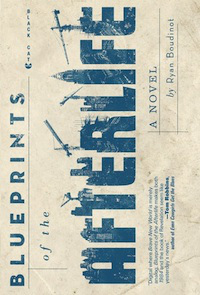
Beach_in_key_westWithin science fiction, there is a great tradition of the oddball post-apocalyptic novel, pioneered by Philip Dick in Dr. Bloodmoney (1965) and Deus Irae (with Roger Zelazny, 1976). It is a tradition still thriving today in books like Jonathan Lethem’s Amnesia Moon (1995) and Ryna Boudinot’s Blueprints of the Afterlife (2012), and it includes Denis Johnson’s lyrical Fiskadoro. The oddball post-apocalyptic novel is not concerned with the gritty realities of survival; instead, it takes place in a less lethal and much more hallucinatory setting that is populated with various hucksters, grotesques, dreamers, and generally confused people who are trying to figure out just what the hell is going on.

The post-apocalyptic setting of Fiskadoro is a group of small fishing communities in the paradise of the Florida Keys, about sixty years after a nuclear war destroyed North America and probably much of the rest of the world. Life here is based on scraps of the pre-holocaust world: physical scraps, scraps of language, scraps of identity, and scraps of awareness of the birth of the present world. Salvaged car seats make up the living room furniture, and people speak in a combination of broken English and Spanish. The residents of these villages piece together their identities by assuming names of celebrities nobody can any longer recall, or grandiose but largely irrelevant titles like ‘Manager of the Miami Symphony Orchestra’. Continue reading

The Infuriating and Essential Science Fiction of A.E. Van Vogt

vanvogtvoyagespacebeagleIf you like the pulp science fiction of the Campbellian Golden Age from the late 1930’s to the early 1950’s, you’re bound to run across A.E. van Vogt’s name on nearly every must-read list. (Incidentally, not everyone, including me, considers this era to be the real Golden Age of science fiction). For fans of vintage science fiction, van Vogt is essential because his works were crucial in the canalization of many of the core ideas that we now consider essential to science fiction. At the same time, van Vogt is infuriating because his writing is annoyingly juvenile, even when compared against the other writers who shared pages in the same magazines aimed at juveniles.

When you read van Vogt today, it’s hard not to wonder what people saw in this guy when they ranked his works as some of the greatest ever in science fiction. Continue reading