
Theory vs Experiment in biology, 150 years ago

150 years later, biology still suffers from the tension between creating a rigorous theory and creating a descriptive narrative of experimental results:

From Toulmin and Goodfield’s The Architecture of Matter, p. 331:

[Claude] Bernard not only succeeded in stating acceptable terms for reconciling physiology with physics and chemistry, but also demonstrated in his own experimental enquiries how this compromise was worked out in practice.

Today Bernard is thought of as a scientist – as one of the founders of modern physiology – and so he was. But he spoke of his own work as ‘experimental medicine’, and the name is significant. For, throughout the two hundred years which separated him from Harvey and Descartes, the central problem had been to combine the natural philosopher’s theoretical vision with the medical anatomist’s fidelity to experience. (This was the problem Hippokrates dismissed as insoluble.) The secret of Bernard’s success ay in his capacity to bring these two elements in physiology into fruitful intellectual harmony. Both in his original researches and in his analysis of physiological method, Bernard treated the animal frame as a functioning whole. Though his experimental work was rigorously quantitative and chemical, he always saw the particular process he was studying in their relation to the rest of the body; and this made him the natural successor to Harvey and Galen, as much as to Liebig and Descartes. As we shall see, it also made him less dependent that his predecessors on the hypothesis of a ‘vital principle’. For he showed that the special characteristics of organisms could be explained as resulting from the complexity and interconnectedness of their bodily processes, without the need to introduce any uniquely ‘vital’ cause into one’s account.

Today we still have trouble straddling the line between what Eric Davidson calls “bits of causality swimming in a sea of phenomenology” and rigorous, quantitative theories that explain how complex interactions between ordinary physical molecules give rise to living processes.
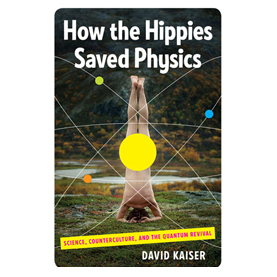
Go read How the Hippies Saved Physics

Wow, definitely a must-read for anyone who likes physics, history of science, and understanding why trends and fads in science come and go. (Read an excerpt at Scientific American.) Kaiser, a physicist and historian of science at MIT tells the story of a group of physicists who, finishing their PhDs in the late 60’s/early 70’s, emerged from graduate school into a job market whose bottom had just dropped out as the Defense Department funding for physics was sharply reduced from its earlier Cold War peak. Jobless and bored with the traditional questions of physics, these hippie physicists became obsessed with some non-traditional questions, and through a convoluted series of causal links, influenced the resurgence of interest in quantum entanglement and the emergence of the now billion-dollar business of quantum computing.

The post-WWII physics boom had been characterized by a ‘shut up and calculate’ attitude, as physicists focused on research questions that fell within or built upon the existing mainstream framework laid down in the 30’s and 40’s. Ignored were questions about the ultimate foundations of quantum mechanics that had long troubled Einstein. Students who showed an interest in such questions were quickly redirected. Continue reading “Go read How the Hippies Saved Physics”

Best letter response. . .EVER

Charles Bennett has a beef with the wording of an article title in Science“At long last, Gravity Probe B satellite proves Einstein right”.

I find myself frequently repeating to students and the public that science doesn’t “prove” theories. Scientific measurements can only disprove theories or be consistent with them.

Instead of going on about the philosophy of science at length, let’s just quote the spot-on quote from their response:

Bennett is completely correct. It’s an important conceptual point, and we blew it.

Bravo!


Cell phones don’t cause blinding either

According to a preliminary study in the Journal of the American Medical Association –  “Effects of Cell Phone Radiofrequency Signal Exposure on Brain Glucose Metabolism” (Volkow et al. 2011) – the radio frequency emissions from cell phones can cause detectable changes in the metabolism of a specific brain region.

In healthy participants and compared with no exposure, 50-minute cell phone exposure was associated with increased brain glucose metabolism in the region closest to the antenna. This finding is of unknown clinical significance.

While there has been a great deal of speculation in the media regarding the mechanism of this effect, we need to dedicated some thought to whether there is actually an effect that requires explanation.

Continue reading “Cell phones don’t cause blinding either”

Science vs getting a life

That seismic rumble you feel is 100,000 postdocs and grad students nodding their heads:

Goodbye academia, I get a life:

The ones I’ve seen thriving in Cambridge, apart from geniuses (there are a few), are the guys who cling to a simple ecological tenet: Find your niche, where you are indispensable, and keep it in your claws at all costs. This means basically that these people do always the same thing, over and over again, simply because it’s the lowest-risk option. I could have done the same (I was pretty skilled during my Ph.D. in a quite obscure but interesting biophysics experimental technique) but I thought that doing science properly was also about learning and broadening your expertise. How wrong I was.

You can imagine yourself what does it mean also for research in general: Nobody takes risks anymore. Nobody young jumps and tries totally new things, because it’s almost surely a noble way to suicide your career. Continue reading “Science vs getting a life”