The Art of Science: A Peek at Particle Physics

b31_joseph_paul_boccio
Photo by Joseph Boccio

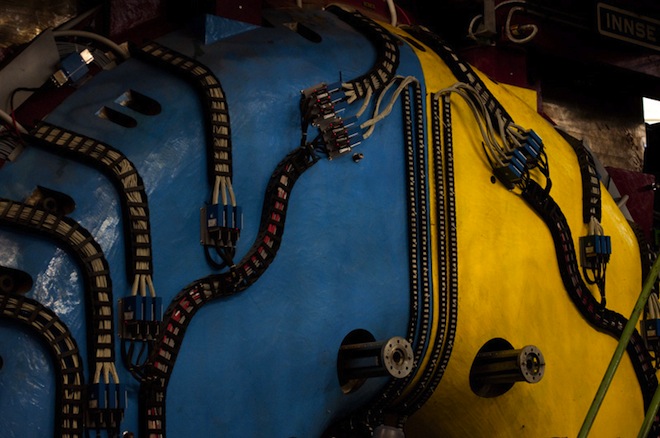
Ten of the world’s leading particle physics facilities invited hundreds of photographers, amateur and professional, for a behind-the-scenes look in September 2012.  The InterActions Physics Photowalk, an annual event, allowed photographers to visit top labs, including Brookhaven National Lab in New York, Gran Sasso National Laboratory in Italy, Chilbolton Observatory in the U.K., and TRIUMF in Canada.  An international panel selected this shot by Joseph Paul Boccio of the KLOE detector at Italy’s Frascati National Laboratory as the top prizewinner. Continue reading “The Art of Science: A Peek at Particle Physics”

Knit frog guts

“Knitting in Biology 101” by Emily Stoneking

Emily Stoneking is not only the name of my favorite Jarl from Skyrim, but also knits dissected frogs. You read all of that right.

Cast your eyes to port on that wonderment. Frog dissections have never been so adorable.

According to the description:

3 out of 4 biologists agree: Knitting in Biology 101 is the cutest biology project, ever!

What I want to know is who is that fourth broken soul? Actually, I know who it is. I went to grad school with him. Yeah, I’m talking about you.


The Art of Science: Engineering Nature

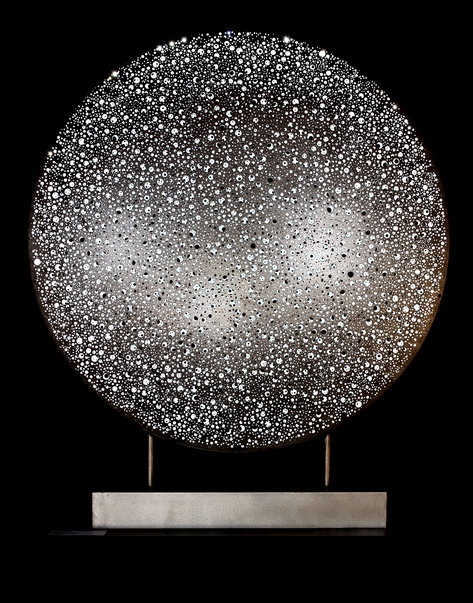
orb
The Orb of Tranquility, 2012
Photo by Pete Duvall

Michael Enn Sirvet is a sculptor, a nature lover and structural engineer. All of these come together in his work in wood, plastic and metal, which he says are “inspired by chaotic and yet uniform naturally occurring patterns, and the technology and industry which mimic them.”

This 2012 sculpture, The Orb of Tranquility, is made up of two aluminum dishes with multiple holes and an LED light source between them.  Its name and shape evoke the moon, stars and planets.  Its intricately patterned surface, however, may be more reminiscent of atoms, molecules, or dividing cells.

Although his work is based in nature, industrial materials and technology form an intrinsic part of Sirvet’s sculpture. “The most organic of my sculptures are industrial, and the most engineered of my pieces reflect primitive natural calm.”

You can see more of Michael Enn Sirvet’s work at his website.

The Art of Science: Mark Dion’s Marine Invertebrates

markdion

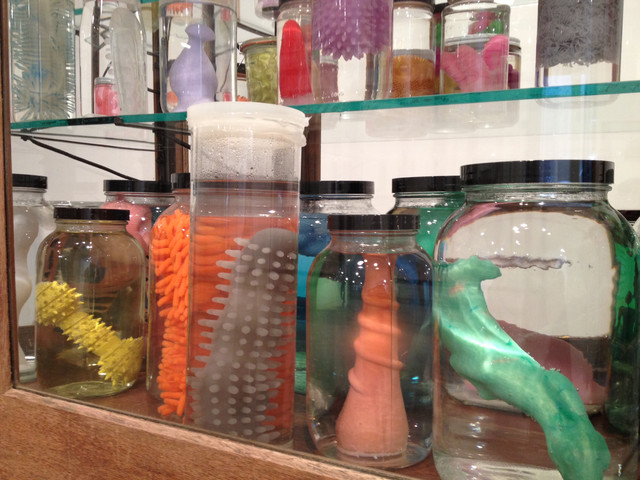
Andy Warhol famously said that “Art is what you can get away with.” It seems a good definition for this sculpture by renowned American artist Mark Dion.  The piece, Marine Invertebrates, is made up of dog toys and sex toys displayed in specimen bottles, as if in an old-fashioned natural history museum.

The toys, which bear an uncanny resemblance to real marine invertebrates,  continue Dion’s exploration of the ways that museums and other institutions shape our views of nature.   A show of his work, including this piece, is on exhibit at the Tonya Bonakdar gallery in New York city through April 13.

According to the gallery website, “Appropriating archaeological and other scientific methods of collecting, ordering, and exhibiting objects, Dion creates works that question the distinctions between objective (rational) scientific methods and subjective (irrational) influences. The artist’s spectacular and often fantastical curiosity cabinets, modeled on Wunderkabinetts of the 16th Century, exalt atypical orderings of objects and specimens….Mark Dion questions the authoritative role of the scientific voice in contemporary society.” (source)

On a less philosophical plane, my personal responses to this artwork were (in objective, rational, scientific order): 1. Hahahahahaha! 2. OMG that is amazing. 3. Damn, I wish I had thought of that.

More information on the Dion exhibit and his other works are at the Tonya Bonakdar Gallery website.

Ye Olde Meteoroid

Source: theratzingerforum.yuku.com via minouette on Pinterest

In the wake of the Russian meteorite over Chelyabinsk, Russia, Minouette compiled a fascinating look at how objects from space running into our fair planet have inspired art throughout of human history.