
Arthur Conan Doyle’s The Poison Belt (1913)
 End of the world narratives are typically about a fight for survival – people fight for food, shelter, and safety as the asteroid, pandemic plague, or zombie hordes threaten to wipe out human life. This was just as true of SF a century ago as it is today: In 1912, Jack London’s The Scarlet Plague featured armed Berkeley professors, holed up in the chemistry building as a plague swept away civilization; while Garrett Serviss’ The Second Deluge tells of a thousand lucky survivors who, in a modern ark, escape a world-wide flood.
The next year, Arthur Conan Doyle also published a novel about a group of hardy survivors. But the terms of survival in The Poison Belt are much more ironic: Professor Challenger and his fellow adventurers, who had fought off dinosaurs and ape-men on a remote South American plateau in Doyle’s 1912 The Lost World, now confront the extinction of human life as passive observers, watching the destruction of humanity from the window of the “charmingly feminine sitting room” of Professor Challenger’s wife. Continue reading “Apocalypse 1913: Adrift In A Hostile Cosmos”

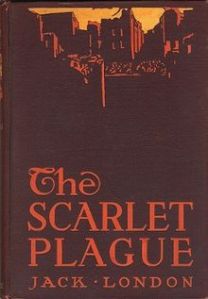 We’re all familiar with classic scenes of a brutal post-apocalyptic world like this: A group of refugees from the pandemic is holed up in an abandoned building with a cache of food and arms, firing on a gang of assaulting raiders. Or, a former professor of English Literature, clad in goat skins and huddled around a fire, is telling his dirty, illiterate grandsons about life before civilization vanished.
 Back in 1805, the French priest de Grainville
  The Finch and Pea