Trollslayers

On 10 April, the US Patent and Trademark Office (USPTO) invalidated key aspects of patent-troll Personal Audio’s “podcasting patent” following a petition for review spearheaded by the Electronic Frontier Foundation with assistance from the Cyberlaw Clinic at Harvard’s Berkman Center for Internet & Society and other pro bono attorneys. Personal Audio had been using the patent to threaten podcasters with lawsuits unless a settlement was paid out.

ORDERED that Petitioner has shown by a preponderance of the evidence that claims 31–35 of U.S. Patent No. 8,112,504 B2 are unpatentable…

A key aspect of the successful petition was the evidence of “prior art” – podcasts or podcast-like productions that pre-dated the patent – which were researched in part through crowdsourcing.

The U.S. Patent and Trademark Office (USPTO) invalidated key claims in the so-called “podcasting patent” today after a petition for review from the Electronic Frontier Foundation (EFF)—a decision that significantly curtails the ability of a patent troll to threaten podcasters big and small…In petitions filed with Patent Office, EFF showed that Personal Audio did not invent anything new before it filed its patent application, and, in fact, other people were podcasting for years previously.
Electronic Frontier Foundation

Science for the People: Heavy Metal Birds

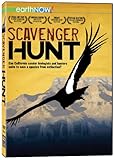
sftpThis week, Science for the People is learning about the impact that the byproducts of our industrial societies have on avian populations. We’ll speak to filmmaker Matthew Podolsky about his documentary Scavenger Hunt, that looks at the effects of lead on the California Condor. We’ll also talk to conservation scientist Alexander Bond about his research on mercury poisoning in the endangered Arctic Ivory Gull.

*Josh provides research & social media help to Science for the People and is, therefore, completely biased.

Science for the People: Impossible Space

sftpThis week Science for the People is exploring the limits of science exploration in both fictional and fact. We’re joined by “lifelong space nerd” Andy Weir, to talk about his debut novel The Martian (and soon to be film, trailer below), that pits human invenitveness and ingenuity against the unforgiving environment of the red planet. And astrophysicist and science blogger Ethan Siegel returns to explore so-called “impossible space engines“, and what news stories about them can teach us about journalism and science literacy.

*Josh provides research & social media help to Science for the People and is, therefore, completely biased.

Science for the People: On Intelligence

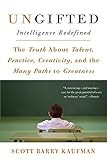
sftpThis week Science for the People is learning about how scientists and society measure intelligence, and the relationship between smartness and success. We’re joined by cognitive psychologist Scott Barry Kaufman, to talk about his book Ungifted: Intelligence Redefined. We’ll also talk to Nathaniel Barr, postdoctoral researcher at the University of Waterloo, about research into the relationship between smartphone use and cognitive skills.

*Josh provides research & social media help to Science for the People and is, therefore, completely biased.

Science for the People: Circumcision

sftpThis week we’re looking at the contentious practice and history of circumcision. We’re joined by Sarah B. Rodriguez, medical historian and lecturer in global health and bioethics at Northwestern University, to talk about about her book Female Circumcision and Clitoridectomy in the United States: A History of a Medical Treatment. We’ll also discuss the medical and ethical implications of infant male circumcision with Brian Earp, University of Oxford Research Fellow in Science and Ethics.

*Josh provides research & social media help to Science for the People and is, therefore, completely biased.