
Mark Witton on Dinosaur Cheeks

“Deinonychosauria” (Cladistic Heraldry) by David Orr (All Rights Reserved; Used with Permission)

Should Deinonychus*, the clawed dinosaur that was the actual inspiration for the velociraptors of Jurassic Park‘s, have lean, Sting-like cheeks or chipmunk cheeks under their feathers?

In a recent post, paleontologist Mark Witton looks at the research on Deinonychus bite strength and how it should influence PaleoArt depictions of this iconic animal.

*While I am on the record with my belief that I could win a fight with a single Velociraptor, I have no doubt that I would lose against a Deinonychus and die slowly as it perched upon my mangled body leisurely consuming my innards.

HT: Tommy Leung
The Science of Weezer

On the 537th episode of the WTF with Marc Maron Podcast, Marc Maron has an interesting conversation with Rivers Cuomo* of Weezer about his method for songwriting, particularly in the gap between Pinkerton (1996) and The Green Album (2001).

What I find so captivating is Cuomo’s application of a scientific mindset to “solving” his creative process  in the hopes of working more efficiently and effectively. He fails, but does not conclude that his art cannot be understood by science. His problem was a classic scientific problem of too many variables, too small of a sample size (ie, n=1), and too little time. Cuomo also defies Maron’s efforts to portray his analytical quest as potentially maddening. It simply wasn’t productive enough.

I’m going to recommend the whole interview, but the segment I have described starts at about the 34:50 mark.

*Promoting Weezer’s new album Everything Will Be Alright in the End.

Hunger Games Victory

Photo by Tara Witten

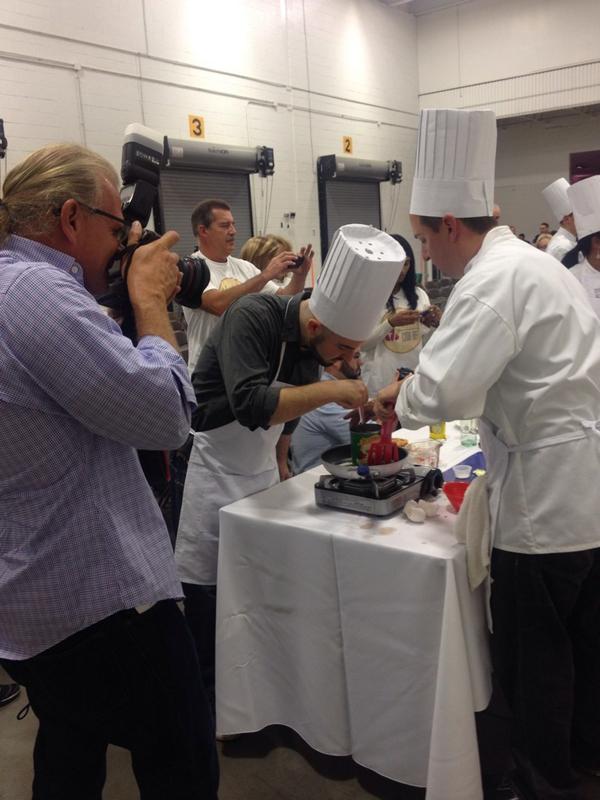
Earlier this month, our resident chef, Ben Witten, mentored a team from GrayHair Software to victory in “The Hunger Games”, a charity cooking event that raised $15,000 to support child nutrition programs at the Food Bank of South Jersey.

The contest provided seven teams with a typical box of food from the food bank. Audience members could also “buy” (i.e., make a donation) additional items to help their favorite team.

The GrayHair Software team produced a breakfast hash that they called GrayHair Sunrise:

“We made an autumn vegetable hash with apples and topped with a sunny side up egg, sprinkled with basil and feta.” – Valerie Capasso, GrayHair Software (Kelly Roncace in South Jersey Times)

The dish surprised the judges by surprise with the simple elegance of its flavors.

As Ben’s brother, I am not surprised. I can see his influence as a team mentor. While I have never had this particular dish, I have had eaten many varieties of vegetable hash that he has prepared for breakfast. They are simple. They are elegant. They are flavorful. And, they all taste like victory.

SOURCE: South Jersey Times (Kelly Roncace) and my proud sister-in-law.

Map update

Remember paper maps, and how hard it was to fold them back up again, and how they would flap all over the place if it was a bit windy? All of that pales in comparison to the frustration of trying to figure out how to update our map in the new Google Maps system. That’s why this post is a week overdue, but I finally managed to add a few non-Finch-and-Pea spots:

Continue reading “Map update”

Pinker explains why academics can’t write

Ahead of tomorrow’s release of Steven Pinker’s new book on writing, The Chronicle features a teaser essay – “Why Academics’ Writing Stinks”:

An insight from literary analysis and an insight from cognitive science go a long way toward explaining why people who devote their lives to the world of ideas are so inept at conveying them.

Bad academic writing shouldn’t be so surprising. During your training as an academic, you get almost no training in writing after your undergrad studies. Sure, you are required write, but you’re not formally trained to do it well. In fact grad students in the sciences generally don’t write very much anyway – a thesis proposal, and a couple of papers, so maybe 4-5 relatively short manuscripts during your entire 5-7 years of PhD training.

I won’t make any grand claims for my own writing, but I have to plug my favorite style guide: Joseph Williams’ Style beats Strunk & White, hands down.

UPDATE: Link fixed!!!