End of the World 1843: The Disease of Civilization

Nathaniel Hawthorne’s “The New Adam and Eve” (1843)

Before we move on to the 20th century works of what Josh has aptly named the “post-apocalyptome,” let’s recap what happened in the 19th. Basically, early writers of post-apocalyptic fiction came up with just about all of the major themes, plots, characters, and settings of the genre that we know and love today (the zombie apocalypse excepted). Plagues, comets, environmental catastrophes, or a dying sun lead to ruined cities, collapsed civilizations, and roving bands of marauders; there is the next evolutionary step, a reversion to barbarism and superstition, and the lonely Last Man.

It all pretty much started in 1805 with de Grainville’s The Last Man, a Miltonian, futuristic religious fantasy authored by a French priest. At first this book seems to have little to do with science fiction — it’s an inversion of Genesis, featuring a Last Couple that has to choose whether to obey God and fulfill his plan or pursue their own desires. But despite the heavy Gothic atmosphere, The Last Man is one of very first futuristic romances of the century: there are airships, great engineering projects, and scientific discoveries of unlimited sources of power. It’s as much a vision of scientific progress as it is one of religion, and is the first solid entry in the Dying Earth sub-genre. Humans, through their technology, control nature until God decides to wrap it all up. Continue reading “End of the World 1843: The Disease of Civilization”

Count Like An Egyptian: More fun than you think!

Greg Gbur is an associate professor of physics, specializing in optical science, at UNC Charlotte.

IMG_5647

I’ve been a fan of ancient Egyptian history and culture since I was a kid. My Dad would take me to the Field Museum in Chicago and we would browse the beautiful Egyptian art and artifacts.  When King Tutankhamun’s treasures reached the Field Museum in 1977, I was there to see them, standing in lines that rivaled those of Star Wars, which opened earlier that same year.

One aspect of ancient Egyptian culture that I failed to pay much attention to, however, is mathematics.  Conventional wisdom for years has suggested that, although ancient Egypt had a functioning mathematics system, it was rudimentary and flawed in many ways. I assumed that this was the case without k10197looking too much into it – besides, what sort of insight could one gain from learning an antiquated system of mathematics?

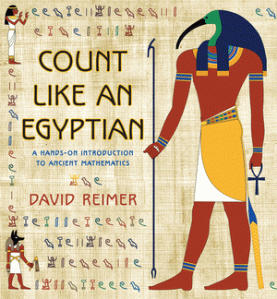
Now a book has come out that aims to correct these flawed opinions of ancient mathematics: Count Like an Egyptian by David Reimer, an associate professor of mathematics at the College of New Jersey. Continue reading “Count Like An Egyptian: More fun than you think!”

Science Caturday: Curiosity Revisited

curiosity

A study published this week in the journal Neuron suggests why people learn better when their curiosity is piqued.

Researchers from UC Davis conducted  fMRI scans on students and found evidence that activity in the midbrain was enhanced during states of high curiosity. The study indicated that curiosity was related to an increase in the activity of the brain chemical dopamine, which seemed to strengthen the students’ memories.

While this may be good news for human students and teachers, researchers have yet to test the findings on cats, a group to which curiosity is often said to be lethal. Good luck getting those proposals past IRB cat!

irb cat


It’ll take more than tweaking NIH review to promote young scientists

The NY Times ran an op-ed by a Maryland Congressional representative arguing that younger biomedical investigators, who are at what should be the most creative time of their careers, are getting screwed in the current funding climate. He suggests that Congress should force the NIH to change this:

Congress should also mandate that the median age of first research awards to new investigators be under 40 within five years, and under 38 within 10 years. Failure to meet these benchmarks would result in penalties for the N.I.H., including possible funding cuts.

But people aren’t just getting funded later – it looks like they’re getting their first tenure-track jobs later as well. There are probably proportionally fewer younger investigators that the NIH could fund. The average age at which people get their first assistant professorships at U.S. medical schools appears to have climbed steadily, closely tracking the rise in age of investigators getting their first R01s. (There are some conflicting data; my guess is that it’s important to distinguish between first tenure-track job at any institution (NSF survey), and first tenure-track job at medical schools (AAMC data), where most people who apply for R01’s work.) This shouldn’t be surprising – competition for faculty jobs is growing, and as the economist Paula Stephan has argued, there is some evidence that those who go on to tenure track jobs do longer postdocs than those who don’t. This isn’t a problem that will be solved by forcing the NIH to fund more younger investigators.

Science for the People: High Price

sftp

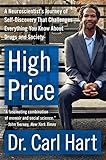
This week, Science for the People is looking at the science and policy of treating drug addiction. They’re joined by psychology professor and researcher Carl Hart to talk about his book “High Price: A Neuroscientist’s Journey of Self-Discovery That Challenges Everything You Know About Drugs and Society.” And they’ll speak to Donald MacPherson, Director of the Canadian Drug Policy Coalition, about harm reduction strategies to reduce the negative consequences of drug use.

*Josh provides research help to Science for the People and is, therefore, a completely biased and cooperative member of the team.