Ellesmere Island

3232070295_fcb9b6288e_z
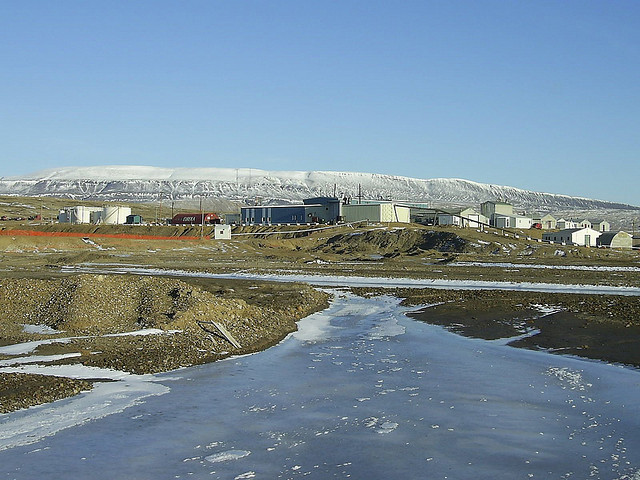
Town of Eureka, Nunavut.

Think it’s cold where you are right now? It’s not as cold as Ellesmere Island. The average temperature of its capital city Grise Fiord (population 130) is −16.5 °C (2.3 °F), according to Wikipedia. Only about 150 people (maybe even fewer) live on Ellesmere Island, and the permanent population of the town of Eureka is zero. Eureka, as you might have guessed, is predominantly a research station.

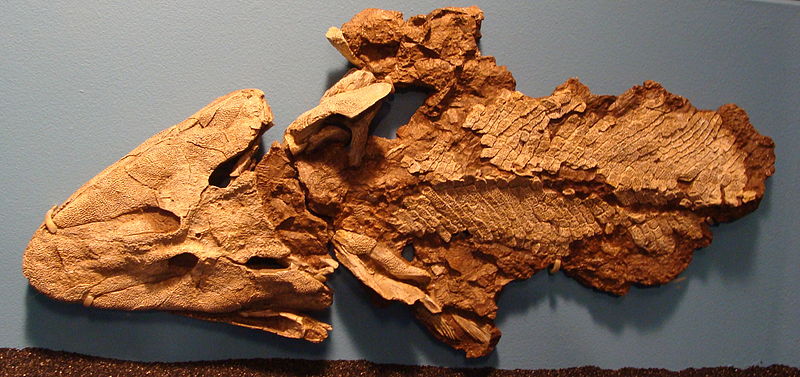
Research on Ellesmere Island in northern Nunavut (Canada) focuses largely on weather and climate research, but perhaps its most famous discovery is Tiktaalik – a fish with limbs.

800px-Tiktaalik_Chicago

Continue reading “Ellesmere Island”

Some gene conceptions and misconceptions

Any geneticist who has discussed genes with friends and family knows that there are a lot of misconceptions floating around out there. This is understandable – genetics involves some tricky concepts, and sometimes we use confusing linguistic shortcuts to talk about genes without using jargon. Sometimes scientists get confused as well (although that’s a topic for another day).

One of the big misconceptions is that there are genes ‘for’ specific traits — you’ll often hear that we have a gene ‘for’ X, X being some phenotypic trait. (If X is not a trait, but some sort of molecular player, than the language is correct, e.g. we do in fact have a gene — actually multiple genes — for the enzyme alcohol dehydrogenase.) This language is often rightly condemned as being misleading, because there is no one-to-one correspondence between genes and traits: traits are the product of multiple genes, while any given gene will contribute to multiple traits.

But you only need to tweak the ‘gene for X‘ language slightly to get at a correct and important concept in genetics: variation in a single gene is often responsible for important differences in X (in a particular population). This is usually what we mean when we say there is a ‘gene for X‘, but this clarification is rarely noted when people knock the phrase. Continue reading “Some gene conceptions and misconceptions”

Apocalypse 1912: Nightmare Journey to the Center of the Earth

William Hope Hodgson’s The Night Land (1912)

NightLandHiLoBack in 1805, the French priest de Grainville wrote what could be considered the first Dying Earth novel. Despite many obvious science fictional elements, Le Dernier Homme was a religious fantasy, inspired by the pseudo-biblical style of Milton’s Paradise Lost. Scientist-prophets fulfilled God’s will by conquering nature with science, but in the background was an invisible world of mystical spirits who were part of God’s master plan.

A century later, a quirky British poet produced another major dying earth vision by flipping this formula: he brought the mysticism to the foreground, and put the science in the background, creating a completely secular and much darker vision of earth’s final era. William Hope Hodgson’s The Night Land, a flawed beast of a book, is a milestone in the genre — a forerunner not only of now-classic Dying Earth fantasies by Jack Vance and Gene Wolfe, but also of psychologically refracted post-apocalyptic visions like Galouye’s Dark Universe and Dick and Zelazny’s Deus Irae. Continue reading “Apocalypse 1912: Nightmare Journey to the Center of the Earth”

Science Caturday: Treasure in the Dirt

vewyqwiet

The biggest news in the science world this week was from a tiny microbe that grows in the dirt. A study published in Nature revealed that a newly-discovered antibiotic, Teixobactin, based on a soil bacterium, shows promise against TB and MRSA, which are increasingly resistant to all the drugs currently on the market.

There’s much more information about the team, the study and the possible uses of Teixobactin in this Washington Post story by Rachel Feltman. Our intrepid science kitteh was so inspired by this article that she went right out and started searching for the next marvelous microbe hidden in the soil.


Science for the People: Falling into the Fire

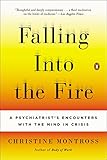
sftpThis week, Science for the People gets a gripping first person account of the challenges involved in mental health diagnosis and treatment. They spend the hour with Dr. Christine Montross, Assistant Professor of Psychiatry and Human Behavior, and the Director of Counseling Resources at the Warren Alpert Medical School of Brown University, to talk about her book Falling Into the Fire: A Psychiatrist’s Encounters with the Mind in Crisis.

*Josh provides research help to Science for the People and is, therefore, completely biased.