This week Science for the People is learning about the fascinating lives of bees, and the important role they play in our global ecosystem. They speak to University of Sussex biology professor Dave Goulson about his book A Sting in the Tale: My Adventures with Bumblebees. They also talk to Jocelyn Crocker, founding member of YEG Bees, about the rewards and challenges of urban beekeeping.
While the retro-poster concept is far from unique, the use of the phrase “Exoplanet Travel Bureau” made me wonder if the folks at JPL were inspired by the Intergalactic Travel Bureau project or if they had stumbled onto a similar idea independently. So I asked them; and they actually answered.
The concept for JPL’s posters was developed by David Delgado. Delgado collaborated with Joby Harris and Dan Goods to create the posters, according to Elizabeth Landau (JPL Media Relations Specialist). Joby Harris* said:
The existing posters by other artists out there were not inspiration for ours, but rather confirmation that our posters in progress would be well received.
While I’m a bit disappointed that the JPL team was unaware of Steve Thomas’ posters (the Intergalactic Travel Bureau has also received NASA funding), it is admittedly difficult to be aware of everything on the Internet these days. I do hope that the creative convergence of JPL and the Intergalactic Travel Bureau might lead to creative cooperation on science outreach efforts in the future.
Artist Elsabé Dixon grew up raising silkworms in cardboard boxes as a child in South Africa. Now based in Virginia, Dixon has made her childhood hobby the source of her art, now on display in a unique residency and installation called LIVE/LIFE at Arlington’s Artisphere through February 22.
In the Artisphere studio, Dixon and helpers first constructed an environment for domesticated silkworms (Bombyx mori) to live out a life cycle – hatching from eggs to caterpillars, eating mulberry leaves, spinning cocoons, pupating, mating and dying – and then created sculpture using what was left behind, including twigs, empty cocoons, salt and even silkworm poop.
Detail from LIVE/LIFE, Elsabe Dixon, Mixed Media, 2014-15
Dixon sees the life cycle of the Bombyx mori – the only truly domesticated insect in the world – as a means of investigating many aspects of life. The first and most obvious is the ephemeral and ever-changing nature of life, but the work examines many other issues, including our relationships with society, nature and the built environment.
There are no barriers between the insects and the audience here. Visitors in the earlier months of the residency were free to touch the caterpillars and the moths. When I visited earlier in January, the moths were all dead, but I was able to touch the silk cocoons left behind.
The sculptural installation that Dixon has constructed, first for the silkworms to live in and then using their products and detritus, is based on microscopic photographs of silkworm particles. Made from materials including rubber, cut-up cardboard paper towel tubes, discarded silk cocoons, mulberry branches and, yes, piles of caterpillar poop, the installation looks organic, natural, and utterly at home in its modern-art setting.
LIVE/LIFE is open to the public Thursday and Friday evenings as well as Sunday afternoons, when the artist welcomes visitors to join in conversations with her and others in the field of art, medicine, engineering and food production.
Close to Nikko, just a 20-minute bus ride away, is a waterfall that all the guidebooks recommended, so we had to check it out. The waterfall is further uphill, at Lake Chuzenji – a lake formed after a volcanic eruption blocked off the river thousands of years ago.
Before we got on the bus, we became a bit worried by the fog we had seen creeping onto the mountain. Hoping that it would clear eventually, and with no further days left in Nikko, we decided to risk it and journeyed to Lake Chuzenji.
The further we travelled up the mountain, the thicker the fog got.
Once we got out of the bus at the top, we walked toward the waterfall, barely seeing more than about twenty or thirty feet in front of us.
In the distance, we saw what looked like a… bear?
Coming closer, the bear stayed motionless next to a sign. It was a wooden statue.
The sign was for the Nikko Natural Science Museum, but we were aiming for the falls, so we didn’t stop at the museum.
Last week, more than two years after visiting the Lake Chuzenji area, I was looking at my photos again, and decided to look into this Natural Science Museum that the bear was trying to entice us to visit.
We’re all familiar with classic scenes of a brutal post-apocalyptic world like this: A group of refugees from the pandemic is holed up in an abandoned building with a cache of food and arms, firing on a gang of assaulting raiders. Or, a former professor of English Literature, clad in goat skins and huddled around a fire, is telling his dirty, illiterate grandsons about life before civilization vanished.
Today these scenes are standard fare in post-apocalyptic fiction, from The Road to The Walking Dead. But when Jack London wrote them a century ago, they weren’t. The genre itself had been around for a long time, and many of the classic themes, settings, and catastrophes had already been introduced. However, nobody before Jack London had described a collapse of civilization so violent or an aftermath so squalid. In the century since, images of a gritty and brutal world in ruins have become almost a requirement in this genre. Continue reading “Apocalypse 1912: A Naturalist End of the World”


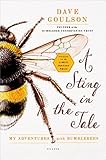 This week Science for the People is learning about the fascinating lives of bees, and the important role they play in our global ecosystem. They speak to University of Sussex biology professor Dave Goulson about his book A Sting in the Tale: My Adventures with Bumblebees. They also talk to Jocelyn Crocker, founding member of YEG Bees, about the rewards and challenges of urban beekeeping.


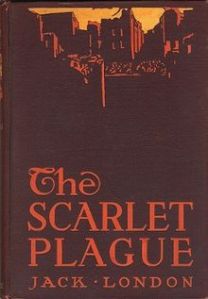 We’re all familiar with classic scenes of a brutal post-apocalyptic world like this: A group of refugees from the pandemic is holed up in an abandoned building with a cache of food and arms, firing on a gang of assaulting raiders. Or, a former professor of English Literature, clad in goat skins and huddled around a fire, is telling his dirty, illiterate grandsons about life before civilization vanished.
 The Finch and Pea