Cracked

If you are going to wind up as a reference point in a Cracked.com article, it can go a lot worse than being the Internet’s ironic evidence of Senator Lyndsay Graham’s antipathy to modern information technology (I’m concerned citizen #1), even when addressing questions on modern information technology that were submitted to his office using modern information technology*.

*It is arguable that my semi-rural, South Carolina, DSL connection is not modern information technology.

Having “Visions” at the Art Access Gallery

inkretina
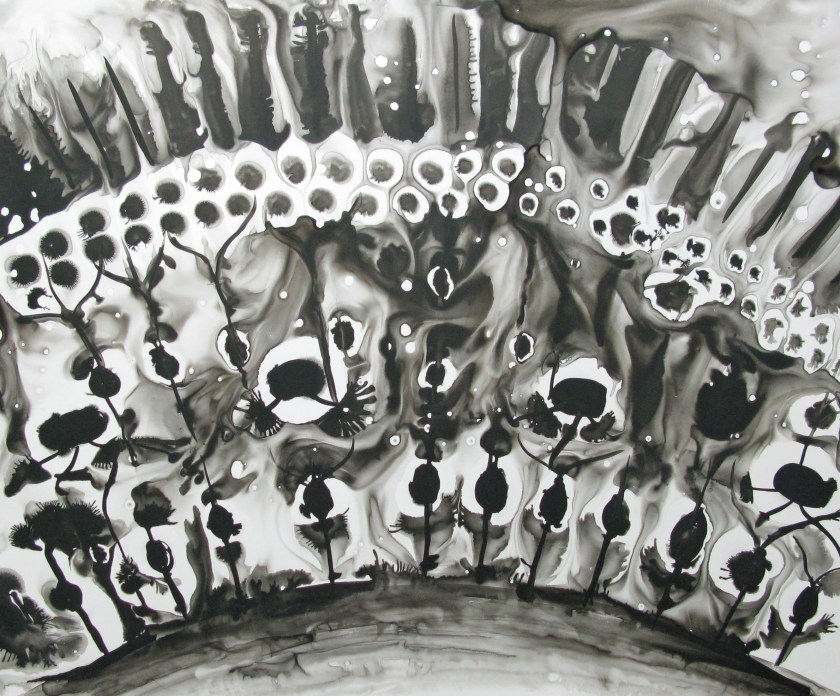
Retina Diagram, ink and water on yupo, 2015 by Michele Banks (All Rights Reserved; Used with Permission)

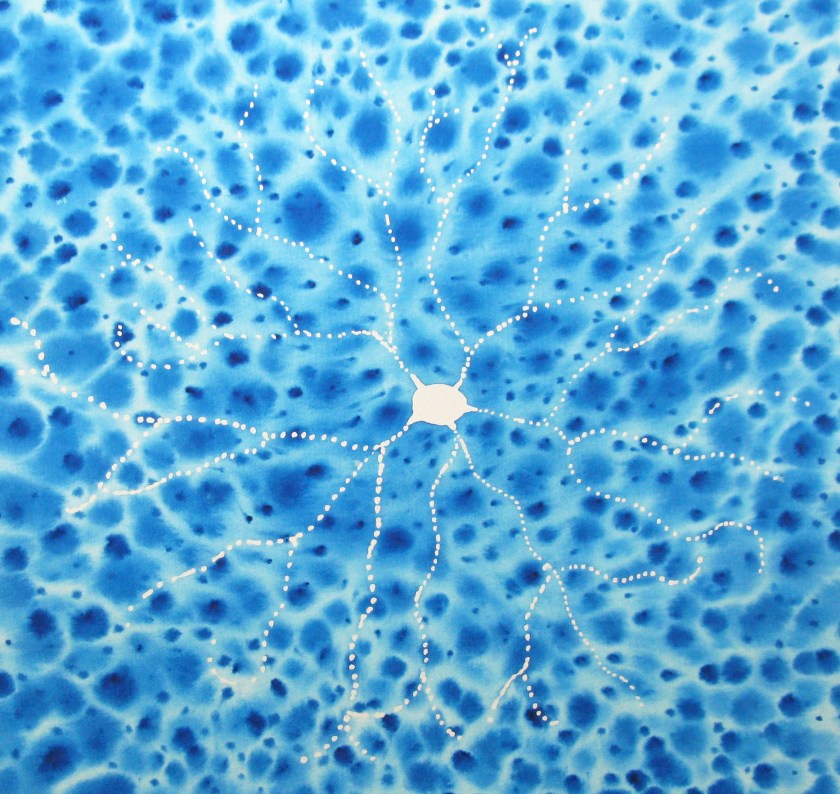
The Art Access Gallery in Salt Lake City, Utah has collaborated with the Moran Eye Center at the University of Utah to present Visions from 17 April to 6 May, 2015 with an opening reception on 17 April (6-9PM). Visions blends the art and science of vision. The exhibit also had the good sense to include the work of our own Michele Banks, who has graciously provided us with a preview of her art.

Blue Batik Retinal Neuron, watercolor on paper, 2015 (All Rights Reserved; Used with Permission)

The exhibit also includes the work of James Anderson, Nico Cuenca, Jim Gillman, Bryan Jones, Helga Kolb, Gabe Luna, Paula Morris, Hope Morrison, Scott Peterson, Rebecca Pfeiffer, Stuart Stansbusry, and Peter Westonscow.

Geysir

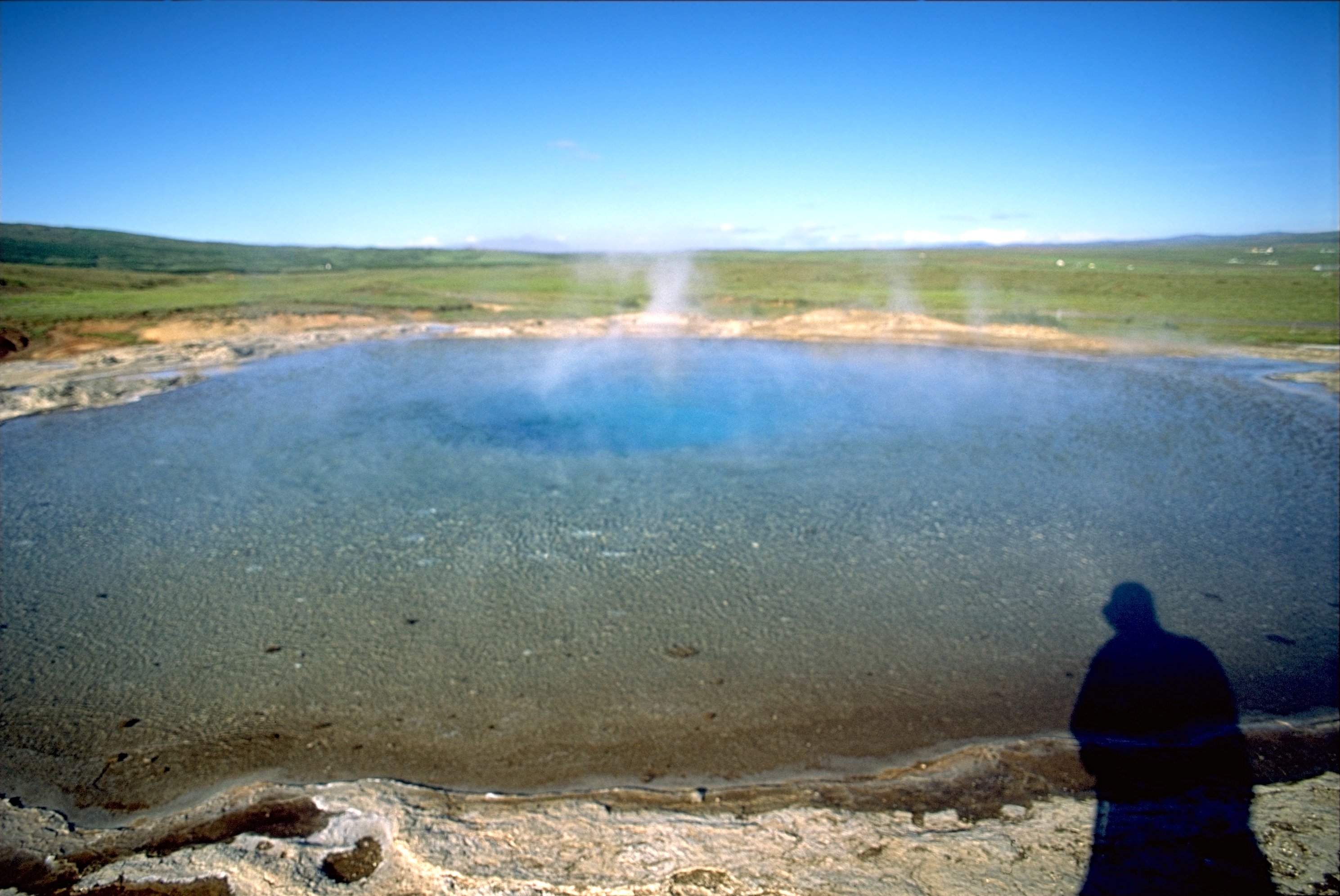
400px-Geysir-iceland-1The word geyser comes from Geysir – the name of the first described geyser known to European scientists and explorers.

Much of what we know about Geysir in Iceland, and about geysers in general, comes from work carried out by Robert Bunsen in 1846. (Yes, that Bunsen, of the bunsen burner.)

He discovered that geyser activity was caused by heating of underground water at a particular point, while the rest of the water remains colder.

Geysir is thought to have been active for about 10,000 years, and is still active, although it’s not always predictable. Until the 1990s, eruptions were sometimes induced with soap so that the geyser could go off on command for special occasions, but that practice was abandoned out of environmental concerns.

GreatGeysirPool

Images: Active Geysir by Joaoleitao via Wikipedia; Quiet Geysir by Andreas Tille, via Wikimedia

Science Caturday: Ah Tawt I Taw a Terror Bird

i am not the mighty hunter i thought i was

Once upon a time, ten-foot-tall carnivorous “terror birds” roamed the earth. In a paper published this week in the Journal of Vertebrate Paleontology, scientists revealed fascinating new details about their anatomy and hunting technique, based on studies of a nearly-complete fossil found in 2010.

Laura Geggel reports in LiveScience that the researchers, led by Federico Degrange, learned a great deal about the behavior and anatomy of terror birds by studying the skeleton of Llallawavis scagliai.

“Given its extraordinary condition, the fossil has helped researchers study the terror bird’s anatomy in detail. The specimen is the first known fossilized terror bird with a complete trachea and complete palate (the roof of the mouth). It even includes the intricate bones of the creature’s ears, eye sockets, brain box and skull, providing scientists with an unprecedented look at the flightless bird’s sensory capabilities.”

The researchers also discovered that the bird’s skull is more rigid than in other species, suggesting that Llallawavis scagliai may have killed by slamming its large beak up and down upon its prey.

Geggel’s article and the paper itself have many more fascinating details. But I think we’ll just leave it at that because we’re frightening the cat.

Mark Ptashne on the “incoherent and counterfactual world” of epigenetics

Ptashne again cuts through epic epigenetic confusion of transcription factors versus histone marks, cause versus effect.

“The Chemistry of Regulation of Genes and Other Things”:

As I have described, where the activated gene encodes the activator itself, we have memory: a self-perpetuating state of gene expression transmitted by regulatory proteins distributed to daughter cells as cells divide.

These now obvious ideas seem to be hard to accept for some. Ignoring the specificity problem and in the search for some alternative solution to the memory problem, they have created an incoherent and counterfactual world, one in which chromatin structure determines the activity of transcription factors (recruiters) rather than the other way around. Chromatin structure is usually meant to imply histone modifications, which somehow have acquired the name epigenetic modifications. The literature is replete with studies of histone modifications presented as studies of “epigenetics,”… Continue reading “Mark Ptashne on the “incoherent and counterfactual world” of epigenetics”