El Dorado – The mythical city at the lake

El Dorado, the city of gold, was a popular legend in the 16th century. At that time, large parts of South America remained undiscovered, so who knew what secrets the continent held?

According to legend, El Dorado was located at Lake Parime. Sir Walter Raleigh was the first explorer to try to find the lake, in 1595. He didn’t find it, but that was no reason to believe it wasn’t there. Maybe they just hadn’t looked closely enough?
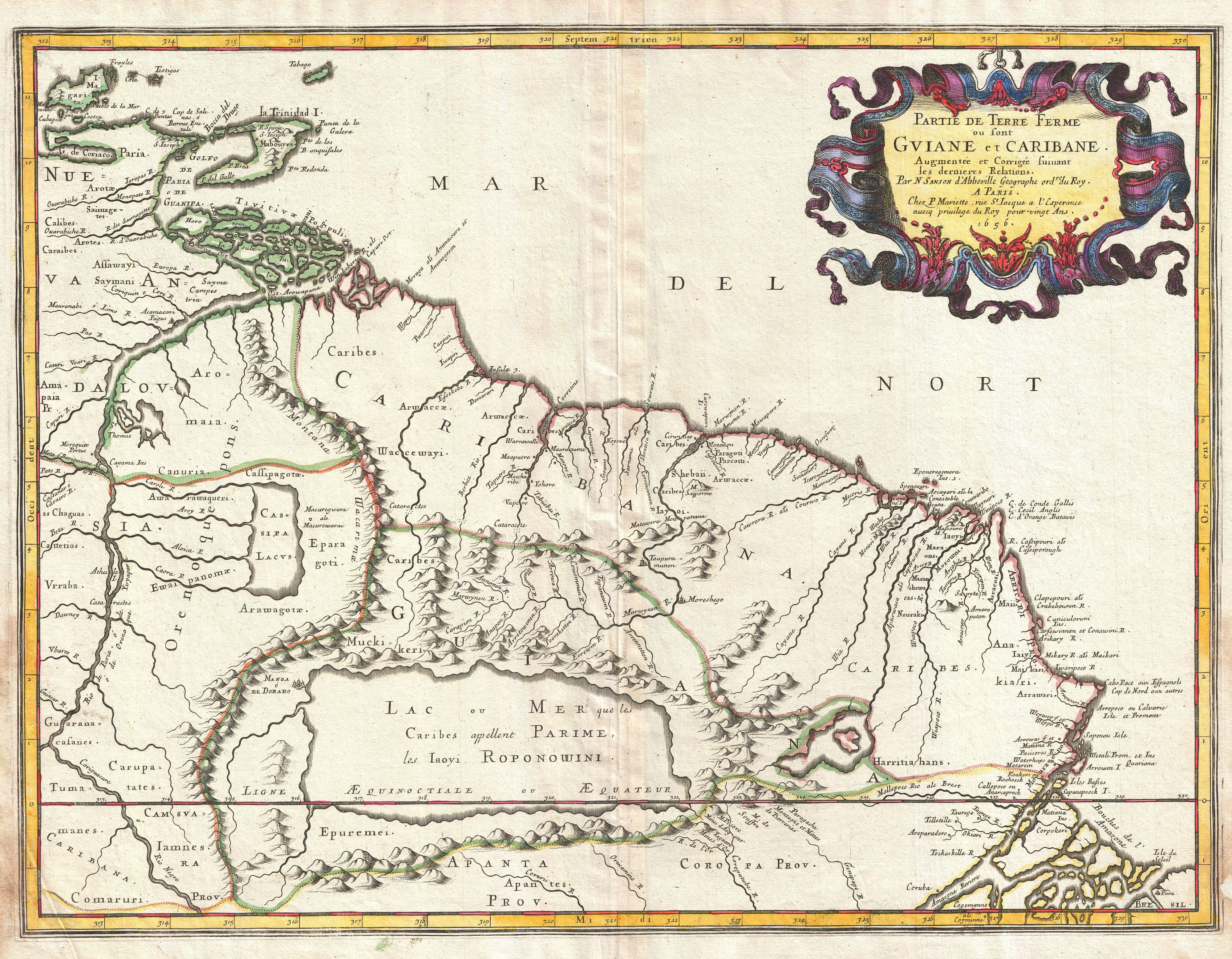
Lake Parime, a location marker for the city of El Dorado. At least one of these things is a myth.

Several other expeditions set out in the direction of the supposed lake, but nobody was successful. Of course not. The lake, like the city of El Dorado itself, was just a myth.

Or was it?

According to our modern day oracle of Wikipedia, there is some geological evidence that suggests that there were indeed lakes in the past in the area where Lake Parime was thought to be, and that some those lakes could have carried gold that came from mountains upstream, leading to myths of an entire city of gold. Some researchers believe that the painted rock of Pedra Pintada was alongside an ancient lake. Others have found evidence that a 17th century earthquake drained an entire lake that could have been Lake Parime. But the one research paper cited on Wikipedia as reference to suggest that Lake Parime might have been the lake drained in a 1690 earthquake does not make this assumption at all.

Was there really a city of gold, or even a mysteriously vanished lake?

Citation needed.


Map: 1656 Sanson Map of Guiana, Venezuela, and El Dorado . Public domain. Via Wikimedia.

Science Cat Scientific Name

catusphilosophusOur Chief Cat Wrangler is busy sharing her art with the world. So, today, you are stuck with me and a joke that occured to me in the middle of the night. Yes, I wrtie jokes about latinized scientific names for Science Cats.

Science for the People: Bruno Pontecorvo

sftpThis Science for the People, we’re digging into a tale of intrigue that may have changed the course of physics research in the 20th century. We’ll spend the hour with Frank Close, Professor of Physics at the University of Oxford and Fellow of Exeter College, Oxford, talking about his book Half-Life: The Divided Life of Bruno Pontecorvo, Physicist or Spy. We’ll learn about Pontecorvo’s groundbreaking career in particle physics, his defection to the Soviet Union, and the accusations that he traded nuclear secrets at the height of the Cold War.

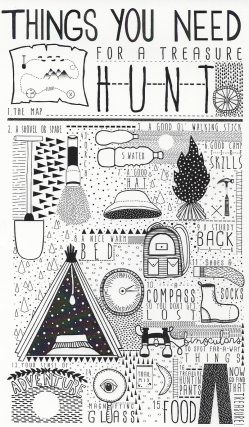
Things You Need for a Treasure Hunt

AdventureI have not made my fondness for The Curated Tee‘s children’s shirts. They are also some of my daughters’ favorite shirts. We love the variety of art on these shirts from incredibly creative artists.

We were all very happy when Mandy & Vanessa extended the shirt sizes to 6T, but now I’m jealous they don’t do adult sizes.

I know that I should be a good nered and stick with the anatomical heart shirt as my personal favorite, but the new Treasure Hunt shirt featuring art from Ruby & Wolf is irresistable.

Right now, you can get 20% off a 3-month subscription at The Curated Tee by using the code TREASUREHUNT.

The Art of Science: Culture and Monoculture

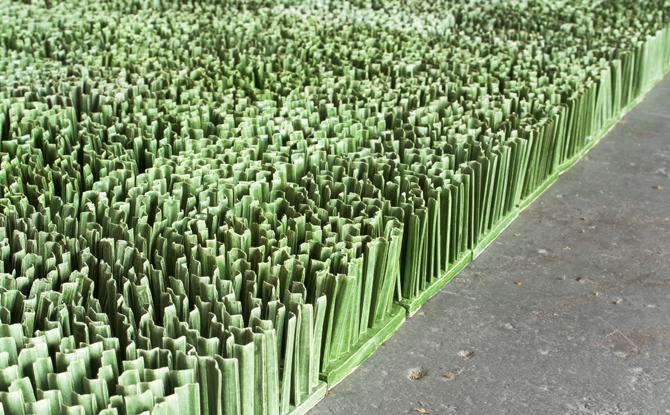
Dawn Holder, Monoculture, porcelain, 2013

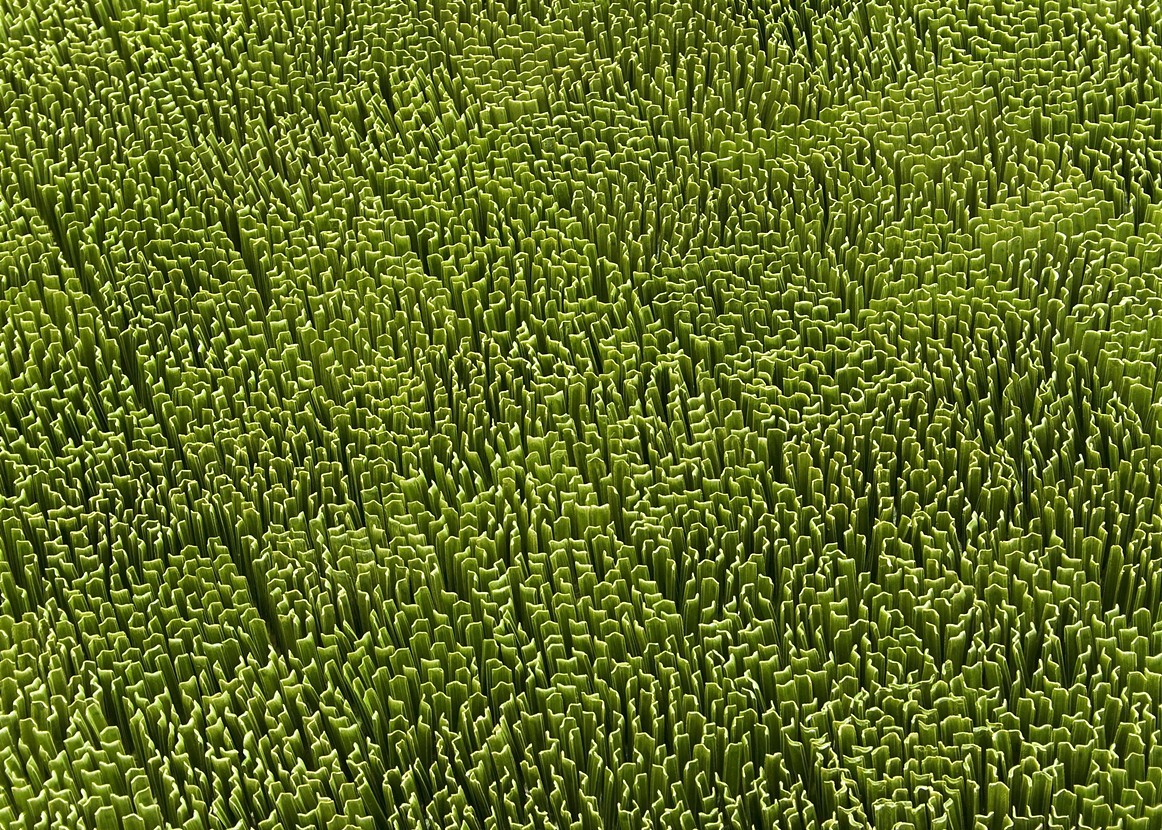
Dawn Holder’s Monoculture is a porcelain replica of that American ideal, the perfect green lawn. Holder explains that she focused on the lawn because of its “multivalent nature.”

“It is a “natural space” in that it is comprised of plants and landforms, yet the lawn is a wholly artificial construct, a highly controlled space requiring labor, chemicals, and specialized equipment to maintain. I am fascinated by suburban America’s desire to construct this hybrid artificial-natural landscape and what it signifies in terms of time and resources. I think the lawn is our culture’s fantasy version of the natural world.” (source)

Holder’s piece, made from individually formed, glazed and fired pieces of porcelain, is also, of course, a “highly controlled space” that requires a lot of labor to create and maintain.

“The toil involved in the manufacture of these repetitive pieces mirrors the tedium of shaping and cultivating the landscape…Breakage and repair have become part of the labor of maintaining much of the work.” (source)

Holder’s piece is on exhibit at the National Museum of Women in the Arts, in Washington, DC, as part of a show called Organic Matters—Women to Watch 2015. The work seems especially timely as drought and climate change call into question whether humans can – or should – continue to exert this kind of control over the natural environment.

Perhaps one day, maybe sooner than we imagine, a museum will be the only place to see a perfectly tended green lawn.

Organic Matters continues at the National Museum of Women in the Arts through September 13.

detail from Monoculture