NASA launched many lols this week and a few bad puns:
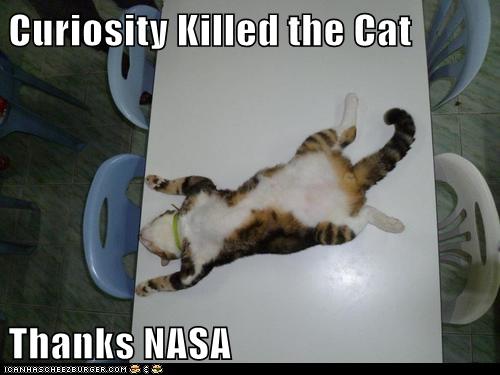
via cheezburger.com
Curiosity Thrilled the Cat

via Dirk Talamasca on G+

NASA launched many lols this week and a few bad puns:
via cheezburger.com
Curiosity Thrilled the Cat
via Dirk Talamasca on G+
My Library of America volumes of classic 1950’s science fiction have arrived:
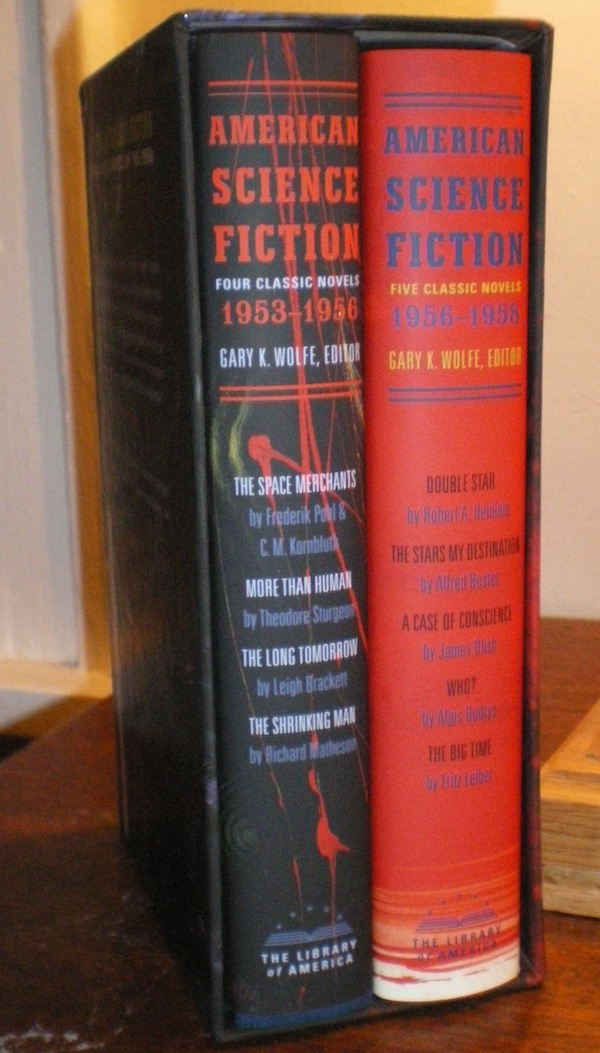
The first volume features a perfectly appropriate cover by Richard Powers. I can’t trace the date of this cover, but it seems more like Powers late 50’s, early 60’s style: Continue reading “Feast your eyes on Library of America Sci-Fi Cover Art”
 After a hiatus to move my family back across the Atlantic, I’ve got a new post up at The Paltry Sapien in which I lay out my proposal for fixing American football.
Prior to the NFL draft, pre-season training camp, and a player’s return after a concussion, NFL doctors will determine the medical eligibility of a player. Essentially, this has the NFL set the list of players that are available for teams to employ. The NFL has an economic incentive to declare players at risk of long-term issues from repetitive injuries (especially concussions) ineligible.
Missourians have voted overwhelmingly for a ‘right-to-pray’ constitutional amendment that creationists may use to let students opt-out of certain topics in science class. When I voted on Tuesday in my St. Louis suburb (against this amendment, of course), the ballot described the proposed amendment with a single, innocuous sentence that basically nobody could disagree with (except maybe Richard Dawkins or Jerry Coyne). No wonder the thing passed with 83% in favor – you can make anything sound good if you’re not constrained by honesty, which, when it comes to prayer, one would think ought to be a constraint.
From the St. Louis Post-Dispatch:
In the months leading up to the vote, Amendment 2 prompted unsuccessful lawsuits over its ballot wording, which its critics argued oversimplified the issue to the point of deceit. Continue reading “Missouri may have opened a creationist Pandora’s Box”
I first heard about experimental evolution while reading “The Greatest Show on Earth” by Richard Dawkins. In my naïve view, how could anyone really perform experiments on evolution? Doesn’t it take millions of years? The chapter referenced the E. Coli Long-Term Experimental Evolution Project. I was blown away by the fact that this lab was taking advantage of the short reproduction and life cycle of E. Coli to study evolution in the lab.
I was reminded of this great experiment the other day by an article about another lab studying experimental evolution using microalgae instead of E. Coli. Sinead Collins leads a group in the UK that is studying how microalgae respond to changes associated with ocean acidification or increased levels of carbon dioxide. They have found that while these algae use carbon to complete photosynthesis, they are sensitive to overly high levels of carbon. In an acidic environment, the algae start to get “syndromes” and fail to use up the increased carbon available to them. This goes against the beliefs of many that say that the aquatic life will simply use up the increased carbon in an acidified ocean.
These two groups have each found an organism and a method that will allow them to study evolution experimentally in the lab.
 The Finch and Pea