Science Caturday: Nootrishun Edishun

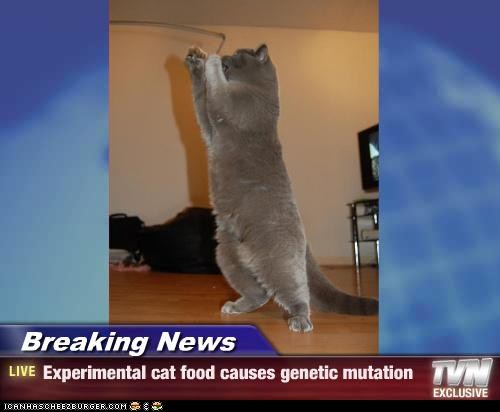
Looks like some naughty scientists allowed their kitties to test some highly experimental cat food, with regrettable results:

catfud1

Another tragic case:

catfud2

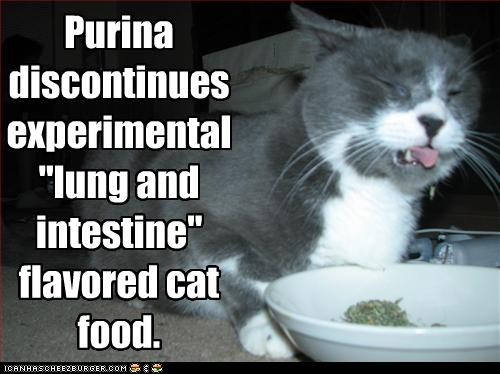
Some experiments, while not actually harmful, were also unsuccessful:

catfud3

Careful what you feed your cats, people.

all photos from Cheezburger.com

NFL moves to protect player’s brains

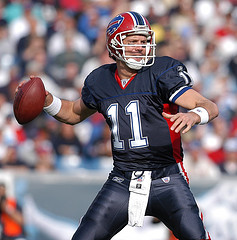
drewbledsoeLast week the NFL announced their Head Health Initiative, a 4 year $60 million dollar collaboration to improve diagnosis and recovery from potential head injuries. $40 million dollars will go towards developing imaging technology to better detect trauma in head injuries and $20 million will be devoted to the study of concussions including understanding, diagnosing, and treating them. Continue reading “NFL moves to protect player’s brains”

Meet the Flying Fox

There are about 60 species in the genus Pteropus and these bats are known generically as flying foxes. They are typically fruit and nectar fiends and can forage over a 40 miles radius. This seems incredible, but some of the larger species have wingspans reaching over a meter and a half.

Check out the video from National Geographic below:

“Meet the…” is a collaboration between The Finch & Pea and Nature Afield to bring Nature’s amazing creatures into your home.

Retraction rate increases with impact factor – is this because of professional editors?

Folks have long noted the strong positive correlation between high impact factor and retraction rate. There are three primary theories I’ve run across that attempt explain why Nature, Science, Cell, etc. have substantially higher retraction rates than other journals:

1) Acceptable risk/fame and glory theory: High impact factor journals are willing to publish riskier, but potentially higher-impact claims ASAP – more retractions are the price for getting high-impact science out early. The more negative version of this theory is that high impact factor journals care more about a high impact factor than about the integrity of what they publish.

2) Heightened scrutiny theory: papers published in high visibility journals get more scrutiny and thus flaws/fraud are more likely to be detected, but fraud/errors happen roughly equally everywhere. An associated theory is the high-stakes fraud theory: if you’re going to commit fraud, you need to make the payoff worth the risk, so you’re going to submit to Nature and not BBA.

Anthony Bretscher, in an MBoC commentary on editors, proposes a new theory, which, based on personal experience, I believe accounts for most of the correlation between retraction rate and high impact factor journals:

Continue reading “Retraction rate increases with impact factor – is this because of professional editors?”

The Art of Science: Mark Dion’s Marine Invertebrates

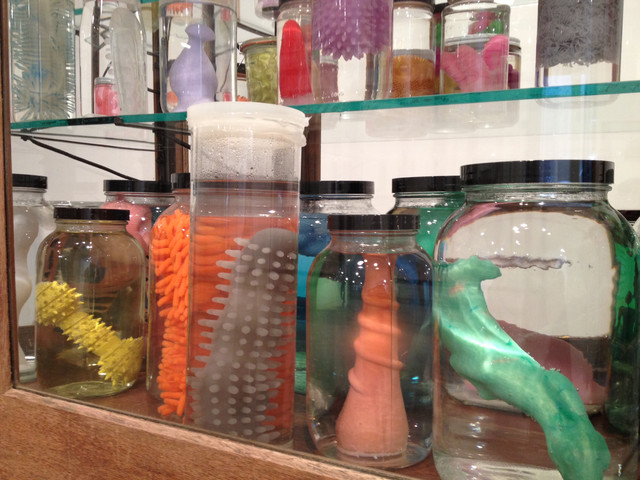
markdion

Andy Warhol famously said that “Art is what you can get away with.” It seems a good definition for this sculpture by renowned American artist Mark Dion.  The piece, Marine Invertebrates, is made up of dog toys and sex toys displayed in specimen bottles, as if in an old-fashioned natural history museum.

The toys, which bear an uncanny resemblance to real marine invertebrates,  continue Dion’s exploration of the ways that museums and other institutions shape our views of nature.   A show of his work, including this piece, is on exhibit at the Tonya Bonakdar gallery in New York city through April 13.

According to the gallery website, “Appropriating archaeological and other scientific methods of collecting, ordering, and exhibiting objects, Dion creates works that question the distinctions between objective (rational) scientific methods and subjective (irrational) influences. The artist’s spectacular and often fantastical curiosity cabinets, modeled on Wunderkabinetts of the 16th Century, exalt atypical orderings of objects and specimens….Mark Dion questions the authoritative role of the scientific voice in contemporary society.” (source)

On a less philosophical plane, my personal responses to this artwork were (in objective, rational, scientific order): 1. Hahahahahaha! 2. OMG that is amazing. 3. Damn, I wish I had thought of that.

More information on the Dion exhibit and his other works are at the Tonya Bonakdar Gallery website.