
Function and another failure to consider the null hypothesis

Somehow, the following kind of illogic creeps into so many discussion of genomic function:

In terms of pathological functions, somatic mosaicism of terminally differentiated cells has long been known to cause cancer. Recent work shows that somatic mosaicism of nervous system tissues underlies a host of neurodevelopmental and perhaps neuropsychiatric diseases (17). However, the extent of somatic mosaicism that is now being reported in a variety of healthy tissues and cell types suggests that it also has physiological functions.

– James R Lupski, “Genome Mosaicism—One Human, Multiple Genomes” Science 26 July 2013: Vol. 341 no. 6144 pp. 358-359

This paragraph comes after the author carefully describes why extensive mosaicism is unavoidable, given the number of cell divisions we undergo during development from a zygote into a fully adult human.

So explain to me why extensive mosaicism “suggests that it also has physiological functions”? Why should we think that most of the mosaicism being observed is anything like the deliberate hypermutation that happens in the immune system? Isn’t the default hypothesis that mosaicism is the expected, non-functional by-product of trillions of cell divisions?
Second fiddle, better fiddle

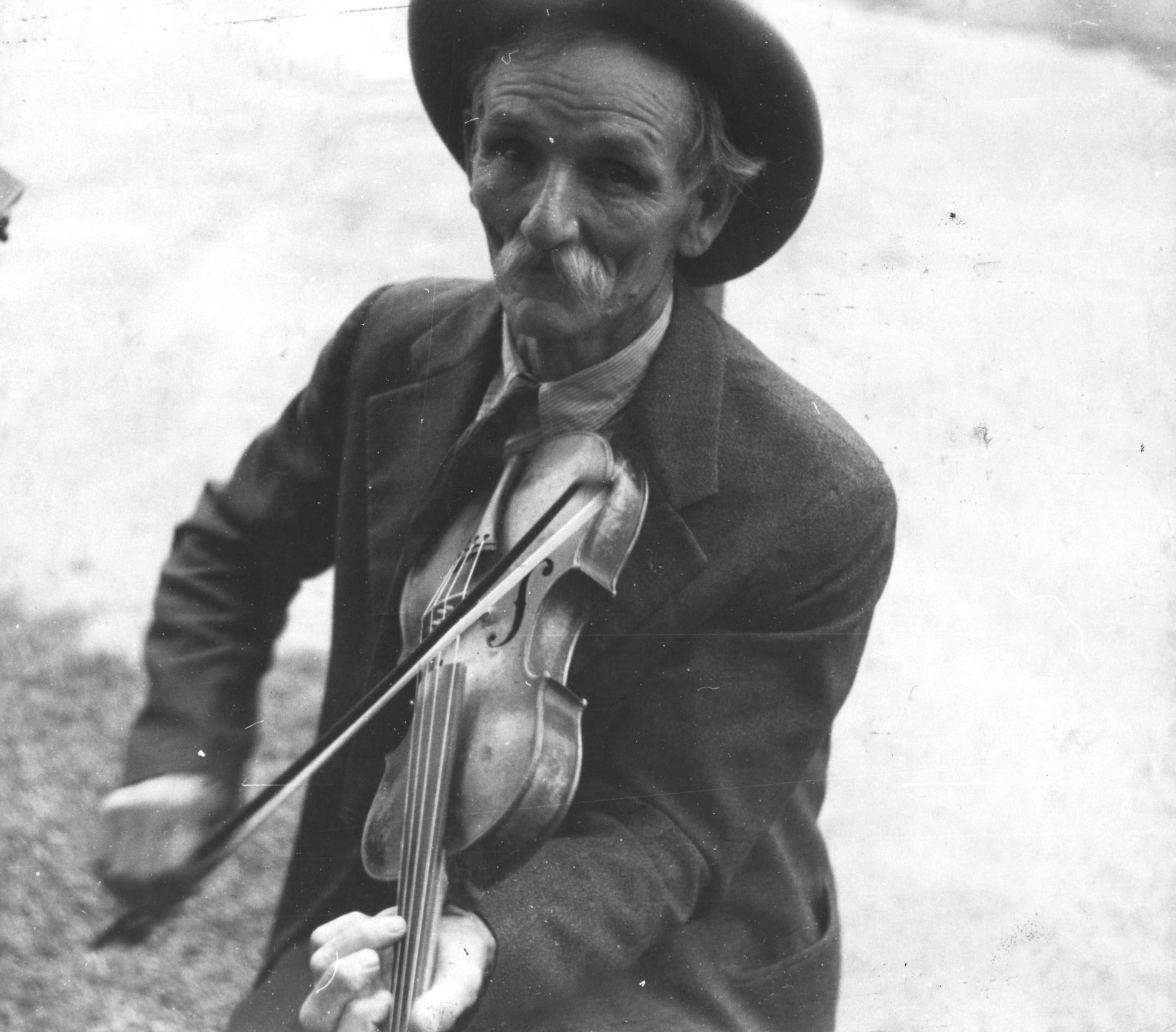
Fiddlin Bill Henseley, Mountain Fiddler, Asheville, North Carolina by Ben Shahn, 1937

Sometimes you spend years working on a project and then, right as you are about to share your progress with the world, someone else beats you to it. I’d imagine Meng-Tsen Ke, Satoshi Fujimoto, and Takeshi Imai were feeling pretty disgruntled in June when the Deisseroth lab published their technique for making brain tissue optically clear.  The press coverage of CLARITY was immense, I even wrote a post about it. But it turns out while we were all drooling over clear brains, another group was coming up with a cheaper and easier way to make brain tissue see-through. Continue reading “Second fiddle, better fiddle”

Since when is cancer not caused by mutation?

I feel a major rant about epigenetics coming on… must hold it back until a more convenient time. But I can’t refrain from commenting on just how wrong this is:

“We used to think that cancer was caused mainly by mutations of genes, but we now believe that epigenetic aberrations are responsible for more than half of cancer cases,” says Trygve Tollefsbol, who is a senior scientist at the University of Alabama at Birmingham’s Comprehensive Cancer Center.

“That’s an important change because genetic mutations are very difficult, if not impossible, to correct, while epigenetic marks are potentially reversible,” he explains.

– Nutrition Action HealthLetter, July/Aug 2013, p. 10

I’ve heard a lot of BS claims made in the name of epigenetics, but this one takes the cake. Can anyone point me to an instance of any cancer that does not involve mutations? And where is the evidence that “more than half of cancer cases” are not caused by mutations? Anyone?

(And if you haven’t read this, you should: Mark Ptashne, “Epigenetics: core misconcept” Proc Natl Acad Sci U S A. 2013 Apr 30;110(18):7101-3.)

NOTE: The article is not online yet, but comes from a big story on epigenetics in the July/Aug issue of the Nutrition Action Health Letter.

Science Caturday: What’s the Matter?

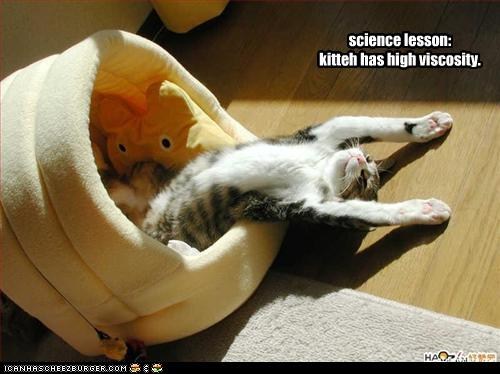
Caturday science question: are cats actually liquids, as claimed here earlier, or amorphous solids? Discuss in the comments.

catvisco

image via Cheezburger.com

Evolution and Gene Regulation in Chicago

Happening at the U of Chicago today is the ASBMB meeting “Evolution and Core Processes in Gene Regulation”. The attendees here are an eclectic mix of evolutionary geneticists, systems biologists, developmental biologists, and hard core biochemists. So far the result has been fascinating, as Ian Dworkin over at Genes Gone Wild tells us.

Follow the meeting over at #genereg, where Ian has done a great job summarizing the talks in real time.

I’ll try to chime in occasionally during today’s talks (@genologos) and put up some more in depth thoughts on my favorite bits here.