The Art of Science: Bouncing Beethoven Off The Moon

Some of The Moonlight Sonata as received in code from the moon.                    Katie Paterson, 2007
Some of The Moonlight Sonata as received in code from the moon.
Katie Paterson, 2007

For centuries, artists have been inspired by the beauty and mystery of the moon, and for the last 50 years, by the tantalizing possibility of traveling there.  An exhibition in London, The Republic of the Moon, takes those imaginings a few steps further. The show, at Bargehouse in London’s South Bank, “combines personal encounters, DIY space plans, imaginary expeditions and new myths for the next space age,” says its organizer, Nicola Triscott of The Arts Catalyst.

One especially intriguing piece is a sound and data based work called Earth – Moon – Earth, by Scottish artist Katie Paterson.  Paterson translated Beethoven’s Moonlight Sonata into Morse code and “bounced it off the moon” via Earth-Moon-Earth (EME) transmission.  The artist explained:  “The moon reflects only part of the information back – some is absorbed in its shadows, ‘lost’ in its craters … Returning to earth fragmented by the moon’s surface, it has been re-translated into a new score, the gaps and absences becoming intervals and rests. In the exhibition space the new ‘moon–altered’ score plays on a self-playing grand piano.” (You can listen to a clip of it here)

(Full disclosure: I thought Paterson was totally making this EME stuff up. A brief consultation with my friends Google and Wikipedia, however, convinced me that it is indeed possible to bounce a signal off the moon’s surface and people have been doing so since the 1950s. Incidentally, streaming Beethoven to the moon sounds like a perfect project for noted music-and-moon-lover Newt Gingrich. But I digress. )

Is Paterson’s piece a metaphor for the cultural loss that often seems to go hand-in-hand with scientific progress?  Maybe. It’s also intriguing that she chose Beethoven, not only for the “moonlight” theme, but because he couldn’t even hear all the notes himself.

If you’re in London, you have a few more days to catch The Republic of The Moon before it closes on February 2nd.  You can also see her work in upcoming shows in Berlin and Adelaide, Australia or on her website.
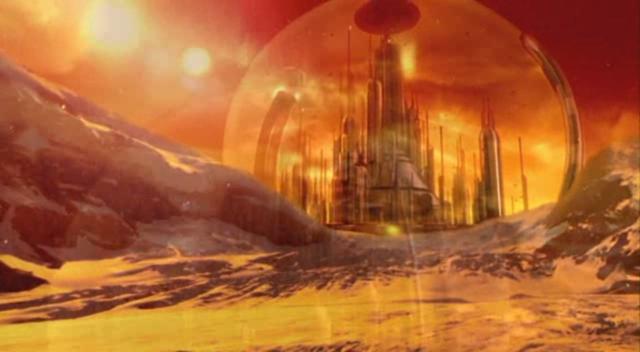
Gallifrey and HD 106906 b

GallifreyThe long-running British sci-fi series Doctor Who is centered around The Doctor, the only remaining member of the Time Lord species from the planet Gallifrey. In a last-ditch effort to save the world, The Doctor has had to destroy Gallifrey in the Time War, so he’ll never be able to go home – or can he?

In more recent episodes of the show, it was revealed that Gallifrey is not lost forever, but that it has been relocated to a different universe, setting the scene for a future plot line involving a return to Gallifrey. Two weeks after the fictional planet Gallifrey was revived in the TV series, astronomers announced the discovery of a new, real-life, distant exoplanet. Continue reading “Gallifrey and HD 106906 b”

Jargon will make time travel very confusing

6c8be9cc69d429e19aa0eb80216d2c91

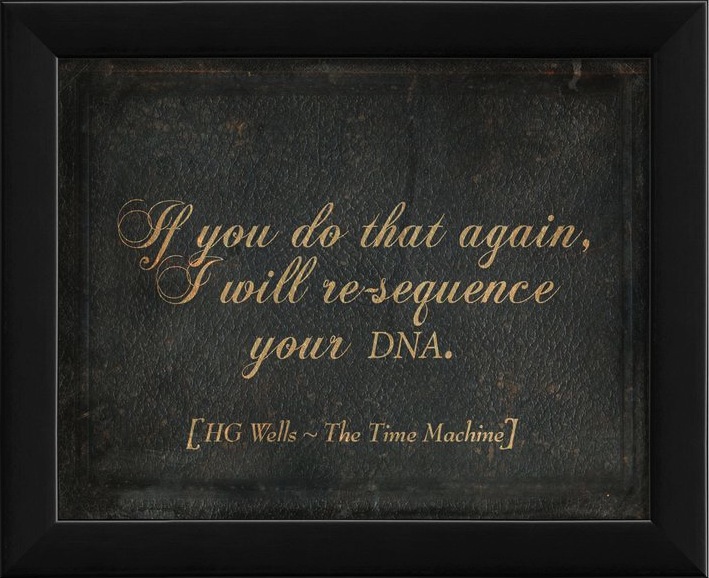
This was a gift from my sister and is a solid science fictiony quote – one that I’m quite happy to put on my wall1.

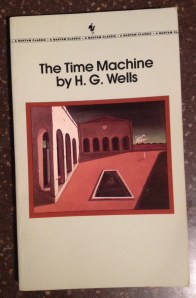
The Time Machine by HG Wells (1991 Bantam Classic Reissue from library of Josh Witten)

Being a fan of, but hardly an expert on HG Wells2 and being a fan of, but hardly an expert on the history of science, I had to wonder if this quote was actually from HG Wells’ The Time Machine, or was from one of the movie adaptations. As you will see, this is an easy question to answer. The trick is figuring out why you might want to ask the question in the first place.

HG Wells was brilliant and reasonably familiar with scientific research. To pen that line, he would also need to be a time traveler himself. Continue reading “Jargon will make time travel very confusing”

JFK on the Sunday Science Poem

Well, not just the Sunday Science Poem. I suppose his remarks could be construed to be about poetry, more generally, and about Robert Frost, more specifically (as the remarks were made in honor of Robert Frost’s passing earlier in 1963):

At bottom, he held a deep faith in the spirit of man, and it is hardly an accident that Robert Frost coupled poetry and power, for he saw poetry as the means of saving power from itself. When power leads men towards arrogance, poetry reminds him of his limitations. When power narrows the areas of man’s concern, poetry reminds him of the richness and diversity of his existence. When power corrupts, poetry cleanses. For art establishes the basic human truth which must serve as the touchstone of our judgment.
President John F Kennedy, Remarks at Amherst College, 26 October 1963

*Hat tip to Greg Proops on The Smartest Man in the World Podcast.

Science Raturday: Ghost Ship!

raturday

Twitter was abuzz ( well, at least a-twitter) this week with the news that an abandoned ship, possibly filled with rats, which were possibly eating each other, was possibly going to run aground in the near future. The ship, the Lyubov Orlova, was seized by Canadian authorities in 2010 and broke free of its mooring in a storm last year. The so-called “Rat Ghost Ship” has not been spotted in many months, and the speculation that storms may have driven it in the direction of Ireland or the UK seems … speculative.  Nevertheless, imagining a ghost ship full of cannibalistic rats is ghoulish fun, so we’ll extend it one more day with our first-ever Science Raturday.