
Happy New Year from the Finch & Pea. Remember, if you’ve overdone the EtOH, a little C 8 H 10 N 4 O 2 may help!

Happy New Year from the Finch & Pea. Remember, if you’ve overdone the EtOH, a little C 8 H 10 N 4 O 2 may help!
A special Thanksgiving Day reminder that evolution is weird. The front end of a wild turkey:
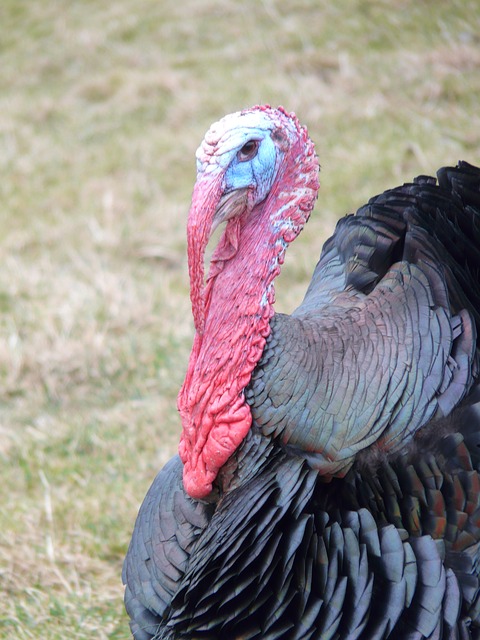
… and the back end:
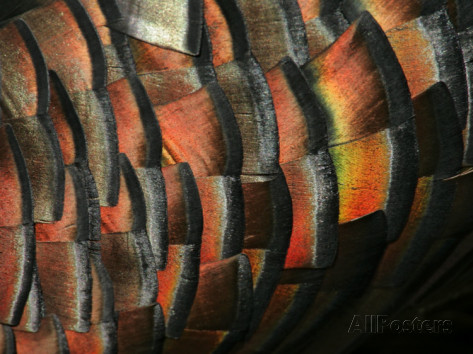
Photos by Hans Braxmeier (top) and Arthur Morris
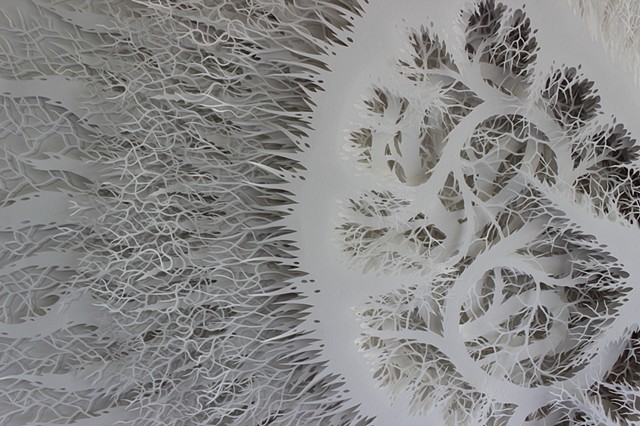
For artist Rogan Brown, the process of making his cut-paper sculptures is as important as the finished product. Each artwork is built from painstakingly cut and assembled pieces of paper – an arduous, time-consuming task. Says Brown, “The finished artifact is really only the ghostly fossilized vestige of this slow, long process of realization. I have chosen paper as a medium because it captures perfectly that mixture of delicacy and durability that for me characterizes the natural world.”
I would add that by working only in white, Brown amplifies the impact of his incredibly complex works, putting the focus squarely on what Darwin called “endless forms most beautiful.”
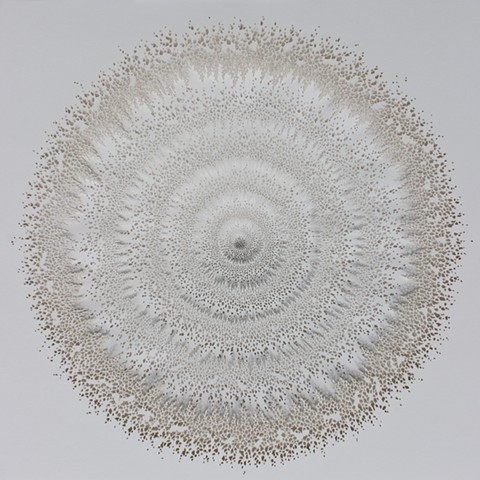
Brown says he is inspired by natural shapes and patterns “from the microscopic to the macroscopic, from individual cells to large scale geological formations”. While his art, and the process of study that precedes each piece, pay tribute to scientist-artists such as Ernst Haeckel, Brown does not seek to replicate nature. He rather describes his pieces as explorations: “Everything has to be refracted through the prism of the imagination, estranged and in some way transformed.”
You can see more of Brown’s work on his website and buy originals and prints here.
Teh red dot wuz always a thingie of majestic but utterly mysterious power.

Until suddenly one day, a kitty thinked something.

Dis just a theory, of course, but still:

OK, thinking over. Nap tiemz.
All images via Cheezburger.com

My dilemma: I’m supposed to write a weekly post about science-based art, but yesterday I discovered this bouncy, inflatable scale model of Stonehenge. So I had to decide whether to try to squeeze this wonderful thing into a science framework – for example, by discussing how prehistoric people with primitive tools were able to move giant stone slabs and place them atop each other. Or perhaps by noting that the design of Stonehenge indicates that Neolithic people had a surprisingly deep and sophisticated understanding of solar movements and patterns.
But what I really want to say is “Yay! Bouncy Stonehenge! Why did this take so long to be built and when will it come to the US?”
For the record, the real name of bouncy Stonehenge is Sacrilege, and it was designed by British artist Jeremy Deller for the Glasgow International Festival of Visual Art 2012. The inflatable structure traveled to the Queen Elizabeth Olympic Park in London earlier this year. Here’s hoping it pops up on these shores sometime soon.
Tip o’the hat to Despoke
 The Finch and Pea