
Science Careers has compiled an excellent list of articles and stories about scientists overcoming disability, mental health issues, and scores of other problems. With all of the negativity surrounding maintaining a career in science, it’s refreshing to read about how a scientific career is possible even with a few extra hurdles.
Category: This Mortal Coil
When immune cells attack…

…it’s usually a good thing! Immune cells normally protect our bodies from foreign objects or marauding bacteria. Sometimes, this finely tuned protective machinery can go haywire. An example of this is the disease Multiple Sclerosis.
Multiple Sclerosis (MS) is thought to be caused by confusion of a person’s immune system. Their immune cells mistakenly attack the protective coating of their nerves (myelin) and progressively strip it away leaving the nerves vulnerable and exposed. When someone has MS they often come to their doctor with symptoms of neurological dysfunction that can vary widely depending on what nerves have been damaged. They could have trouble walking or have a tingling pins and needles feeling in their arm. Unfortunately, there is currently no cure and most remedies are not effective in alleviating the progression of the disease. A new phase one clinical trial may provide some hope. Continue reading “When immune cells attack…”
Significant cell death

Bleach also works. And high concentrations of ethanol (works for humans too).
Also, just leaving the petri dish out on your lab bench to desiccate.
Thinking about Angelina
Writing in Forbes, David Kroll has a very thoughtful take on Angelina Jolie’s announcement that she had a preventative double mastectomy after learning that she was at exceptionally high risk for developing breast cancer. While taking nothing away from Jolie’s bravery in writing about her choice, Kroll raises concerns about health care access, gene patents, “certainty” in medicine, and the influence of celebrity (which could be both positive and negative in this case):
On the one hand, I am stunned by the bravery of this high-profile woman to not only undergo such a transformative surgery and then write about it in the nation’s newspaper of record less than three weeks later…On the other hand, I do worry that the ensuing publicity surrounding her announcement might evoke some magnitude of panic in women with breast cancer, particularly those who don’t have BRCA1/2 gene mutations or cannot afford to have the testing done…My primary concern is that some women with breast cancer may think that they are not being aggressive enough with their current treatment plan. – David Kroll
Don’t Fear the Toilet Seat!
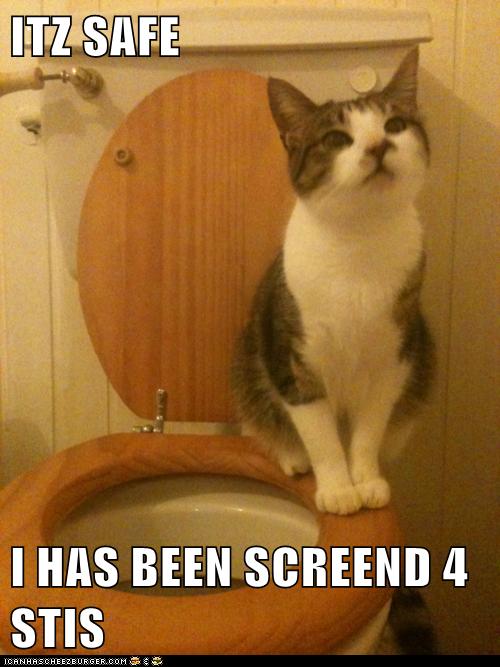 “Fomite” isn’t a word that most people hear very often. However, if you’re a microbiologist (or are under the influence of one), you are likely to find yourself considering fomites as you go about your day. Fomites are everywhere, are difficult to avoid, and while it’s a good idea to be aware of fomites, they should not be feared. Continue reading “Don’t Fear the Toilet Seat!”
 The Finch and Pea