Garbage – Part 1: Pacific Garbage Patch

Two of the most interesting science-related destinations on earth are both garbage-related, so get ready for a garbage-themed two-part post.

Remember the duckies that floated around the oceans for years? Ocean currents brought them all the way across the Arctic. But ocean currents don’t always push garbage to shore. The currents also create large vortexes from which floating plastic can’t escape. Instead, it all stays within the vortex, and creates a patch of floating waste in the convergence zone.
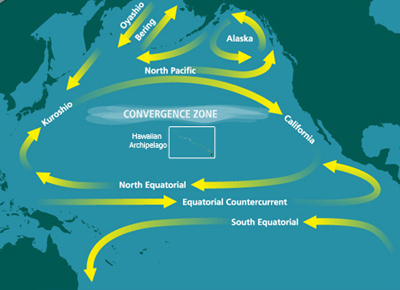
Marine Debris Poster (4) AI9

This is what happened at the Pacific Garbage Patch.

Despite some photos you may have seen, this is not a large patch of floating objects. (In fact, I can’t find ANY reliable and reusable photos of what it ACTUALLY looks like, so you just get a map.)

Unlike the duckies, which retained their duckie shape throughout their oceanic travels, the majority of the plastic in the Pacific Garbage Patch is not shaped like any recognizable objects. It’s mainly plastic pellets, down to microscopic size. The water can look relatively normal on the surface, but water samples consistently show plastic.

As Miriam Goldstein describes in an interview with io9, it’s not entirely clear what the effect is of so much plastic in the ocean, but it’s definitely changing the ecosystem.

It’s also very difficult – logistically – to clean up plastic from such a large and remote area. It’s not close to any particular country, and the garbage comes from everywhere, so whose job is it to clean?

The best solution, of course, is to prevent garbage from ever ending up in the ocean in the first place, and next week I’ll take you on a virtual trip to a place where household waste is being reused in a unique way.

Map from Wikimedia, in the public domain.

Nikko Natural Science Museum

IMG_2558A few years ago I was in Japan for a conference, and tagged on some extra days to explore a bit more of the country together with my sister. We mostly stayed in and around Tokyo, but we took a two-day trip to Nikko, further inland. Nikko is a small town with a beautiful heritage site, with lots of temples, and a famous wood carving of the original “see no evil, hear no evil, speak no evil” monkeys.

Close to Nikko, just a 20-minute bus ride away, is a waterfall that all the guidebooks recommended, so we had to check it out. The waterfall is further uphill, at Lake Chuzenji – a lake formed after a volcanic eruption blocked off the river thousands of years ago.

Before we got on the bus, we became a bit worried by the fog we had seen creeping onto the mountain. Hoping that it would clear eventually, and with no further days left in Nikko, we decided to risk it and journeyed to Lake Chuzenji.

The further we travelled up the mountain, the thicker the fog got.

Once we got out of the bus at the top, we walked toward the waterfall, barely seeing more than about twenty or thirty feet in front of us.

In the distance, we saw what looked like a… bear?

Coming closer, the bear stayed motionless next to a sign. It was a wooden statue.

IMG_2544

The sign was for the Nikko Natural Science Museum, but we were aiming for the falls, so we didn’t stop at the museum.

Last week, more than two years after visiting the Lake Chuzenji area, I was looking at my photos again, and decided to look into this Natural Science Museum that the bear was trying to entice us to visit.

Continue reading “Nikko Natural Science Museum”

AMNH Shelf Life

I’ve never been to the American Museum of Natural History (it’s on the “to visit” list!) but now the museum is coming to me via the magical medium of YouTube. AMNH has launched a video series called Shelf Life, through which you can get a behind the scenes tour of parts of their collection.

The show debuted in November, with an episode on collections in general (and fish in particular). Two more episodes have since gone up, one per month. The production quality of the videos is really good, but they managed to stay within the YouTube attention span.

The most recent episode is about the coelacanth, which actually ties in nicely with my last post about the Tiktaalik, so you might want to watch that.

I can’t help but wonder, though, if they modeled it after the Field Museum’s (acquired) Brain Scoop series, but it is clearly a different concept, with different people on screen in every episode. Each episode is also accompanied by a web page with more information, so it’s more in depth than just the videos. I really liked the turtles and taxonomy episode and web page.

It’s good to see another museum embrace online video to share their collection, and I can’t wait until February’s episode, which is all about the olinguito!

Ellesmere Island

3232070295_fcb9b6288e_z
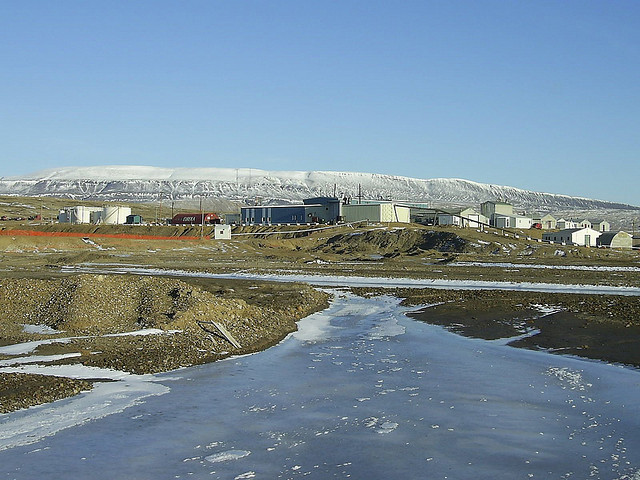
Town of Eureka, Nunavut.

Think it’s cold where you are right now? It’s not as cold as Ellesmere Island. The average temperature of its capital city Grise Fiord (population 130) is −16.5 °C (2.3 °F), according to Wikipedia. Only about 150 people (maybe even fewer) live on Ellesmere Island, and the permanent population of the town of Eureka is zero. Eureka, as you might have guessed, is predominantly a research station.

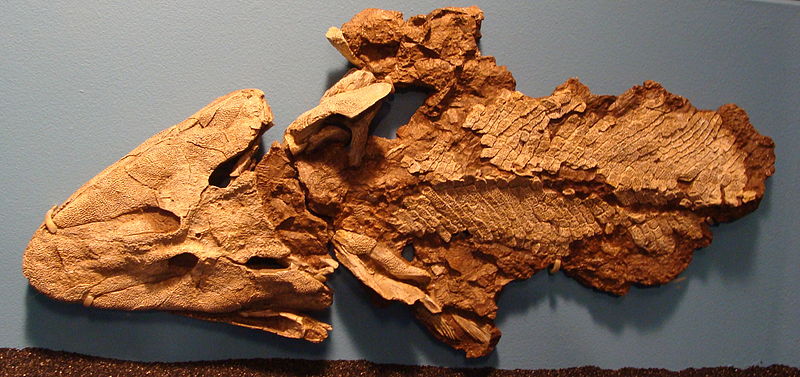
Research on Ellesmere Island in northern Nunavut (Canada) focuses largely on weather and climate research, but perhaps its most famous discovery is Tiktaalik – a fish with limbs.

800px-Tiktaalik_Chicago

Continue reading “Ellesmere Island”

Giant Crystal Cave

Naica

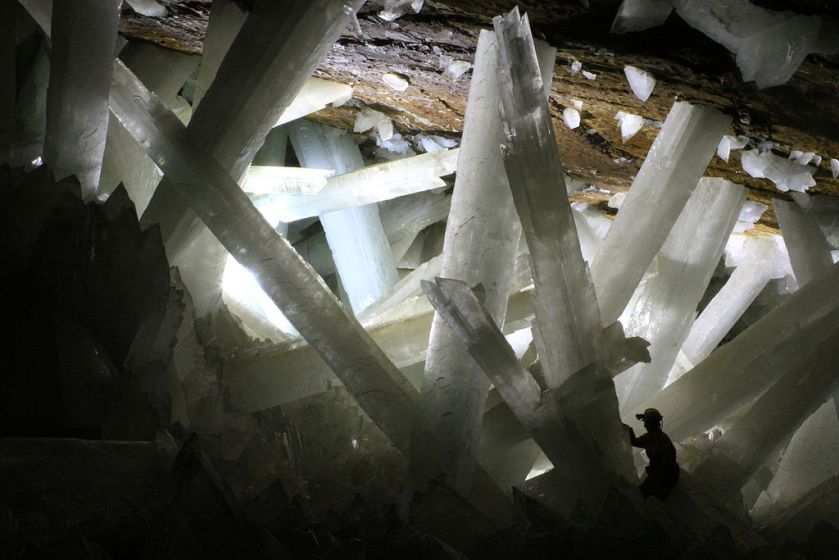
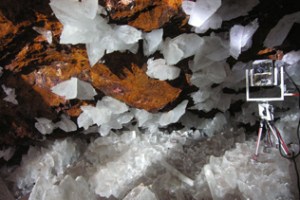
In 2000, a group of Mexican miners was drilling new tunnels for the excavation of zinc, silver, and lead, when they found something even shinier than the metals they were after: an underground cave with enormous crystals, 300 meters underground.  These crystals are up to 12 meter (39 ft) high, and are the largest crystals on the planet!

The crystal cave was originally filled with water (in which the crystals were formed), but the miners pumped the water out of the space, revealing the crystals. Once they’re done mining this area, they will stop pumping, and the cave will fill up with water again. In the mean time, while the crystals are exposed to the air, they’re quite fragile and can deteriorate. Either way, the crystal cave is not a permanent space.

cavescientistsRecognizing the short-lived nature of the cave, a group of researchers and artists set up the Naica project in 2006, with the goal of documenting all aspects of the crystals before they disappear. The scientific team of the Naica project is studying the physical and geological aspects of how the crystals were formed, and looking at microbiology and fossils within the area. So far, they have published several dozen articles. Meanwhile,  the “visual rescue” team is working hard to document the caves from all angles before they’ll be lost.

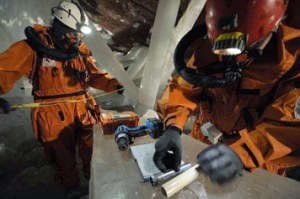
robotBoth the photographers and scientists have had to deal with extreme conditions: temperatures within the cave are about 50 degrees Celcius (Over 120 Fahrenheit). Combined with 100% humidity, humans can only survive in the caves for a few hours, tops. That means the teams have had to develop techniques to take images and measurements without exposing themselves too much to the climate within the caves. The imaging team uses robots, and everyone has to wear special suits to go down there.

It’s not a place most of us will ever got to visit, so the research and documentation efforts are a great way for everyone to learn about the caves. The cave was discovered by accident, and who knows what else is hiding below the Earth’s surface?

Images:
Cave crystals – CC-BY by Alexander van Driessche, via Wikimedia. Robot and scientists images from Naica project website, copyright Naica project.