
Part of the Reactions series from the American Chemical Society, featuring Raychelle Burks.
Category: Follies of the Human Condition
P-Value Interpretation
If all else fails, use “significant at p>0.05 level” and hope no one notices.
–xkcd by Randall Munroe
I can’t say that I ever thought about doing this, but I can admit feeling enormous stress proofreading for “less than” signs pointing the wrong direction – an anxiety that may have been justified on more than one occassion.

Science for the People: A Sting in the Tale

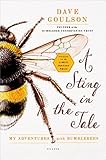 This week Science for the People is learning about the fascinating lives of bees, and the important role they play in our global ecosystem. They speak to University of Sussex biology professor Dave Goulson about his book A Sting in the Tale: My Adventures with Bumblebees. They also talk to Jocelyn Crocker, founding member of YEG Bees, about the rewards and challenges of urban beekeeping.
*Josh provides research help to Science for the People and is, therefore, completely biased.
Apocalypse 1912: A Naturalist End of the World
Jack London’s The Scarlet Plague (1912)
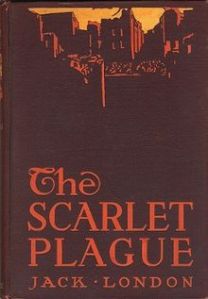 We’re all familiar with classic scenes of a brutal post-apocalyptic world like this: A group of refugees from the pandemic is holed up in an abandoned building with a cache of food and arms, firing on a gang of assaulting raiders. Or, a former professor of English Literature, clad in goat skins and huddled around a fire, is telling his dirty, illiterate grandsons about life before civilization vanished.
Today these scenes are standard fare in post-apocalyptic fiction, from The Road to The Walking Dead. But when Jack London wrote them a century ago, they weren’t. The genre itself had been around for a long time, and many of the classic themes, settings, and catastrophes had already been introduced. However, nobody before Jack London had described a collapse of civilization so violent or an aftermath so squalid. In the century since, images of a gritty and brutal world in ruins have become almost a requirement in this genre. Continue reading “Apocalypse 1912: A Naturalist End of the World”
On Beauty in Technical Science Writing
Via Chris Woolston at Nature, I ran across last week’s discussion about the role of beauty in technical scientific prose. Writing over at The Tree of Life, Stephen Heard offers several examples of beauty in scientific writing, and he calls on the community to encourage beauty in scientific writing:
[E]xamples of beautiful scientific writing do seem to be unusual; and those that exist aren’t well known. I don’t think it has to be this way. W could choose to change our culture, a little at a time, to deliver (and to value) pleasure along with function in our scientific writing.
I’ll second the idea that we should encourage beauty in scientific writing, but with a big caveat: we absolutely shouldn’t try to do this by making our technical writing more belletristic. We don’t need to drop in hokey metaphors or cloying phrases — that’s what would happen if you encouraged most scientists to write beautifully. Continue reading “On Beauty in Technical Science Writing”
 The Finch and Pea