Reflections on “The Skeptical Boys Club”

It has been a few weeks since I originally published “The Skeptical Boys Club” on the significant under-representation of women in Skepticism[1]. It generated some serious response, criticism, and discussion. At the time, I tried to focus the article on the information I gathered, but tried to restrict the injection of my personal motivations for being interested, my thoughts on possible causes, and my thoughts on possible solutions. In the first case, those motivations were not immediately relevant. In the latter cases, I have no reason to believe that my thoughts on these matters have any value, and to put it next to “impressive” looking graphs might give those ruminations an inappropriate appearance of authority.

There has been some more recent interest in “The Skeptical Boys Club” by some individuals for whose thinking I have tremendous respect (but not always agreement, which is healthy) and whose thoughts on feminism, skepticism, and women in skepticism is infinitely more developed and considered than mine. After all, I can really date my intense interest in these types of issues quite accurately to precisely 28 months ago (more on how I know the date so precisely below). That is not much time to form a fully coherent philosophy of life.

So, I thought I would take this time to share some of my reflections from the experience of conceiving, researching, writing, and getting responses to the article.
Continue reading “Reflections on “The Skeptical Boys Club””

Ending the World for 60 Years: 1955

Post-apocalyptic Fundamentalism

Leigh Brackett’s The Long Tomorrow is one of many post-apocalyptic novels that envision society returned to a 19th century agrarian state. The rural settings of these novels are commonly used to explore life in a society driven by fear, fear or technology, or change, or those who are different. A society based on fear of technology is what Leigh Brackett explores here.

The Long Tomorrow tells the story of a North American society that, in the wake of nuclear devastation, became essentially Mennonite, since it was the Amish and the Mennonites who were able to adapt most effectively to a world without modern, 20th century technology. And thus Mennonite beliefs about technology, in some form or another, spread widely. Technology, curiosity about technology, and scientific knowledge (and the benefits of that knowledge) are frowned upon, and in some cases even punished severely.

This clamp-down on scientific exploration is enforced by the United States government – after the holocaust, the Thirtieth Amendment to the U.S. Constitution forces a rural, agriculturalist society on the nation by limiting the size of all settlements to less than 1,000 people. Without industry and the pooled resources of cities, there is no manufacturing, no science, and no technological progress. As a result, people are provincial, superstitious, and suspicious of change, and a ripe harvest for fundamentalist preachers.

Continue reading “Ending the World for 60 Years: 1955”

The Skeptical Boys Club

The Worldwide Skeptical MovementTM,1 has found itself in the unenviable position of one of Van Wilder‘s2 clients, namely asking, “How do we get ladies to come to our events?”3. Fortunately, The Worldwide Skeptical MovementTM seems to be asking for more serious reasons than the Lambda Omega Omegas. Unless you are the Augusta Country Club, you want your group demographics to mirror those of the society within which your group is embedded. Among many other benefits, this shows that your message is successfully reaching the entire society, not just a specific niche.

This is what is known in the business as “hard”. Continue reading “The Skeptical Boys Club”

Ending the World for 60 Years: 1954

Nature is never inexplicable

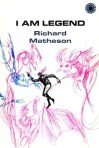
For 1954, we’re discussing the first vampire/zombie apocalypse in this series: Richard Matheson’s I Am Legend. This is a significant subgenre in End of the World fiction, and it reflects the nebulous boundary between horror and science fiction that has been fruitfully occupied by Wells, Lovecraft, Mary Shelley, and many others. If you’ve seen the Will Smith movie version, you know that I Am Legend combines zombie horror with a hard-headed, scientific protagonist like those we encountered in Genus Homo. I Am Legend is significant in our survey of pos-apocalyptic fiction because a key aspect of the book is the idea that nature, even at its most catastrophic and bizarre, is never inexplicable – scientific reasoning always gets to the bottom of the mystery.

Continue reading “Ending the World for 60 Years: 1954”

Post-apocalyptic Neanderthals

Just to reinforce my previous point that it’s natural to think of Neanderthals as living in a post-apocalyptic setting, here’s anthropologist Charles Finlayson:

By the time the classic Neanderthals emerged, during the last interglacial around 125,000 years ago, they were already a people doomed to extinction. Like the hippos, rhinos, and elephants of the eurasian forest, the Neanderthals were a population of living dead, existing on borrowed time.

The Humans Who Went Extinct, p. 116

Finlayson argues that this is so because Neanderthals developed to be ambush hunters, relying on woodlands for close range hunting. Because of climate change after 125,000 years ago, the woodland areas that the Neanderthals exploited best gave way to drier, treeless terrain. Although the Neanderthals survived for almost another 100,000 years, this was the beginning of the end. The apocalypse had already happened, and Neanderthals were playing out the aftermath.

There is more to say on this… stay tuned.